The DexCheck ecosystem is powered by the DexCheck token. DexCheck token currently trades at $0.022 at the time of writing with a total market cap of just $3 million. The DexCheck ecosystem is built to grow mutually with the DexCheck token. The DexCheck token can be traded on decentralized exchanges on Ethereum and Binance Smart Chain (PancakeSwap) and centralized exchanges like Kucoin and MEXC.
For the over 6,000 investors who currently hold DexCheck tokens in their personal wallets and investors who will be buying this token in the future, there are a number of benefits. These benefits are related to the ecosystem and beyond it.
We explore some of the use cases of the DexCheck token.
Platform access and privileges
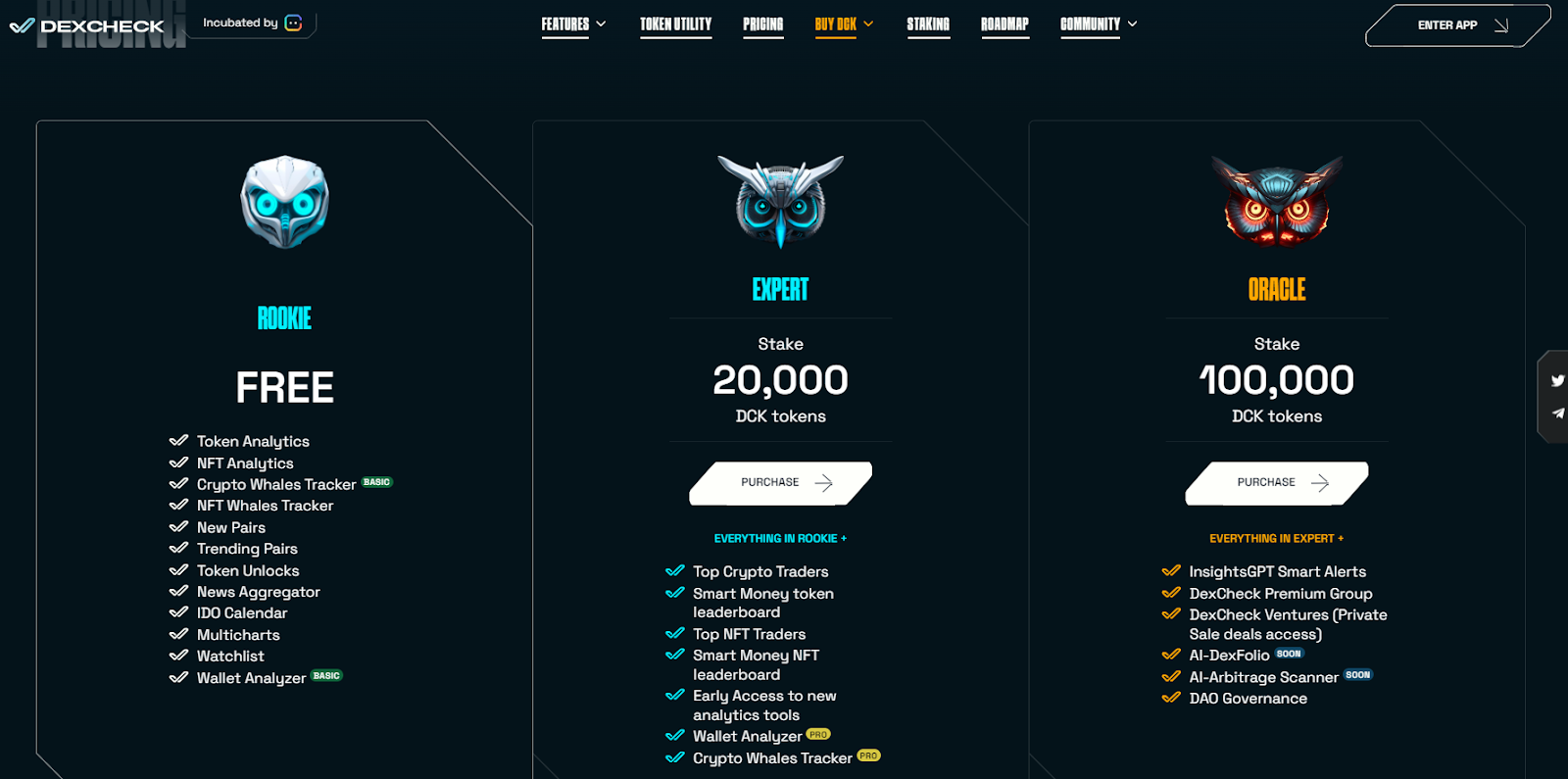
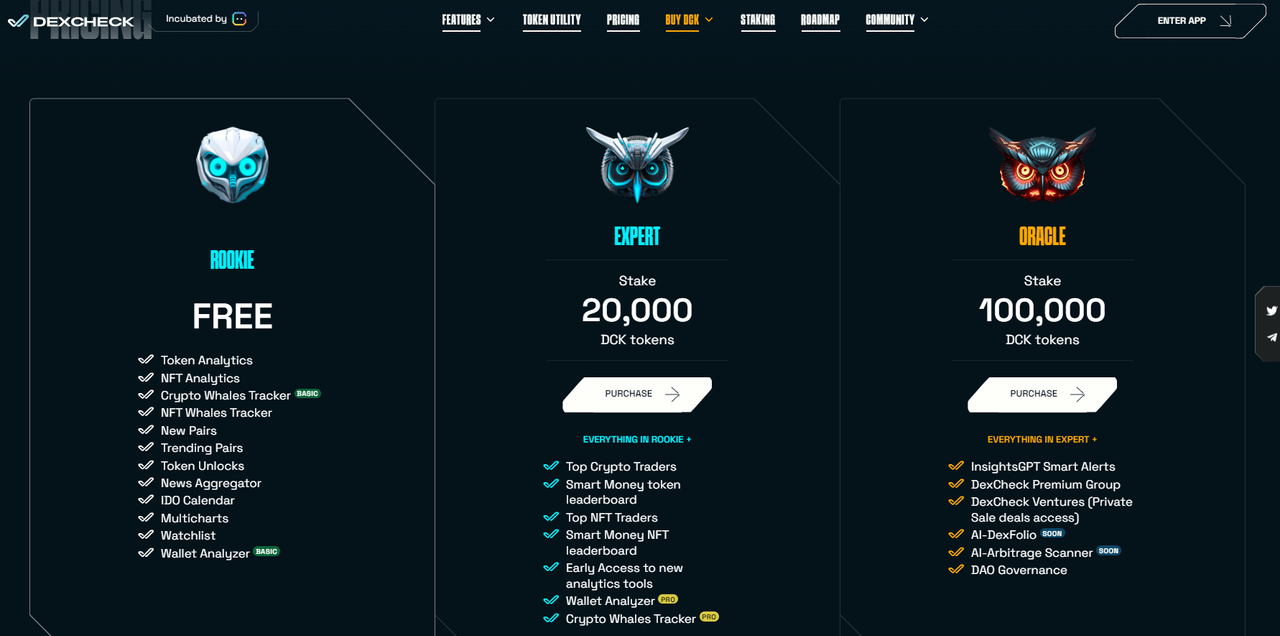
Staking the DexCheck token qualifies you for numerous benefits on the platform. One of these benefits is access to special applications according to the tiered provisions. Note that you only need to stake your tokens to qualify for these benefits. Staking at least 20,000 DCK tokens allows you to enjoy pro traders’ features.
This includes access to applications like InsightGPT and top traders analytics. Staking the DexCheck token also gives you access to the IPSO and allows you to participate in the revenue-sharing program.
IPSO is DexCheck’s launchpad which is open to stakers only. Stakers are given the opportunity to invest in new projects before they launch. The revenue-sharing program allows stakers to benefit from the platform’s financial success.
Passive Income Opportunities
DexCheck offers income opportunities to holders of the DCK token through staking programs and yield-farming opportunities. The on-chain staking program offers APY of up to 35%. APY varies according to the selected lock-up period which could be up to one year.
DexCheck also partners with centralized exchanges to host staking programs for investors. the recent staking program in partnership with Kucoin offers investors up to 100% APY for staking their tokens on the exchange. Liquidity providers for the DexCheck token trading pairs on decentralized exchanges also earn from the trading fees paid by other traders. The revenue-sharing program is also a good income opportunity presented by DexCheck.
Governance
The DCK token also plays a role in the administration of the project, DCK holders, through the DexCheck DAO can vote on proposals concerning the development of the project. Through the DCK token, DexCheck tokenizes the governance of the project, this makes for decentralization at every level. DCK token holders can vote on proposals related to platform upgrades, fee structures, token burns, and other important decisions. Holding the DCK token gives you a say in the project you are invested in.
Intrinsic value investment
The value of the DexCheck token fluctuates over time. Investors bet on the possibility of the token’s value appreciating over time according to market conditions and the project’s fundamentals. While market conditions are unpredictable, projects with strong fundamentals are known to grow over time. DexCheck has solid fundamentals the token’s value has been in appreciation for a majority of its existence. In addition to the utilities mentioned above, holding the DexCheck token can also return tangible value to investors. Investors can decide to hold the tokens and trade them in when the value grows or commit them to any of the passive income programs for extra benefits.
Closing Thoughts
Click here to see active trading pairs for the DexCheck token. We have discussed a few benefits of holding the DexCheck token. These are accurate at the time of writing. These benefits could improve as the project continues to grow, but it is also important to note the risks of investing in crypto assets. It is recommended that investors do proper research before purchasing any crypto assets. Also, note that this article is not financial advice.
DexCheck is empowering cryptocurrency investors to make informed decisions in their routine investments. By making actionable data available at every trader’s fingertips, DexCheck hopes to improve the recorded success rate for cryptocurrency investments. In a space as volatile and challenging as this one, this is for sure a tasking goal. I have made a number of reviews of the different applications in the DexCheck ecosystem. The telegram bots and the wallet analytics applications are at the top of my list, but there is still a whole lot to discover.
The Telegram bot and most of the analytics applications are free to use, technically, all applications in the DexCheck ecosystem are free to use. However, the pro features will require you to stake some DexCheck tokens. By staking the DexCheck token, you also get to enjoy tons of staking benefits in addition to gaining access to the Pro features. There are two tiers, expert and Oracle. To enjoy expert features, you will need to stake at least 20,000 $DCk. The Oracle tier is the most advanced tier and gives you access to every feature on the platform. The required stake to enjoy Oracle benefits is 100,000 $DCK. At current DCK token prices, this is about $2000. You can purchase DCK tokens from Kucoin, PancakeSwap, and MEXC exchange. Click here to enter the DCK staking portal
Here are some pro traders’ features you are missing out on
InsightGPT
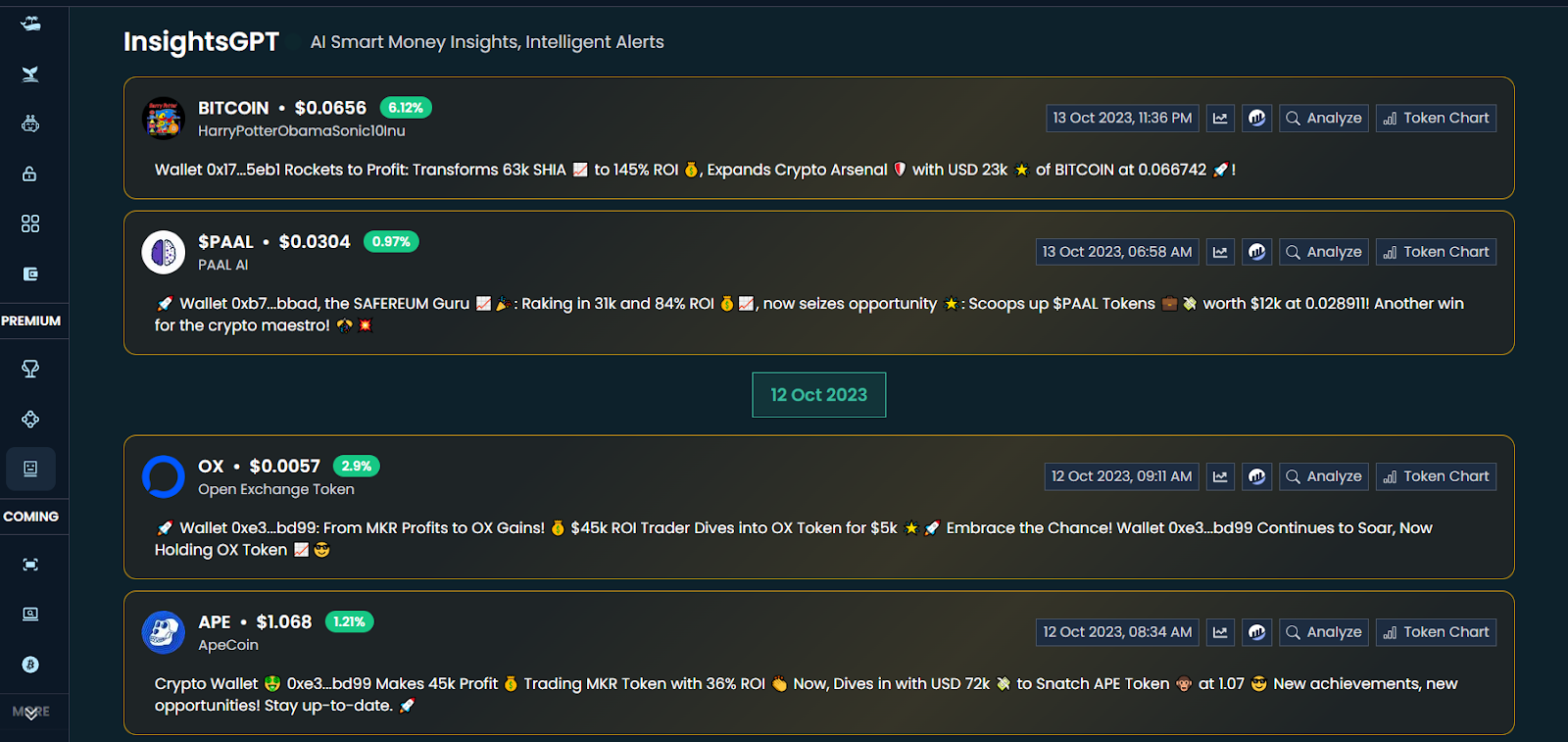
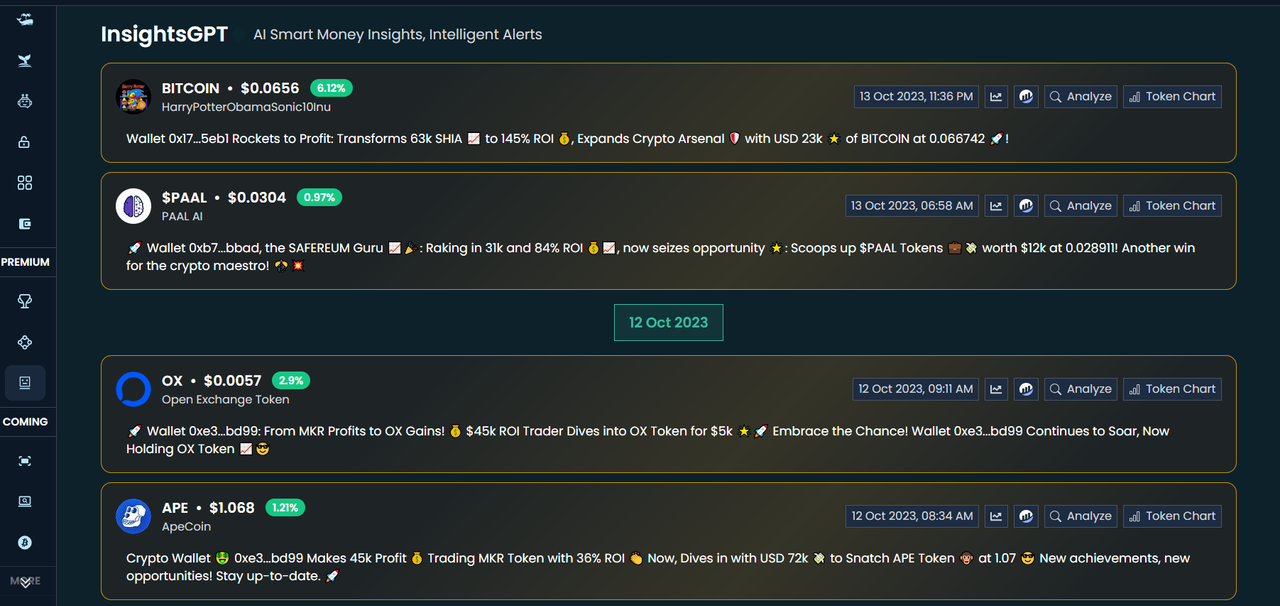
Insight GPT is DexCheck’s flagship AI-powered investment tool. It is only available to pro traders and packs a lot of powerful data-driven analytics for every investor. Under the hood, InsightGPT is a data-sourcing machine that is designed to collate related data and analyze them into presentable information in single sentences. It leverages the ‘Smart money’ feature which is also available on DexCheck. Smart money is a collation of top traders for specific crypto assets. InsightGPT proceeded to apply an algorithm to analyze these data. For instance, if two traders featured in the smart money list buy the same assets, then the asset is deemed a potentially profitable one. InsightGPT proceeds to notify Pro traders of this transaction in plain words. An InsightGPT data presents a brief summary of the trader’s records and an insight into their most recent trades.
An insightGPT alert takes this form,
For any trader, this takes up the bulk of their copy trading process and gives them ample time to follow up with the most experienced traders in the market. InsightGPT combines the functionalities of wallet analytics and whale tracker applications and employs artificial intelligence algorithms to develop a compact data machine. The Artificial Intelligence arm of insightGPT is schooled on the best trade moves and the core signs of an experienced trader. Just like most other AI-powered applications, InsightGPT is in evolution. While the current stage is quite impressive, it will be interesting to see how the DexCheck team hones the application to adapt to even newer trading moves.
How to use InsightGPT for your trading.
Click here to access the application on the DexCheck Platform
The InsightGPT interface is real-time and newer information is shown as soon as the application detects, you can follow up on a specific trader or simply screen through the sniped addresses.
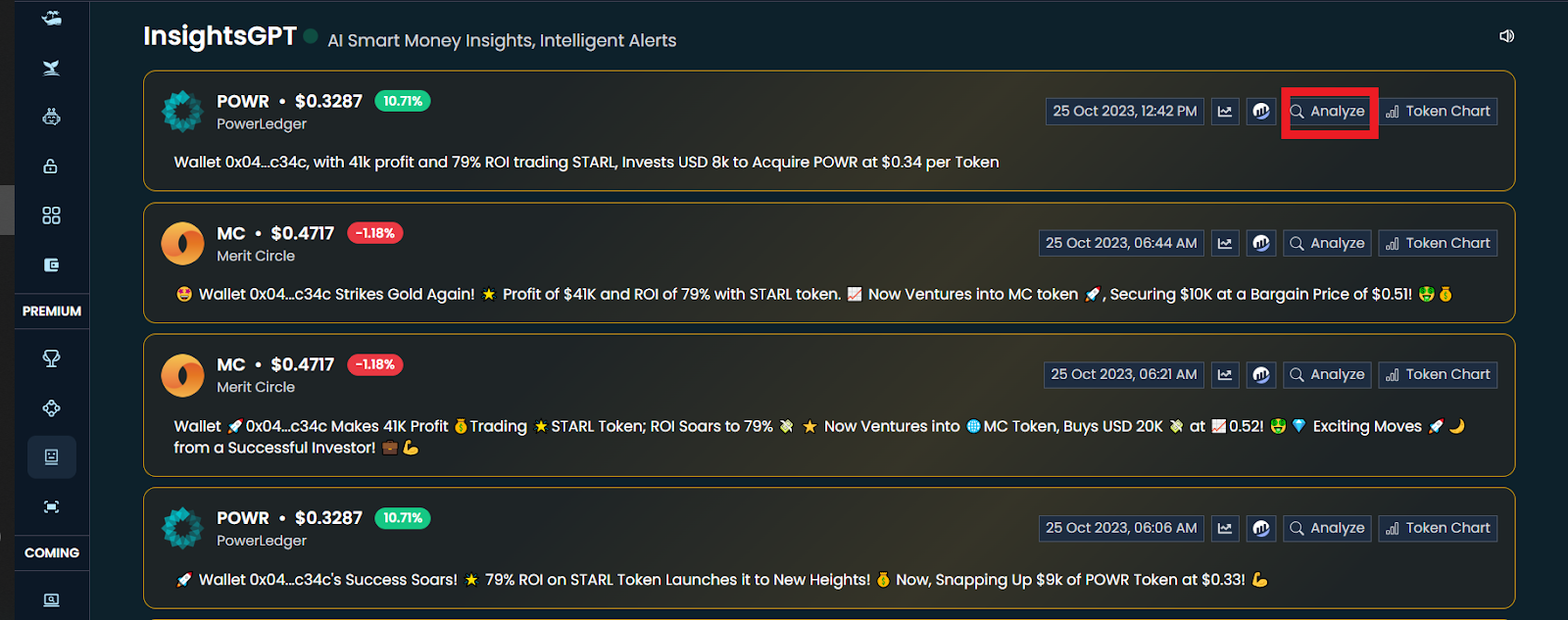
You can also run analytics on a trader that interests you. To do this Click Analyze from the top right corner.
This takes you to the Wallet analyzer interface for the address. Here’s how to navigate the wallet analyzer interface;
How to use the Wallet Analyzer.
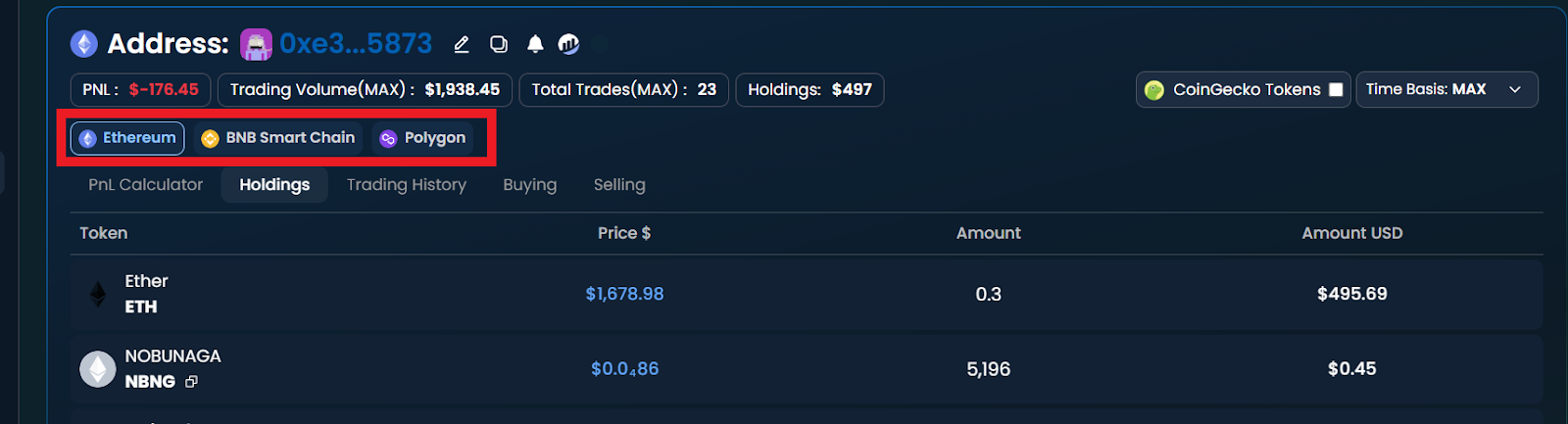
First, the network section presents a list of blockchain networks where the address is active.
You can navigate to the different networks by simply clicking on them. The analyzer presents information for the selected network Only.
On the Top section of the wallet analyzer page, you can see the calculated PnL for the address, the total volume of trades made on the selected network, and the total value of the asset in the wallet’s custody.
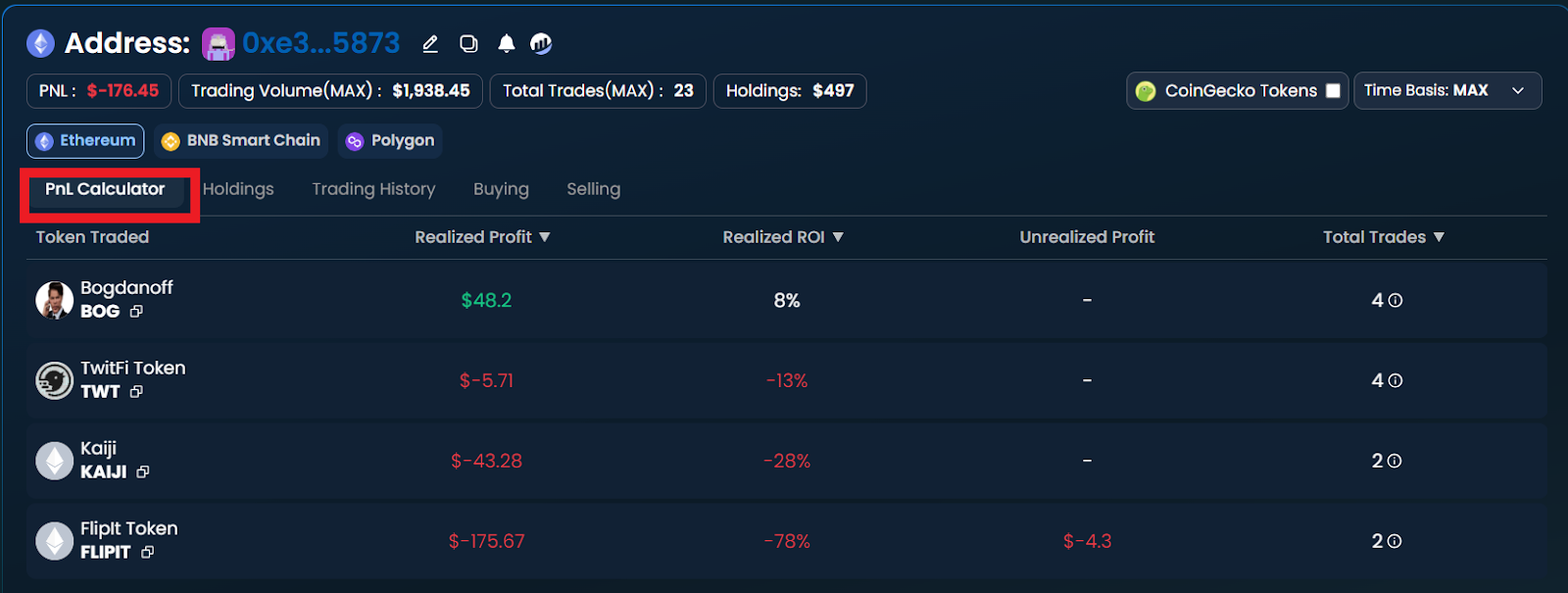
The page usually opens to the PnL calculator, otherwise, navigate to the PnL section by clicking PnL calculator from the options in the left corner.
The PnL page presents the profit and loss the address has across different trades on the selected network. You can see a detailed breakdown of each trade and the profit or loss generated for the trade(s)
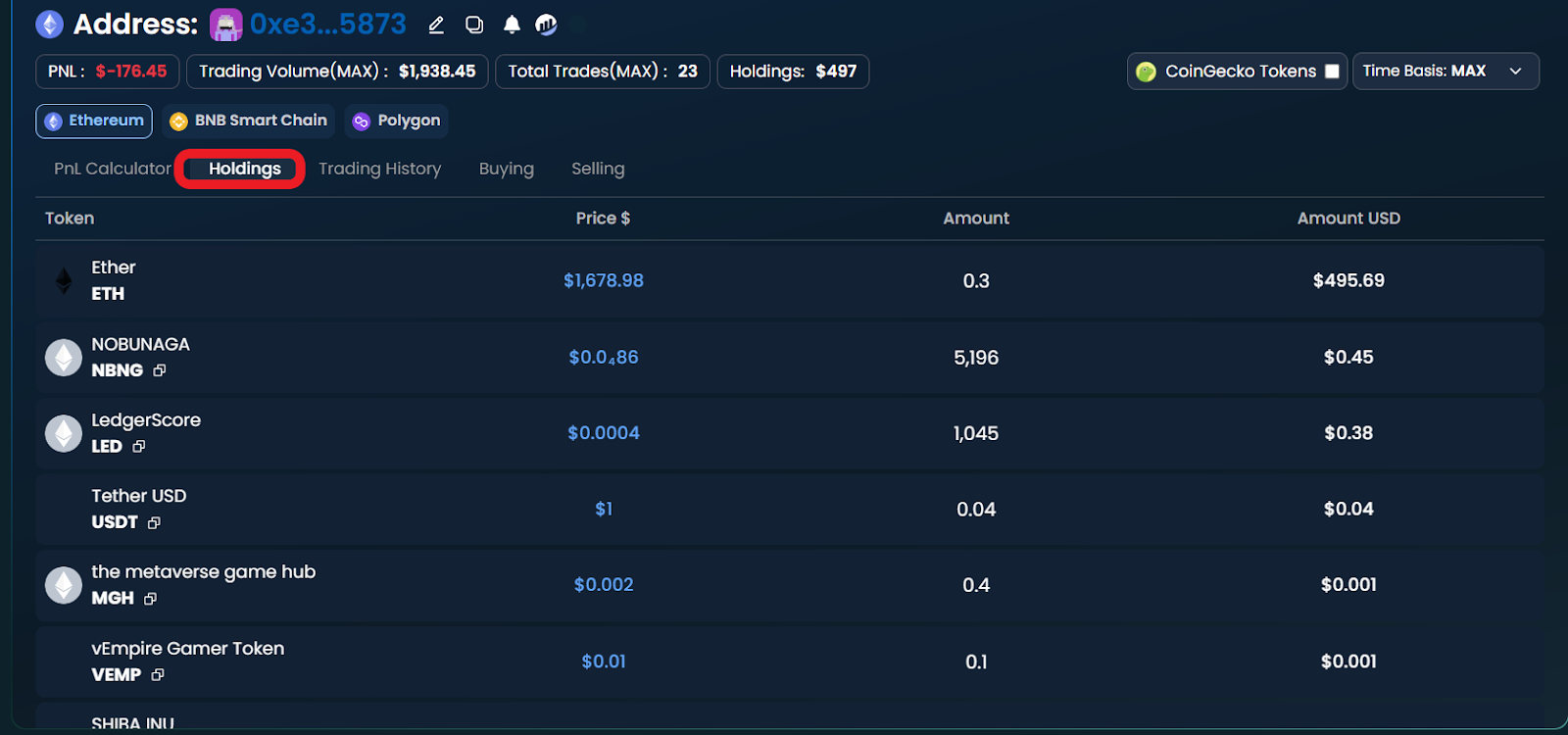
To see a breakdown of the assets in the trader’s custody, click Holdings from the menu to navigate to the Holdings section. Here you will see assets the trader is invested in. if you wish to limit the presented assets to assets listed on Coingecko only, check the box next to Coingecko Tokens in the Top right corner.
The Trading history, the Buying, and the Selling section show a further breakdown of trades by the wallet. You can navigate to these sections to obtain detailed information on the separate transactions.
Setting up a notification
You can set up notifications to follow a wallet closely. The Notification feature is a function of the DexCheck Telegram wallet-checking bot.
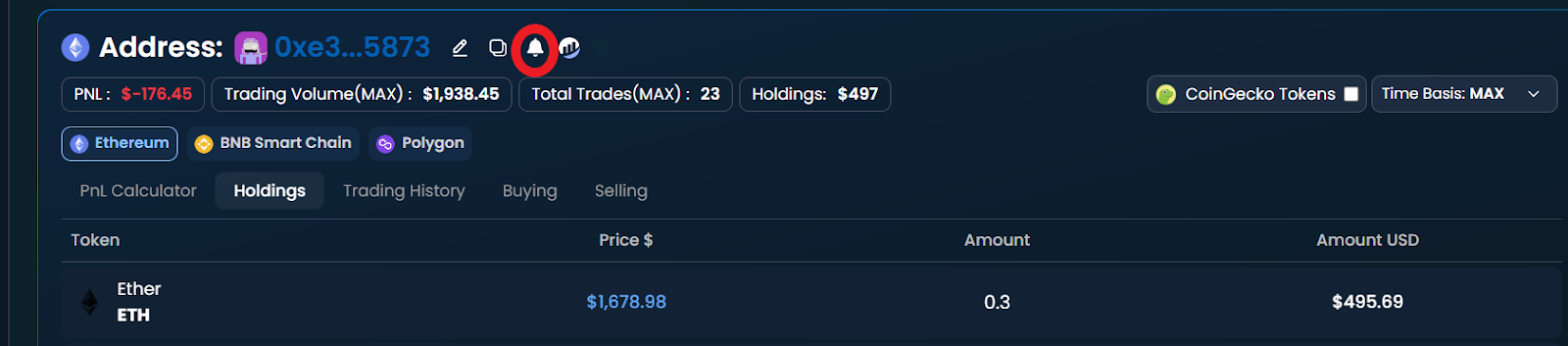
To use this, click the bell icon from the top section, beside the wallet address.
This should immediately open your Telegram messenger or request permission to open the Telegram messenger.
You can now set up a notification for the wallet and get a push notification on your device when the wallet makes a trade.
SmartFolio
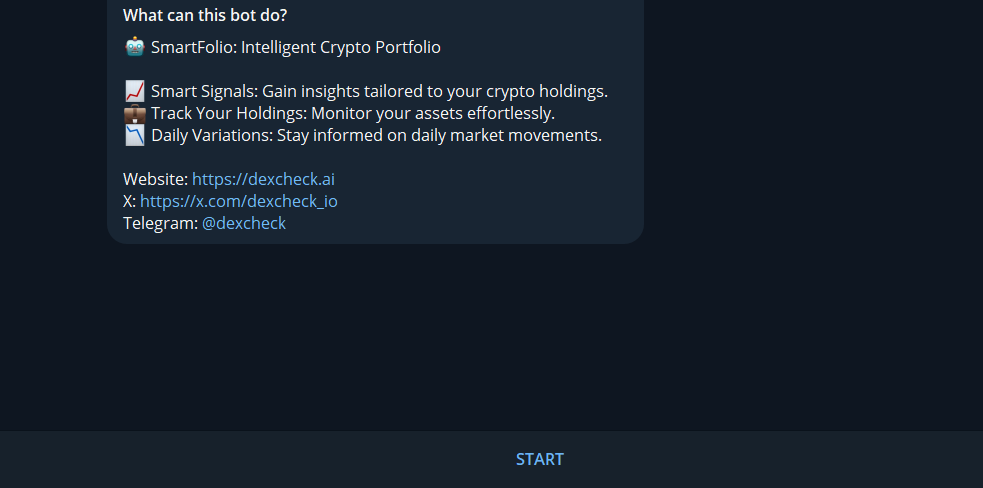
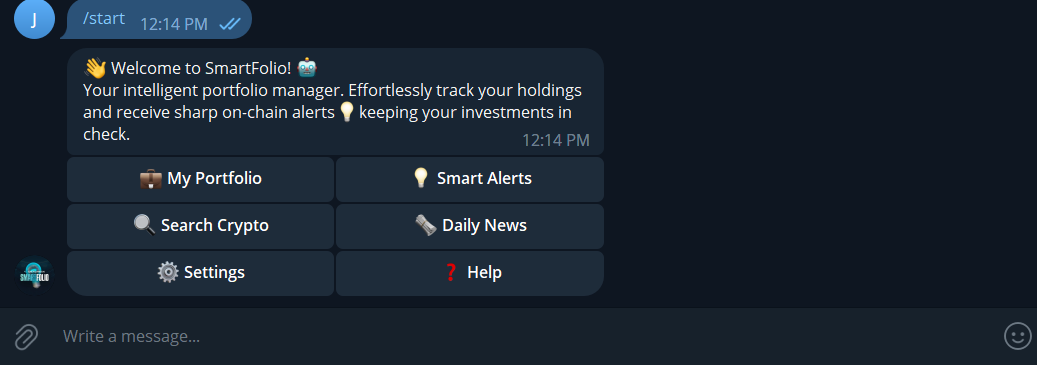
Smartfolio is your intelligent portfolio manager and investment assistant, it is a Telegram bot that helps you track your investments and updates you with signals and price movements as it concerns assets in your wallet. You can integrate your wallet into the bot or manually add the assets you are invested in.
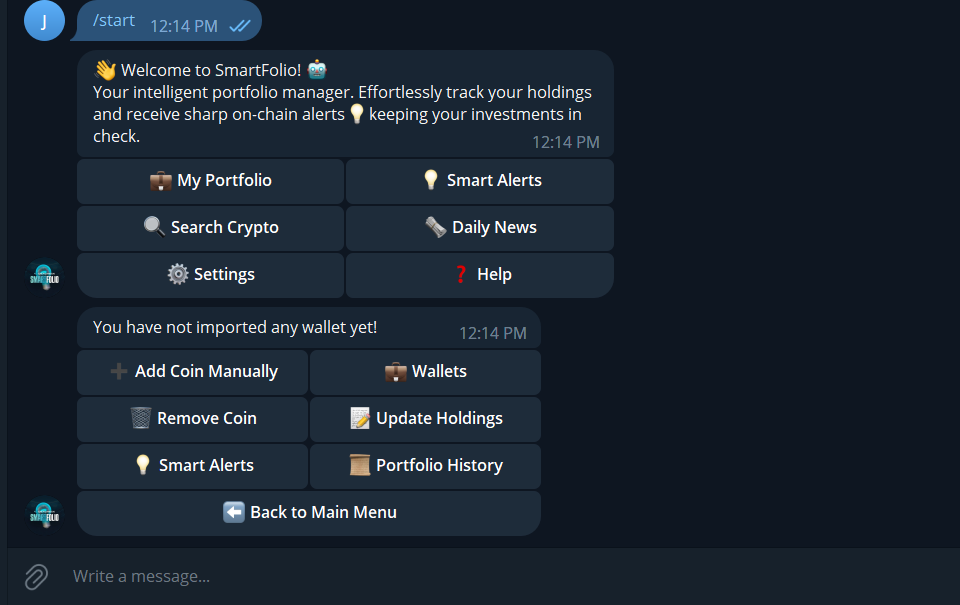
Here’s how to manage your portfolio using the Smartfolio Bot
This returns a message with an option to import your wallet or track the asset manually
To track assets manually, click Add Coin manually.
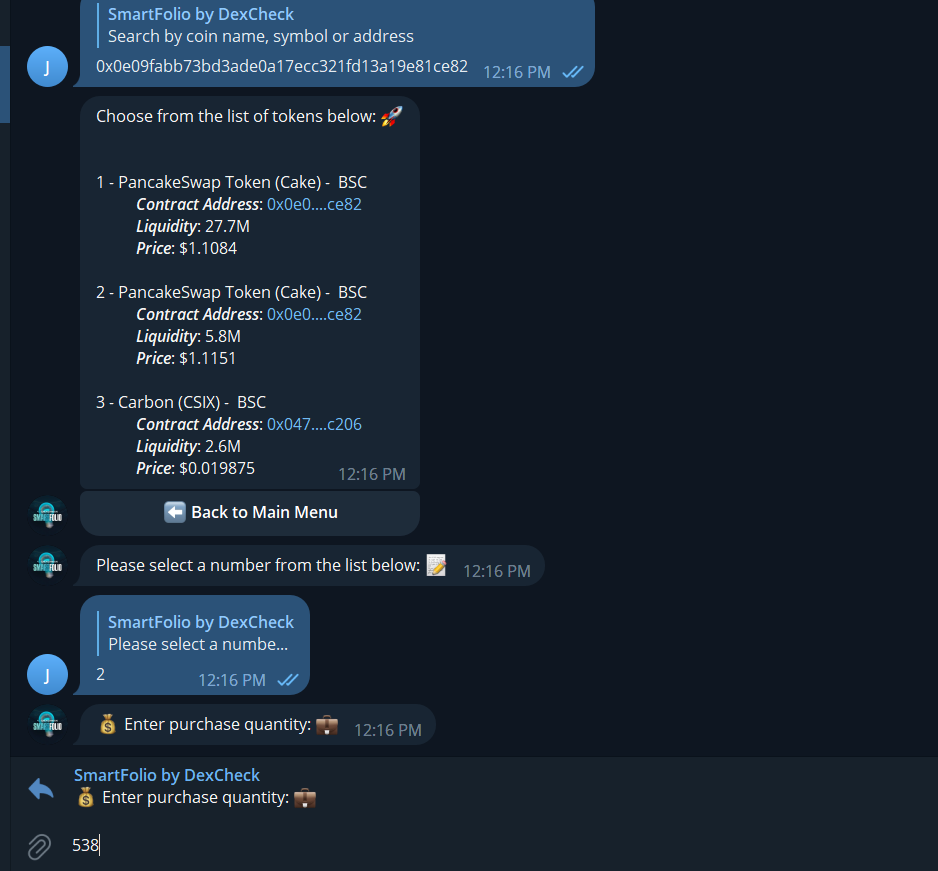
Enter the Smart contract address or the name of the coin you wish to track
The Bot presents a list of similar assets, Choose a line number that applies to the asset you wish to track
Now enter the amount of the asset you own. Send to complete.
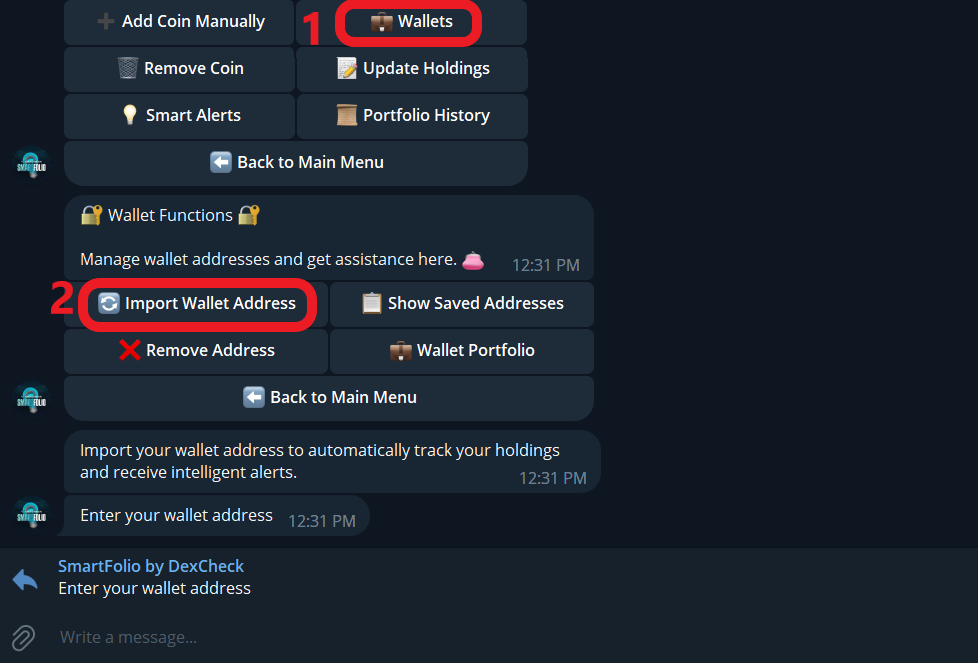
To add import your wallet,Click Wallets from the menu.
Click Import Wallet address to continue
Enter your wallet address and send
The bot now tracks the assets in your wallet
Click My Portfolio from the Main menu to see assets
To set up an alert
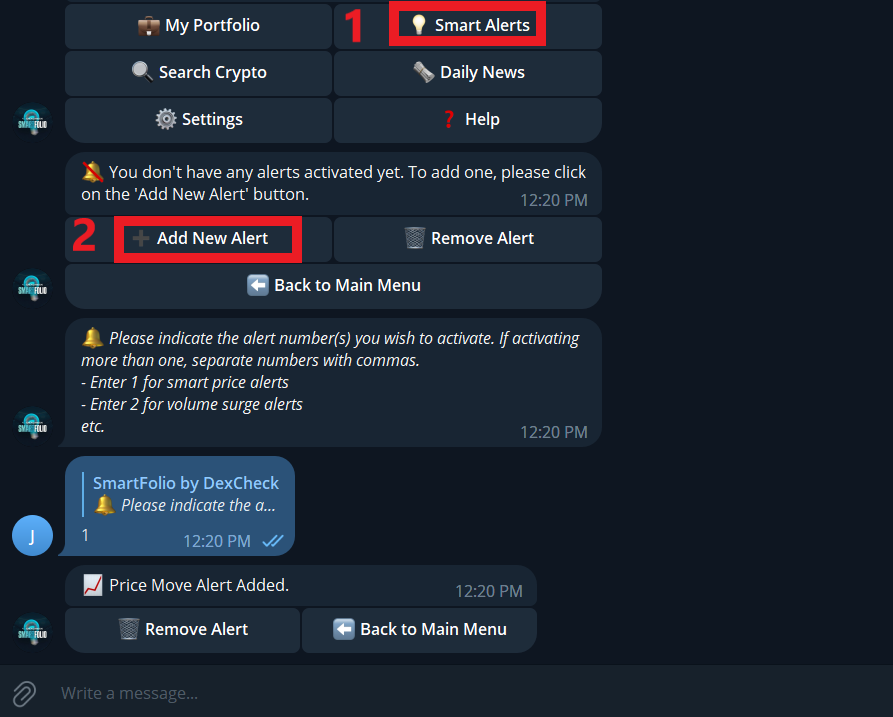
Click Smart Alerts from the main menu
Click Add New Alert.
Enter the line number for the alert you wish to set.
You will receive alerts as it applies to your choice.
Top traders (for fungible tokens and NFTs)
The top trader’s features are another quite interesting application available to pro traders only. Like InsightGPT, it is a data-driven machine as well, however, it gets quite interesting. Instead of presenting the data on interesting trades separately, the top traders’ feature collates high positive PnL traders and traces these trades down to the maker, then it runs a calculation on the total profit and loss generated by the trader. It then shows on the interface, the traders with the highest gains over a specific period of time. This feature is flexible, you can adjust the timeline for the calculations and filter your searches to narrower data. The Top Traders application (for fungible tokens) supports over 20 blockchain networks and 30 decentralized exchanges
The interface is quite intuitive and also has a link to the wallet analyzer to allow you to perform deeper studies on the trader.
Here’s how to use the top traders feature (for fungible tokens)
How to Identify Top Crypto Traders Using DexCheck
Click here to navigate to the Top Traders application.
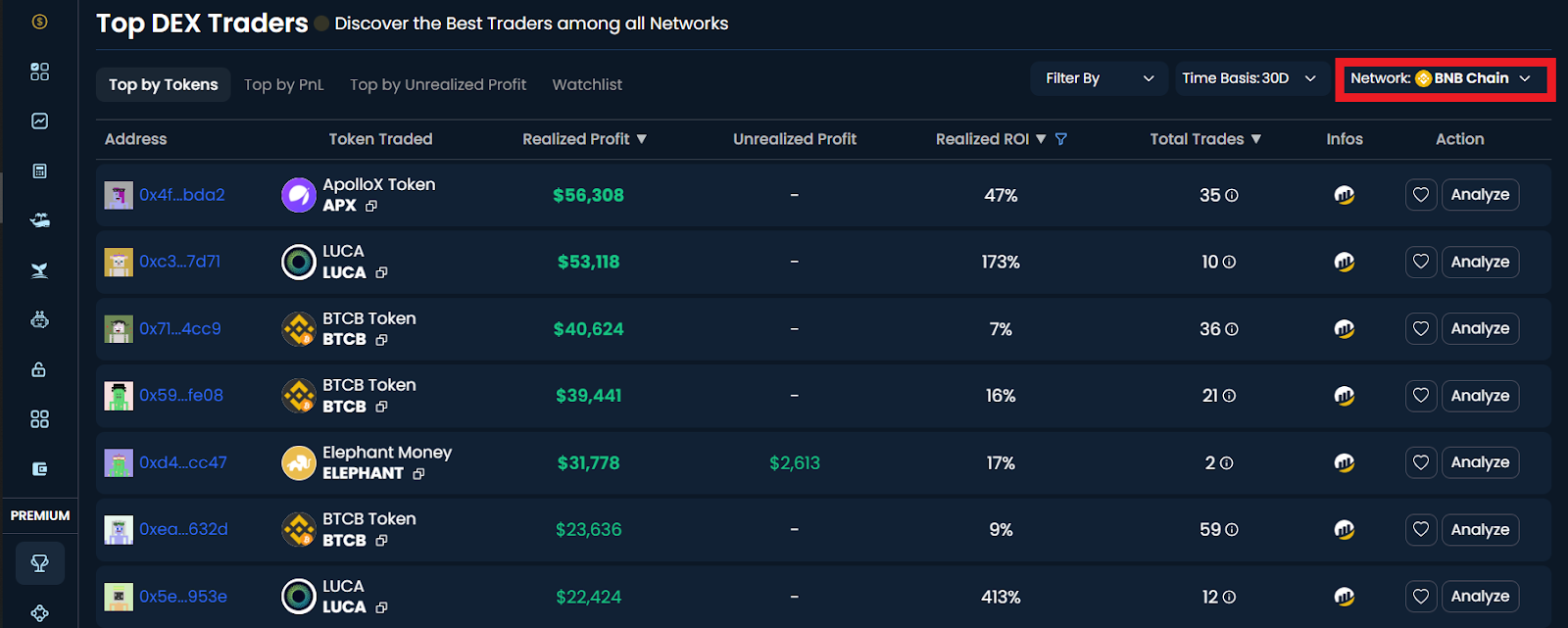
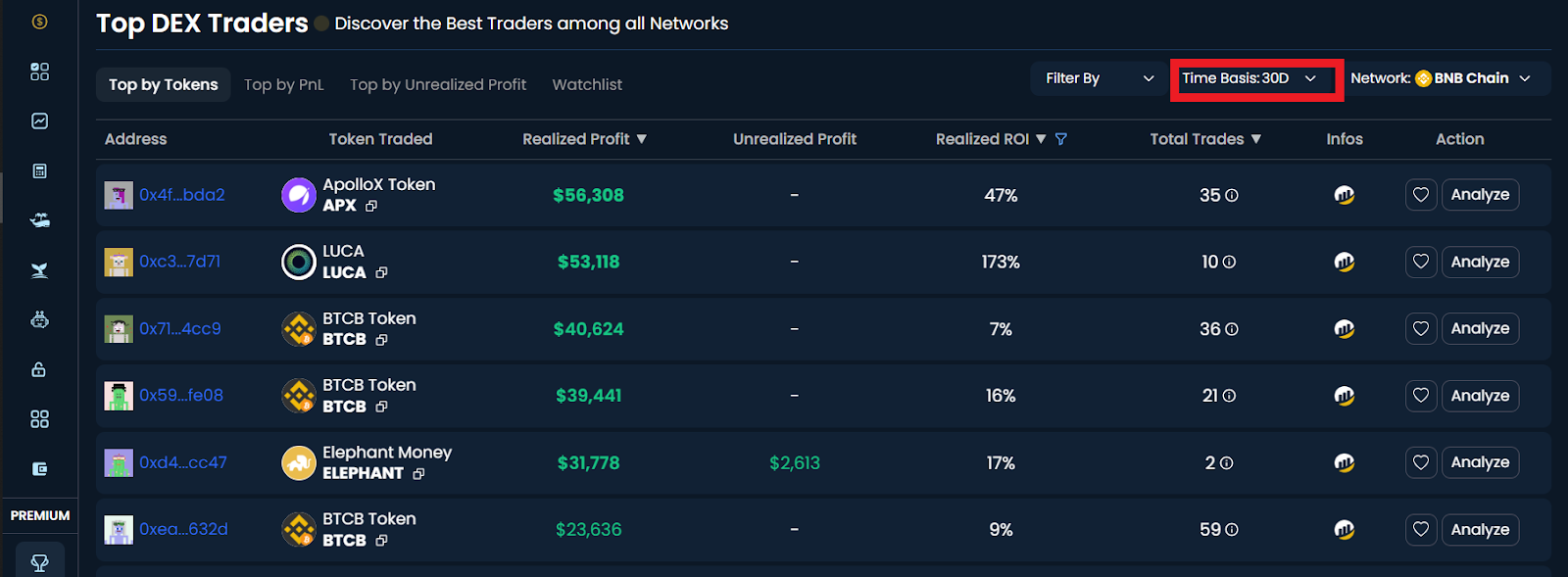
The list is set to a specific network, Click the Network section from the top right corner to select a desired network.
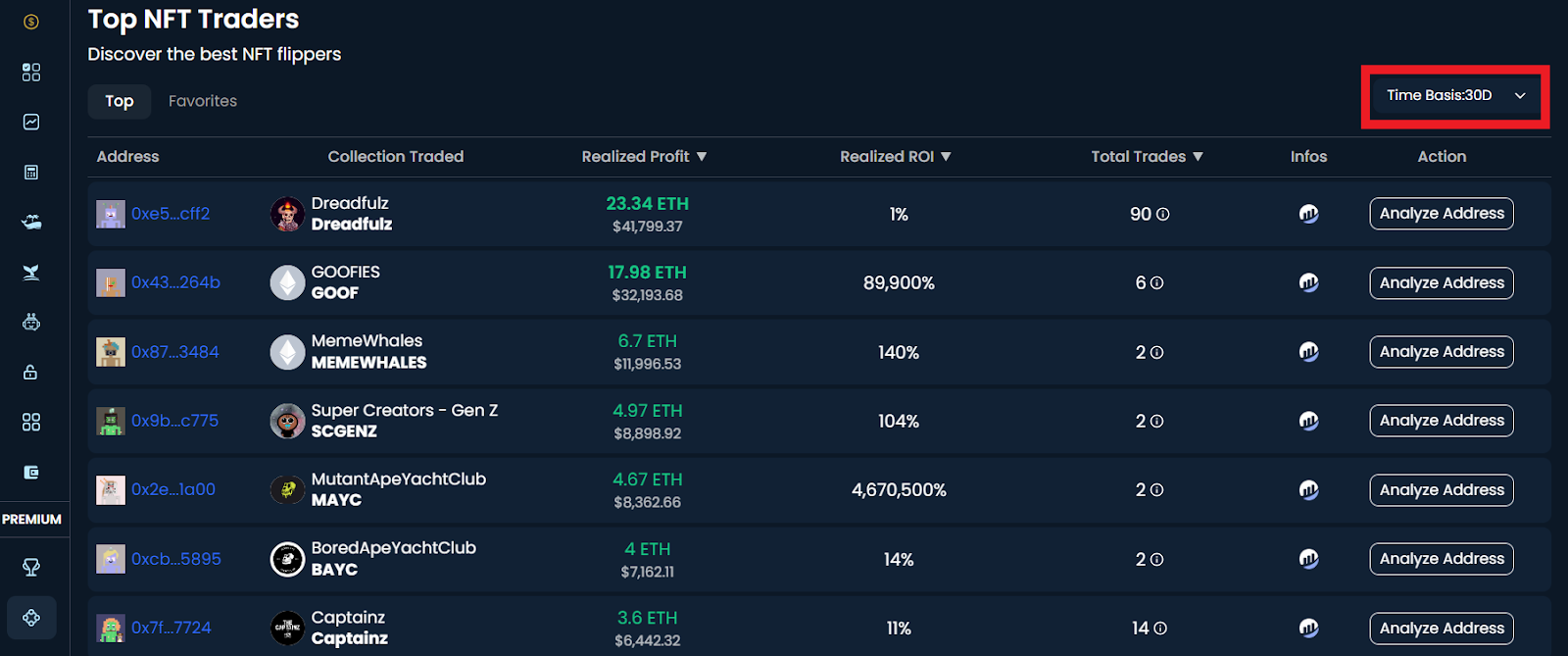
You can now see the list of traders with the most successful trade on the network. This is initially set to 30 days period.
To change the period, Click on Time Basis, you can set it to 7 days or 24 hours.
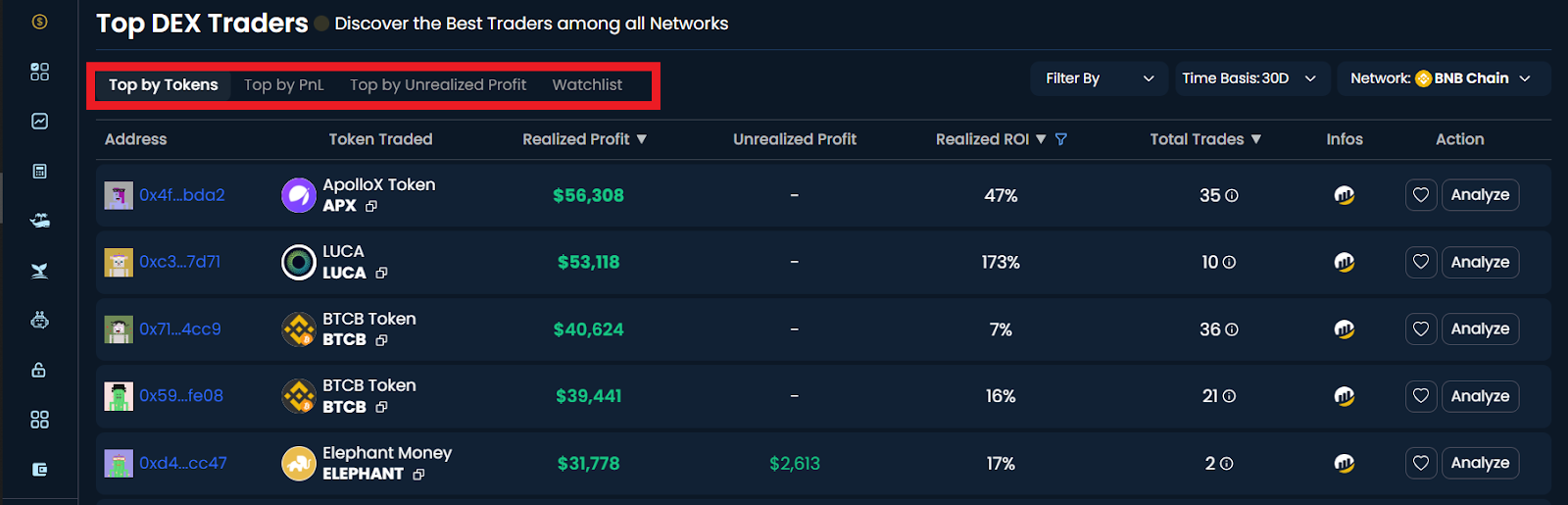
You can also arrange the list according to the Traders’ PnL and unrealized profit. Click on any of these as shown above.
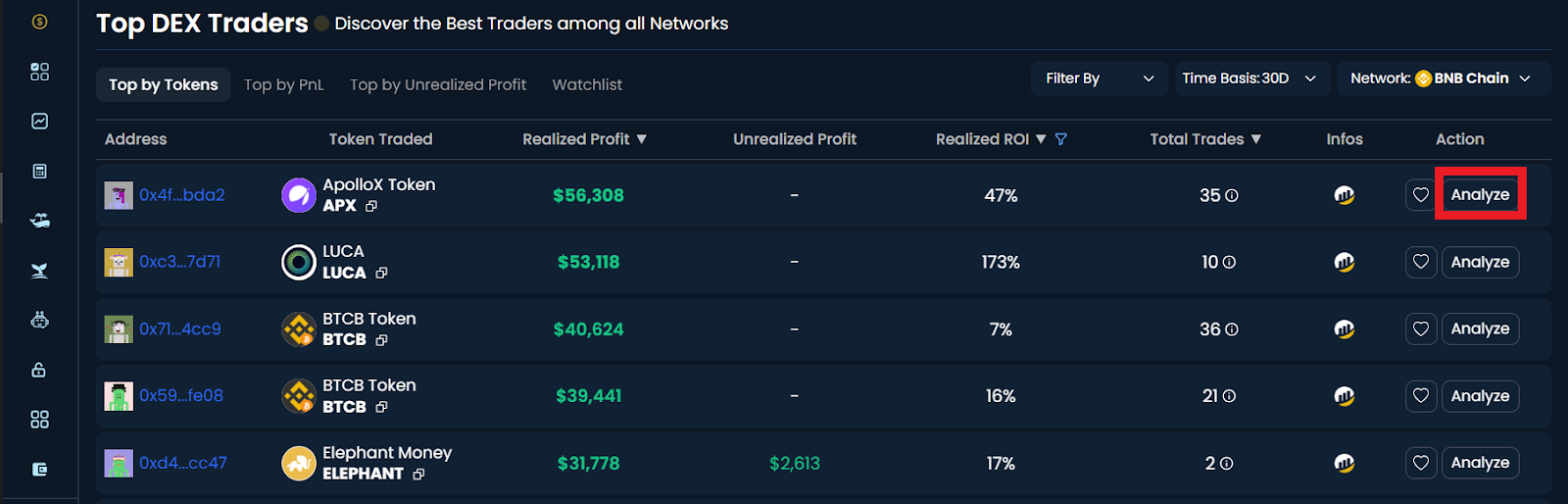
To run a deeper analysis on the wallet, Click Analyze from the right corner to access the wallet analytics page for the address. Follow the wallet analyzer guide above to navigate through the wallet analyzer interface.
How to Identify Top NFT Traders on DexCheck
Flipping an NFT for some profit isn’t really as easy as it appears, but some popular NFT traders have mastered this trade and constantly print profits in their NFT trades. As a newbie and regardless of your expertise in the sector, following up traders with a recurring record of profitable trades can improve your performance as well. With the DexCheck Top NFT Traders application, this is much easier.
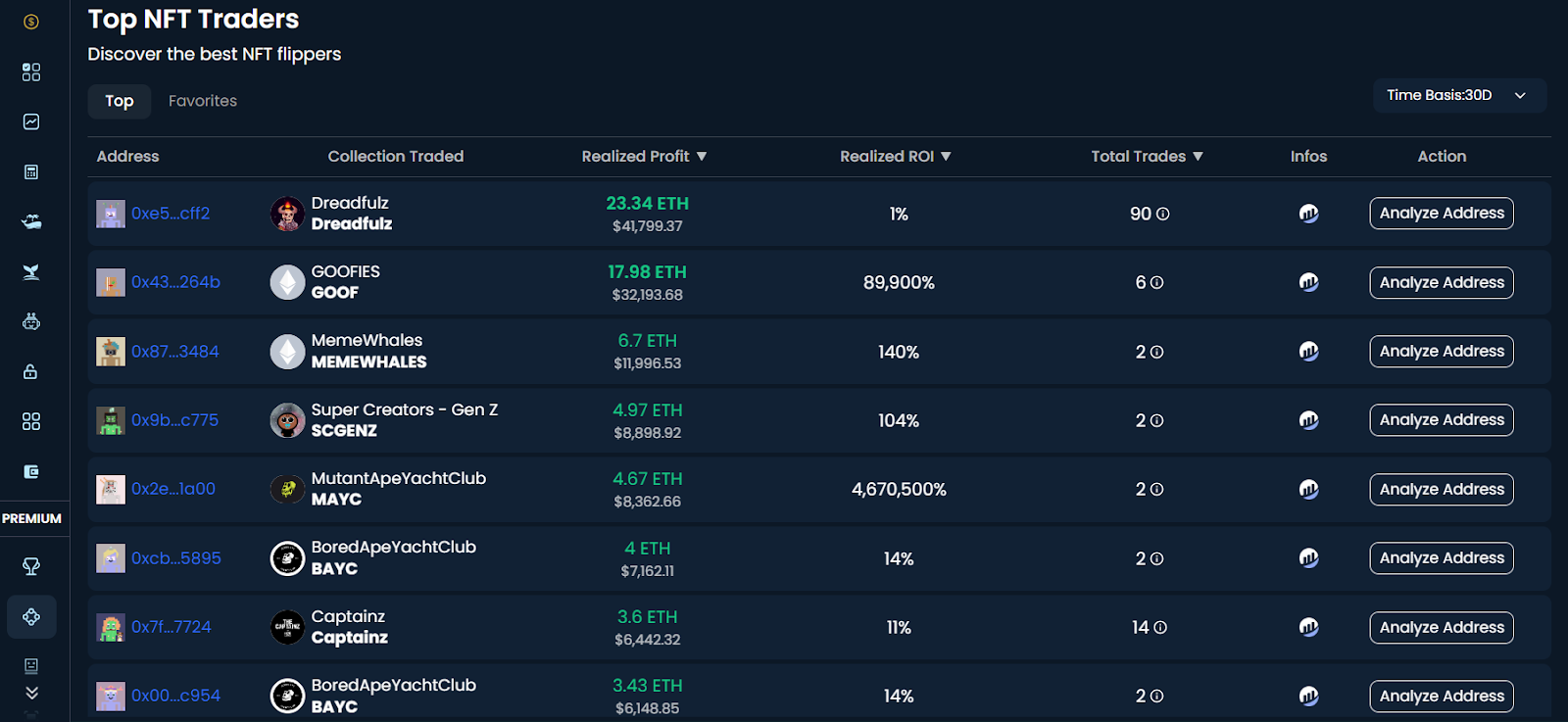
The Top NFT Trader application works in a similar fashion as the Top Crypto Traders application, but it tracks NFTs instead. Also, the Top NFT Traders application only supports the Ethereum network at the time of writing.
The landing page lists NFT traders with the most profits in a period of time. Click the duration box in the top right corner to change the duration.
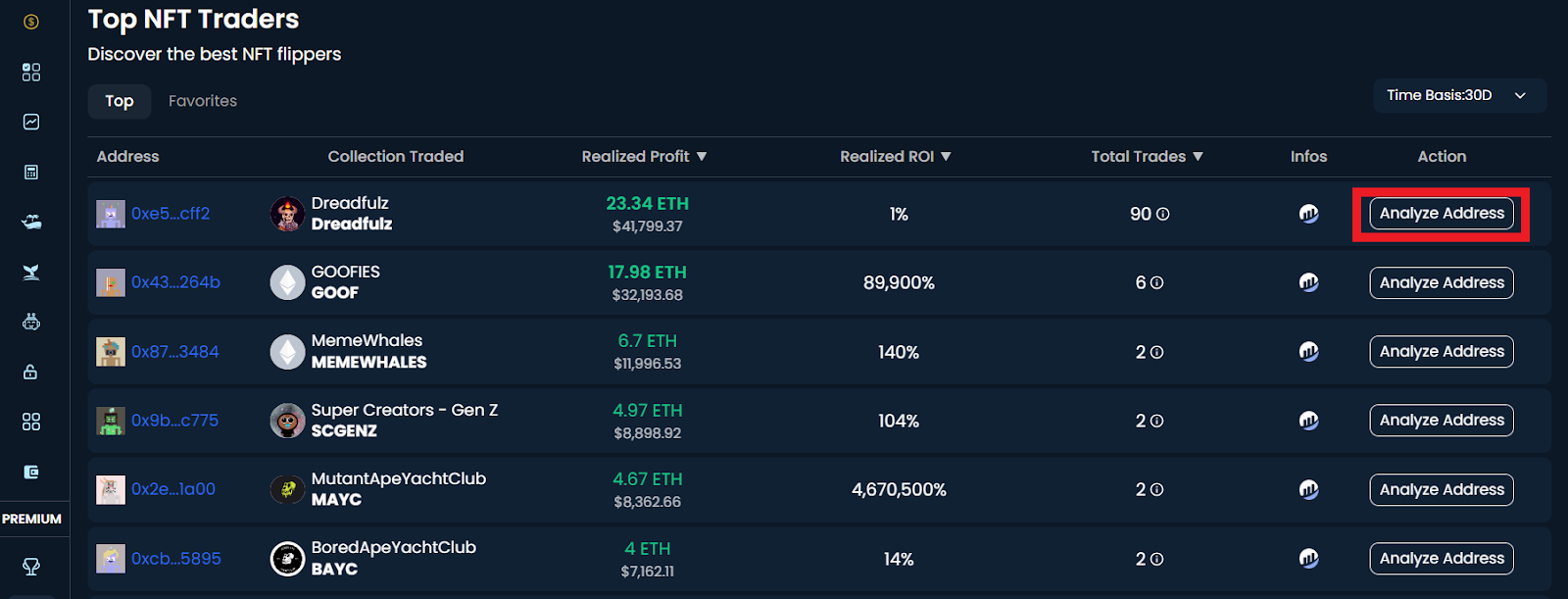
To run a deeper analysis on any of the traders, click AnalyzeAddress from the top right corner.
The wallet analytics page for NFT traders is similar to that of crypto traders. Refer to the wallet analyzer guide above to navigate through the wallet analyzer interface.
Closing Thoughts
We could see traders raving about insightGPT, this is quite understandable, the lead it gives the everyday trader is handy, but the underlying technology is even more impressive. It is likely that we see this tool develop into a more capable application. However, the Smartfolio comes close in terms of utility. By being integrated into the telegram messenger, it delivers its role perfectly. Still, one to keep tabs on as the project develops. The Top Trader feature might also fall down the pecking order as InsightGPT continues to evolve. Either way, it is still a handy tool.
The point here is, looking at the utilities of the pro trader features and how accessible they are, every trader should consider trying these out. Even better, newer features will be available to pro traders.
We have covered a few aspects of DexCheck from the technological point of view. Check out some of these articles
Alright, I get it; investing in a promising low-cap crypto project is a no-brainer and everyone knows this. So I guess you are wondering why I am making a fuss about this. But DexCheck is actually a bit special to me. The feeling is the same as when I bought Fantom (FTM) at $0.003 in 2019. I’ll save the long story for whenever.
I stumbled on DexCheck while researching cool low-cap crypto projects to invest in since the whole market looks like a black Friday discount right now. The potential for the $DCK token to moon in the near future is there, but the technology, the community, and the team (of course!) are what impressed me most. I’ll put an early disclaimer, this is simply a review by an impressed user and not financial advice. Having said that, I’ll reiterate the positive impression the application has left on me.
If you wonder what DexCheck is;
DexCheck is an investor’s best friend. It is a suite of investment utilities powered by Artificial Intelligence (AI) and blockchain technology. DexCheck utilities range from deep asset analysis to expert investment suggestions backed by strong data. With an integrated decentralized exchange powered by Kyberswap, DexCheck lets you implement your analysis by making a sale or purchase. It offers a full suite of trading utilities and tops it off with a Revenue sharing program that offers passive income opportunities to top users and community members.
Sometimes I’m not so good with words and I admit that this description is a bit shallow. I will take these features one after. First, from my experience so far, DexCheck truly works!
I subscribed for a DexCheck Oracle account that allows me to enjoy all of the available privileges. To subscribe for a DexCheck Oracle account, you only need to stake 100,000 DCK tokens (luckily this costs less than $2500 at current token price!) and enjoy staking rewards as well!
Free-to-use DexCheck utilities include Token Analytics, Whale tracker (For NFTs and Fungible tokens) and the Token unlock features.
For traders who take the vesting schedule of assets into consideration before investing, the Token Unlock feature details the vesting scheme for every token. You can now see when the next big supply is getting released with a single click. The DexCheck Whale Tracker.
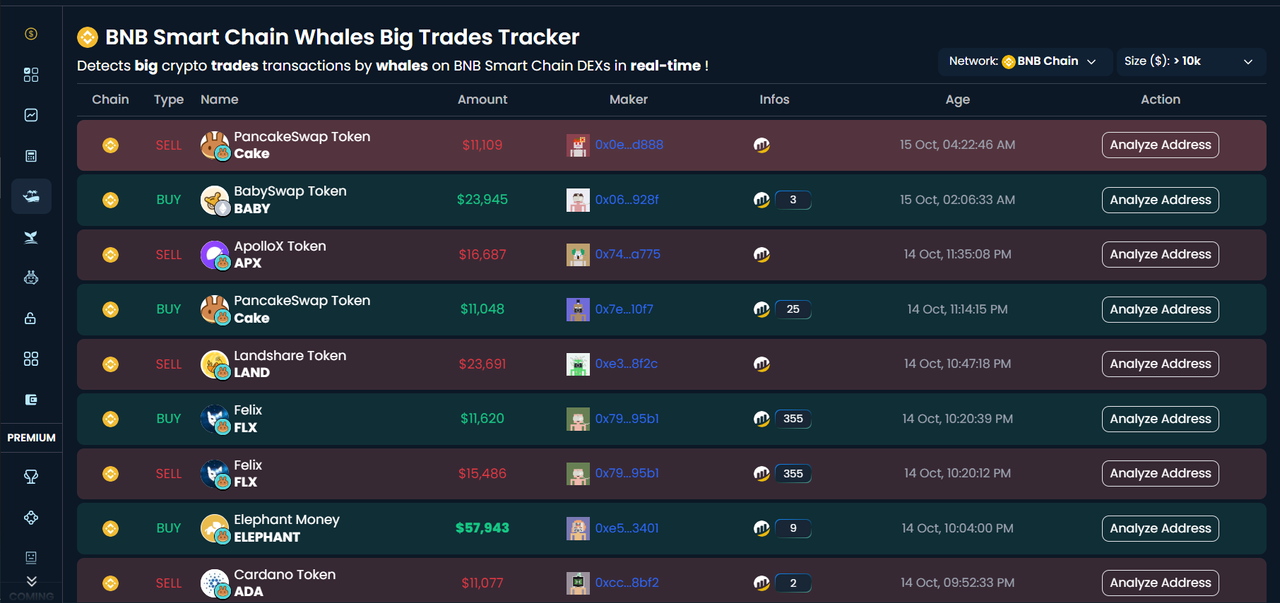
I’m particular about the DexCheck Whale Tracker! The Whale Tracker screens through decentralized exchanges to detect huge transactions and the wallet behind these transactions. It offers a one-click access to a full analysis of the wallet. Considering the prevalence of whales in the crypto space, this is a must-have. I snipped up a couple of giant PancakeSwap and Uniswap Whales with realized PNLs of over $150,000 and set up an alert on their trades. This takes the bulk of my Whale watching duties!
Trading Features for Pros!
The upgraded version of the Whale Tracker feature is available for pro traders. The Top Traders feature screens through Dexes and NFT trading platforms to detect wallet addresses with the highest ROI on trades. Using the top traders feature lets you see what the best traders are trading and how much they commit to their trades. This is available for NFTs and Fungible tokens as well. Alright, I’ll get to my favorites, the Telegram bot and DexCheck’s trademark insightGPT.
InsightGPT: In-depth Trading Analytics powered by Artificial Intelligence!
In case the whale trackers and the Top trader’s features don’t cut your workload enough, insightGPT is what you’ve been looking for! InsightGPT is a next-level automated trading analytics application. According to DexCheck, InsightGPT leverages Artificial Intelligence to analyze vast data in real-time, enabling it to provide actionable insights. InsightGPT offers smart money alerts and details on winning traders.
InsightGPT is your loyal transaction and big operation sniper! The dashboard is an all-around optimized interface that allows you to get regular delivery of interesting moves for specific tokens and take prompt action, you can quickly follow the featured wallet to get an alert when the trader moves again.
For most, InsightGPT is an advanced version of the wallet tracker and the top trader feature, but it is actually a way to augment the two. It combines the core functionalities of the two applications but the best trading will be made by the trader that is able to fuse the three utilities together.
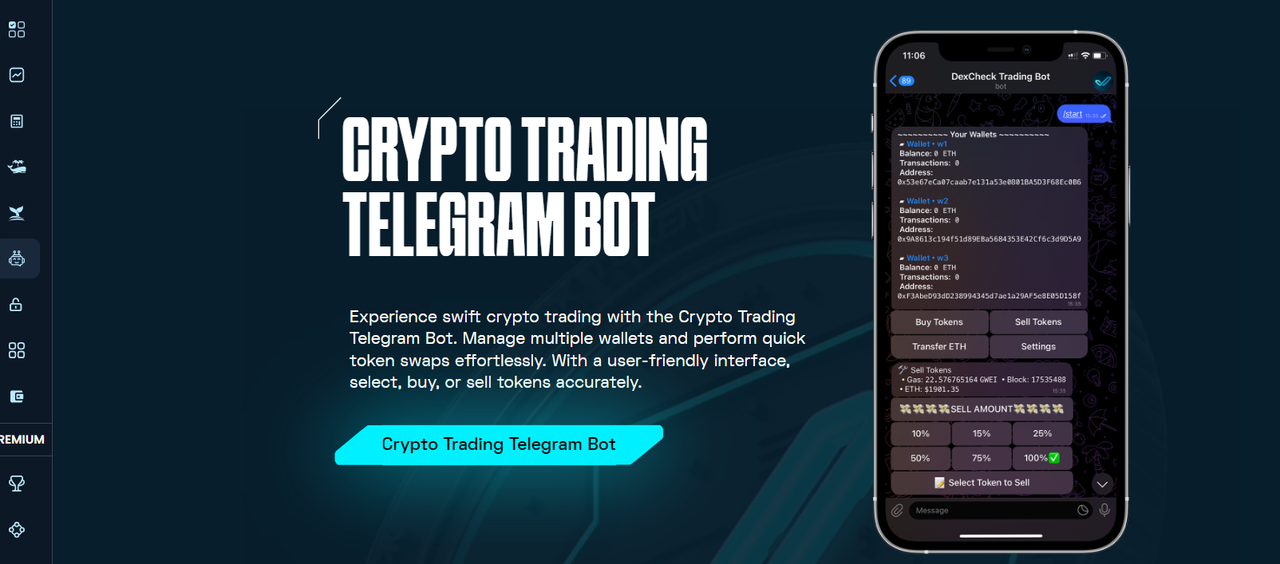
It gets even better with the DexCheck Telegram bot. I admit that sometimes, it could be tedious to swing between different decentralized exchange platforms just to make your trades. This is a time-tasking process as well. The Dexcheck Telegram bot is a fix for this. It offers investors a way to execute normal and advanced trading activities from the comfort of their Telegram Messenger.
The integration process for the Telegram bot is easy and requires no technical experience. Once installed, you can trade on decentralized exchanges, Track cryptocurrency wallets, and perform advanced trading operations like Sniping trades. I’m a bit excited about the potential of this particular feature.
The Snipe trading bot screens exchanges to detect profitable opportunities and trade accordingly. For instance, the snipe trading bot notices newly added liquidity pools and moves to make a purchase before anyone else does. This allows you to purchase tokens at the lowest price and trade them in for a profit when full trading starts. The Snipe trading bot is equipped with advanced trading and analytics algorithms that enable it to run trades better than the regular trader. One thing I left out, the Snipe bot is automated, you can simply set it up with funds and it runs on its own.
You could mention a handful of similar projects, but DexCheck stands out for a couple of reasons. I’ll list them;
A Truly working application
I took the time to go through the features on DexCheck. It is easy to draw up a prototype but harder to develop an application that works as stated on paper. DexCheck runs as stated and the positive first impression was sustained throughout the times I used the application. From the smart contract token analytics to the trader and wallet analytics to the advanced Telegram Bot and the AI-powered InsightGPT. Each application leaves you coming back for more. Even without subscribing to the pro-trader feature, DexCheck offers the utility that most normal traders lack and crave.
An intuitive interface
DexCheck might sound very technical and it actually is. But these complexities are packaged into an intuitive user interface. Regardless of your technical abilities and your knowledge of the crypto space, DexCheck is very easy to use. Each feature is distinct and easily accessible. In case of confusion, the DCK team has also shown dedication to guiding users through using the application.
The DCK token is at the heart of the DexCheck applications. The DCK token powers the DexCheck application’s economy and supports its ecosystem to promote application usage and incentivize user involvement. DCK is a BEP-20 token on the Binance Smart Chain. The DexCheck team has developed a scheme to grow the DCK token and also fast-track the project’s growth through its token.
Via a symbiotic growth scheme, the DexCheck application and its token are designed to grow in utility and value. DCK is used in the project’s governance through the DexCheck DAO. DCK holders vote on new features and changes to the project’s operations. DCK token is also used for purchases, subscriptions, and user reward schemes through the Revenue sharing program.
This should actually come first but I had to save the best for the last. The success of any project depends 60% on the team behind it. Looking at the DexCheck team, the advisory team, and the partners, we could see this project climb to higher highs in the near future. Partner projects are prestigious and DexCheck is integrating across notable blockchain networks and communities including Polygon and Fantom. The DexCheck advisory team is made up of top officials from Polygon, ChainGPT, Kucoin, and Maven Capital.
What’s Next?
I took a look at the DexCheck roadmap and it looks packed for the future, the last quarter of the year will surely see many exciting releases the AI-DexFolio and the AI-arbitrage scanner are some of the new features I am looking forward to. It is interesting to see how the project employs Artificial Intelligence in these two new features.
I’ve personally picked interest in arbitrage trading multiple times, but it is clear that arbitrage trading will be a very tough thing to do without some sort of automation, the AI-arbitrage scanner might just be the tool that finally unlocks arbitrage trading.
Closing up
The thing is, I attempted to go through every utility that DexCheck offers, but this whole article is in fact, a scratch on the surface. I’ll eventually follow this up with even more articles and possibly some user guides and personal tips. Not sure how soon this will be anyway. However, the project is evidence of the evolving trading culture and the role of advanced technology in improving trader’s decisions. As a cryptocurrency investor, you are already wondering how these features will boost the price of the DCK token, I do too. And while I already bought some DCK tokens, I’m focused on discovering the best ways to put the basket of utilities on the platform to use. The general design makes it easy to do this.
Hey guys! Yeah…’guys’ does really sound chauvinistic but I’m sure everyone understands. Anyways, shitposting isn’t really my thing and this ‘Snack talk’ thing is a literal shitpost. Like two beer lovers discussing their favorite brand, a better example is two memecoin investors discussing the ‘utility’ of their cat-themed memecoins. Cat-themed memecoins don’t really do so well, relative to the doggy ones, but I get it…we all do.
Alright, I named this one ‘The Gobsmacked’ and I must say I’m gobsmacked by a lot of things. First, uptober doesn’t seem to be turning out great and the charts are looking like it’s Halloween already. Someone played MJ’s thriller on the bus today. Noisy, but that’s exactly what the whole market sounds like. I could go on with the second but if the charts continue this way then Christmas might be in jeopardy. But it doesn’t matter, we are here for the technology anyway. I said ‘we’ like we are not all waiting for the next earndrop so we can ‘cash out’.
Speaking about earndrops, I did claim a few $TIA from the Celestia airdrop. You can check your eligibility here too. Celestia is working on a couple of things that could become useful for the whole space. A bit excited to hold a (little) stake. Anyway, that’s it with the brief commercial.
JP Morgan just launched a tokenized collateral network, that should come second on my list but, then, these guys have been all around crypto and always trying to come in in their own way. Not sure this is the best way to make a dive into the space, but maybe I’m overreacting to an asset-creation platform.
By the way, if you’ve been following the court hearing for SBF and the FTX guys, you should be astonished…’ gobsmack’ is the word of the day. I forgot. Couple of impressive incomes in those lists from Caroline. Not sure which is more lucrative, Sports, Music, or running a crypto-trading platform. If every exchange operator earns that much, then the latter wins, hand-off. If you haven’t been paying attention, this is the second one on my list.
The third one? This snack of course! I wouldn’t be here after 70 days to write another snack-time talk story if I didn’t find a befitting snack. No need to dwell on that, I came across the whitepaper for BitVM. The Bitcoin blockchain could run smart contracts in the near future. Safe to say that even Bitcoin now copies Ethereum. No jokes on the team working on this impressive development, just saying that Bitcoin has spent a majority of its lifetime being compared to Gold. If it finally turns into another virtual machine, then it will spend another decade being compared to Solana, Taraxa, and Polygon, I left out Fantom…another cool EVM network! But technology is about finding out, sorry, that’s science. Never mind, I own up to that statement.
Deploying memecoins on the Bitcoin network would have been historic, but BRC-20 tokens already did that and suddenly no one talks about them. Not sure why they faded so quickly. Big guess, The Bitcoin blockchain was built to support P2P BITCOIN transfers and not inscriptions. Ethereum and all of its offspring were built for this. And if you think Bitcoin running smart contracts will kill off other smart contract blockchains, just remember the same was said about BRC-20. Too early to call it, but this is where we are headed.
I would have loved to put a word out for everyone getting a 10% refund on their failed NFT investments but I never got a refund from the handful of rug-pulls myself and other memecoin investors had to go through. So, if Logan Paul finally sends your 10% Cryptozoo investment back to you, then you should consider buying a good snack and some Sprite. Project literally sound like a straight scam, but that’s how most rugpulls sound. Cool name projects pull the rug equally, don’t judge a book by its cover, this doesn’t apply to your Algebra textbooks though.
Time to drop the keyboard, just took the last bite and it is not certain when the next snack talk stuff will drop. Judging from the current trend, Q1 2024 is very likely. Maybe Bitcoin will be back above $30K then. If the ETFs finally land, then sure, we can be positive. Yeah, that’s it …guys.
NFTs are one of the seven wonders of crypto, the list will surely change and get even longer in the future, but NFTs have had a hell of a time in the space. From a high-tech concept with huge potential to a meme-like multimedia idea and again to an entity of high financial significance. NFTs reportedly moved over $24 billion in cumulative volume in 2021. This figure has since due to the raging bear market and a lowering interest in NFTs, but NFTs are still very significant.
A handful of arbitrage protocols have seen huge success in trading cryptocurrencies across centralized and decentralized exchanges. However, these projects are only focused on fungible tokens which make up a majority of cryptocurrency investors’ portfolios. But NFTs are fast becoming popular and coveted assets.
Proposed theories for an NFT arbitrage system will certainly involve the synergy of protocols that surf through NFT marketplaces to garner data on the trading conditions of recognized NFTs from different collections and compare these data to evaluate the difference in floor prices collections and selling prices on individual NFTs across selected market places and trade accordingly to take full advantage of the deviations to return maximum profits for each successful trade.
Noted challenges to the NFT arbitrage scheme are the illiquidity of NFTs and loss of profits to MEV (Miner Extractable Value). NFTs are illiquid in the sense that they are first listed and stay waiting for an eventual buyer, NFTs could spend hours to days on the marketplace before a buyer comes around.
MEV is an issue that plagues cryptocurrency as a whole. Additional charges on every transaction build up into tangible expenses, enough to get rid of every profit made in trades, especially for routine traders on decentralized exchanges. Thanks to MEV, an NFT arbitrage system could see a good percentage of its profits eaten away by extra charges or even fall back into losses even after successfully arbitraging an NFT.
NFT arbitrage protocols could tackle this using a pool. By creating a pool for NFTs. This pool will present an instant demand for the NFT and ensures that they can be sold immediately. Only NFTs demanded in the pool will be considered for arbitrage opportunities.
The arbitrage system will basically compare prevailing prices for NFTs in its pool and the price of the same NFTs on other marketplaces. The arbitrage system will proceed to purchase NFTs where they trade for cheaper prices and trade it on the on-demand pool, making a profit. This is recurring and continues until the trades are no more profitable.
Note that there are currently no known NFT arbitrage projects and this content is only a theory of how a system like this could work. Taking into consideration, the basics of NFTs and available technologies, this might be a ground-breaker for NFT investors.
Arbitraging is as easy as buying from one end and selling for an assured profit on the other end because the sale point is positively ahead of the purchase point in terms of price development, or lagging as the case may be. Arbitraging is partially the reason why asset prices stay relatively the same across different markets and pairs. Manual arbitragers, arbitrage sniffing bots, and algorithms are lurking on centralized and decentralized exchanges to quickly take advantage of temporal shifts in asset values. Cyclic arbitrage is a common practice in arbitrage trading.
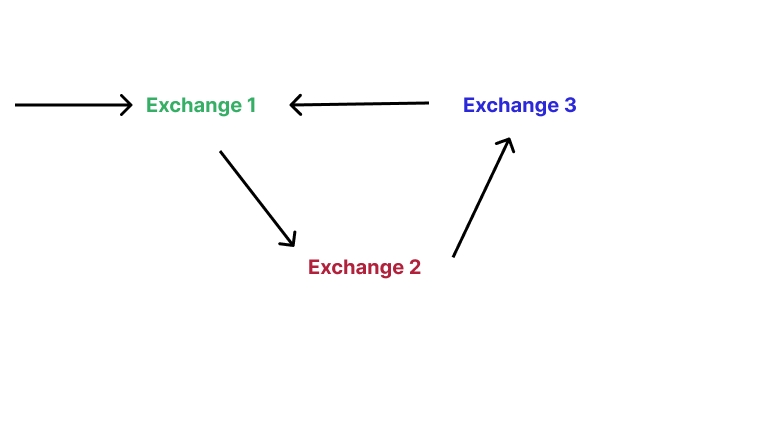
A number of decentralized and centralized arbitrage projects and even projects not directly related to arbitrage trading utilizes the mechanics of cyclic arbitrage to balance their trading system. Cyclic arbitrage could be a really handy theory for cryptocurrency and mainstream trading platforms, even ones that hope to develop an extra income opportunity for themselves. Here’s the basic theory of cyclic arbitrage: The arbitrage trading algorithm sniffs three different exchanges or more with a special focus on a single asset. It collates the current trading price on these exchanges and compares them with respect to their pairs. Using information garnered this way, it simultaneously trades the asset in such a way that it yields a net profit, trades might end up with a different asset, but this asset must have an instantly redeemable value that is above the starting capital.
Protocols that use (or attempt to use) this theory, develop a trading bot that automates it trading in accordance with this theory. Depending on the design of the algorithm, this process is repeated as many times as possible, wither in the same direction as long as the trade remains profitable in a different and more yielding direction.
Here’s a scenario. Say the arbitrage bot detects a difference between the trading price of MATIC on Binance and Huobi with the price on Binance lower than that on Huobi. The bot detects a third exchange (say Kucoin) on which a MATIC pair (like MATIC/FTM) trades below the market value. This bot makes a MATIC purchase on Binance and exchanges the Matic purchased on Binance for FTM on Kucoin. To complete the cycle, it sells this FTM on Huobi for MATIC and realizes more profits in MATIC.
Cyclic arbitrage accumulates the profits from arbitrage trading as opposed to regular one-directional arbitrage trading. Further applications of the cyclic arbitrage trading algorithm will reveal more details about how it works.
Well, I’m yet to put up a poll, but it’s almost certain that a majority of ‘cryptocurrency enthusiasts’ are yet to understand what cryptocurrency ETFs are. Not sure most care anyways. As long as it keeps the market green, we’re fine…I’m fine too. Pun intended.
Exchange Traded Funds are like pooled funds by users of financial institutions, Like mutual funds. But since we agreed to keep this simple, I’ll skip the details and simply attach a link where you can read up on this. Again, this whole article is limited to 500 words. Subsequent ones will grow in length if Bitcoin blows past $30,000
Bitcoin ETFs, Ethereum ETFs, and maybe one for the handful of memcoins flying around. My wild guess is a DogeCoin ETF; if that fails, a PEPE ETF is my backup guess. Elon is cracking down on Twitter bots ‘powered’ by memecoins, so I will stay away from that space.
Binance’s tussle with regulatory bodies around the world was expected. I must say that the firm is handling it considerably well so far. At least relative to FTX, funds are still SAFU. The market slumped on the news, not surprising when the biggest exchange is getting served by the SEC. Mr. Gensler hasn’t been easy on this space!
But we have the ETF news to thank for keeping everyone in the market. Not a big deal, to be honest. Bitcoin traded below $17,000 this year, and the investors’ spirits weren’t damped. Oh well, it actually was, just not totally annihilated. I’d take an exception for the bears who shorted everything they could lay their hands on during this time.
Bitcoin has tumbled almost twice since this time; altcoins are still left in the dust. The market appears to be jostling towards the green lines. The ETFs are a huge factor, but is this enough to take us back to the late 2020 and early 2021 days? You have your personal opinion, and it will be cool to put them in the comments.
I’ve come across a number of Tweets analyzing how ETFs will push Bitcoin to $300,000. If that materializes, then we are 10X away from the future. Bitcoin will have to behave like a real memecoin for the first time since Peter Schiff accused it of being a memecoin. And that’s fine for me. Even Peter is inscribing and selling Bitcoin ordinals now; I guess that’s a good step to becoming a moonboy. Turns out Gold doesn’t have ordinals.
For the most serious part of this article, I’d like to opine that ETFs aren’t enough to launch us into another Bullrun, at least not before the next halving. While a Bullrun before the next halving will be very much desired, the current sell pressure on cryptocurrencies is something these analyses haven’t considered yet. And mathematics doesn’t always work in the real world. $30,000 for a bitcoin in the middle of a global financial turmoil is already a big statement, and the bears can rear their ugly heads.
But there is still a long distance to the next $5,000 pump on Bitcoin. The market is in a pullback at the time I wrote this sentence. Might change by the time I push this article to my blogs. But for now, we can expect thins to dangle between $29,000 and $32,000 for a while. Even with every institution launching an ETF for the two biggest cryptocurrencies.
Again, we blew past 500 words! You guys owe me now!
We are building a community of writers. CryptocurrencyScripts was meant to be a coast of writers and not a ‘one man show’. Currently, we are working to expand our community of writers and create a hub of the most enticing cryptocurrency contents.
But never mind, ‘enticing’ is such a big word. We are open to accepting writers, regardless of their expertise or the quality of their contents. The only requirement is an active medium account.
Click here to submit an application form and be sure to hear from us ASAP.
Once accepted, you can publish your contents to our publication and enjoy a wider reception for your articles.
To publish, click on the three dots at the Top or bottom right corner of your article.
Click “Add to publication” from the options and select Cryptocurrency Scripts. That’s it, we will take it from there!
For every 10 tweets you come across on crypto Twitter, at least three try to tell you how you can position yourself to benefit from predicted airdrops from some new cryptocurrency projects. The list is inexhaustive; layer Zero, SUI network, zkSync. Alright, these tweets score quite high engagement, and cryptocurrency influencers on Twitter have found a new way to draw your attention. Just like the meme coin bubble, free drops are a booming topic in the crypto space today.
Well, if you clicked that link hoping to get a trick that qualifies you for all the airdrops at once, then I must apologize, this isn’t the article you were looking forward to and I admit that the title might have been quite misleading. I got carried away too.
The craving for the financial enrichment cryptocurrency deliver has crushed the hunger to build real decentralized solutions, ones that really work. New projects every day, each producing the same result. But I guess this has been a whole long talk since this article isn’t already telling you how to bridge to a new network, add liquidity, Perform swaps, mint an NFT, and wait for your freebies whenever the project is ready to grease the people’s palms.
Ok, here’s the ultimate guide, USE THE PRODUCT. But I guess that’s a hard thing to do, especially where there are no $500 – $10,000 worth airdrop in view. The space keeps changing and everything keeps going towards bubbles and quick money. A few years ago, the attraction point for any project is its features. The most promising projects get the attention. Ethereum, Tezos…you name them.
Contemporary projects are having it easier. Two steps, raise a couple of millions from super-rich VCs, tease a ‘community reward’ program. That’s it, you are well on your way to hitting a million users, even when your technology is nothing close to what was proposed on the WhitePaper.
If you read up till this point, then the higher chance is that you (somehow) agree with this opinion. It’s unlikely that anyone makes it to this point when this article is yet to show you proof that Polygon and Coinbase will be launching tokens for their layer-2 networks even when they already said they won’t be doing any of that. Well, you can’t trust these Web3 teams…
Even if crypto and blockchain don’t survive, there’s no doubt that they’ve enriched a few pockets and impoverished a few. If you’ve benefitted from the majority of these airdrops, you belong to the former.
Anyways, the target wordcount for this article is 500 and its almost close to that figure, but before the last full stop comes in, it is important to state that these airdrops are a good way to earn, and genuine interest in decentralized solutions is the surest way to benefit. Airdrop-hunting is good exercise. But every one of these is currently in a bubble, it’s hard to say how it will burst and it is important to tread carefully. Scam airdrops and malicious testnets are on the increase. It is important to protect yourself from these.
Well, you’d say this is just me following the same route as many other people. But at least, there are two differences; first, I cared to explain and even more importantly, I did it for a different reason…probably.
Ok, just in case you’re living under a rock and missed the news, here’s me telling you that arguably the biggest L-2 network in the crypto space just airdropped over 40% of its governance tokens to early adopters and DAOs on the network. Thing is, you wouldn’t be reading this if you are living under a rock, but that’s fine…
Alright, I planned to make this a short one so everyone can return to watching the charts. So, first of all, I was awarded a (whooping) 625 ARB token for basically interacting with the Sperax stablecoin project on the Arbitrum network. Second, I sold all tokens at 4$ each, and the funds have been sitting in stablecoins; USDT to be precise.
Why did I do this, now if I wanted quick cash, I’d already be at the closest stores throwing a few things into my cart. But this is not the case.
Before moving further, I’d like to express my dismay at how the whole DAO concept has been riddled in crypto. If there’s anything DAOs represent, decentralization isn’t one of them, at least not currently. I will desist from giving clear examples but a good number of DAO decisions have been trumped by some ‘rich folks’ with tons of governance tokens, enough to change the decisions of the rest of the community.
Tokenizing the DAO is a brilliant idea, but giving room for unlimited possession and unlimited selling of DAO tokens gives room for the one thing the whole crypto space tries to prevent. The blame is spread two ways. The DAO project and the community.
On the side of the community, the treatment given to DAO tokens is proof that 99% of participants in the crypto space are only here for quick bucks. Exchanges would rush to list these tokens to benefit from the huge volume that comes from the first two months of trading. This is fine, exchanges need money to run.
Holders of the DAO tokens, especially ones given out as airdrops are also quick to dump their ‘share of the governance’ on the exchanges and pay a little fee in trading fees. No loss, it was free anyways.
On the side of the project, it will be cool to experiment with issuing these free tokens as real governance tokens (Ve tokens). By this, beneficiaries will be unable to sell these tokens immediately. Tokens can be unlocked periodically or based on other factors like the number of proposals the receiver has voted on. This will enable DAOs to function. To prevent centralization, a smart contract that limits the vote amount for every individual wallet can be added to DAO smart contracts.
Pouring new governance out there hasn’t helped and these tokens just go worthless once the beneficiaries are done selling. Entities who manage to get hold of enough tokens at the lowest price proceeds to own the DAO.
Back to my decision to sell, you probably figure out why already. But the real reason is, I traded my tokens in expectation of the market going the usual way. Arbitrum, for me, is an interesting project, one I’d like to have a say in. So this is it, once the ARB market comes crashing, I will be putting the USDT back in. Had to shun USDC since the US banks are still sorting themselves.
Just FYI, this decision was made out of experience. Multiple times I’ve received DAO tokens, kept them, and watched them get worthless in price while the DAO becomes centralized by the ‘money bags’. This is not the usual article where I ask you what you did with your airdrop, maybe because I don’t care what you do with them anymore. But still, you can feel free to share how you managed your Arbitrum tokens.