Arbitraging is as easy as buying from one end and selling for an assured profit on the other end because the sale point is positively ahead of the purchase point in terms of price development, or lagging as the case may be. Arbitraging is partially the reason why asset prices stay relatively the same across different markets and pairs. Manual arbitragers, arbitrage sniffing bots, and algorithms are lurking on centralized and decentralized exchanges to quickly take advantage of temporal shifts in asset values. Cyclic arbitrage is a common practice in arbitrage trading.
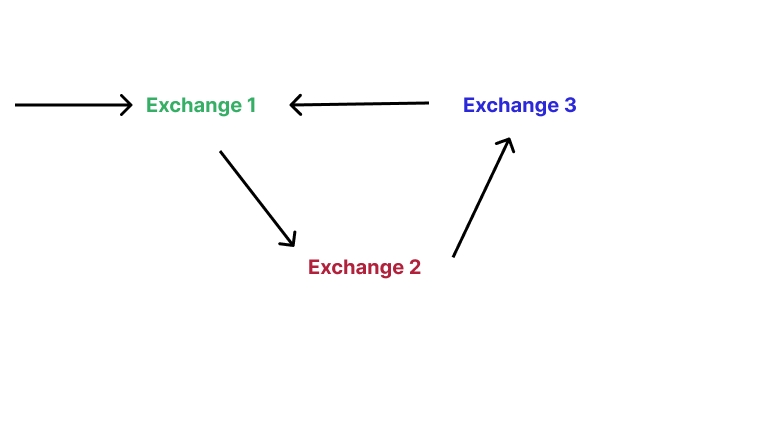
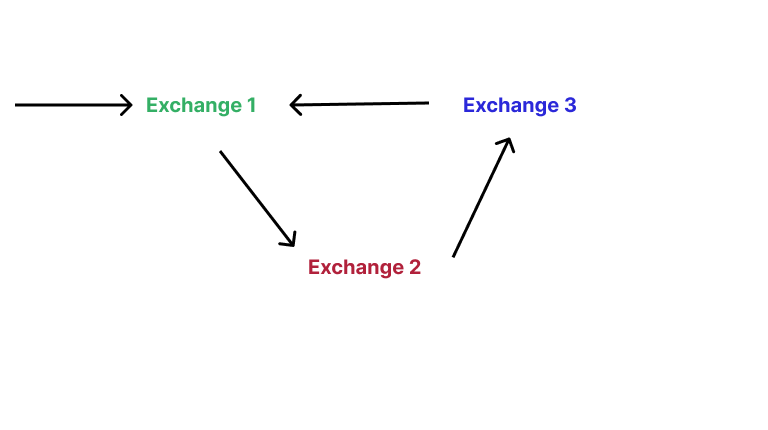
A number of decentralized and centralized arbitrage projects and even projects not directly related to arbitrage trading utilizes the mechanics of cyclic arbitrage to balance their trading system. Cyclic arbitrage could be a really handy theory for cryptocurrency and mainstream trading platforms, even ones that hope to develop an extra income opportunity for themselves. Here’s the basic theory of cyclic arbitrage: The arbitrage trading algorithm sniffs three different exchanges or more with a special focus on a single asset. It collates the current trading price on these exchanges and compares them with respect to their pairs. Using information garnered this way, it simultaneously trades the asset in such a way that it yields a net profit, trades might end up with a different asset, but this asset must have an instantly redeemable value that is above the starting capital.
Protocols that use (or attempt to use) this theory, develop a trading bot that automates it trading in accordance with this theory. Depending on the design of the algorithm, this process is repeated as many times as possible, wither in the same direction as long as the trade remains profitable in a different and more yielding direction.
Here’s a scenario. Say the arbitrage bot detects a difference between the trading price of MATIC on Binance and Huobi with the price on Binance lower than that on Huobi. The bot detects a third exchange (say Kucoin) on which a MATIC pair (like MATIC/FTM) trades below the market value. This bot makes a MATIC purchase on Binance and exchanges the Matic purchased on Binance for FTM on Kucoin. To complete the cycle, it sells this FTM on Huobi for MATIC and realizes more profits in MATIC.
Cyclic arbitrage accumulates the profits from arbitrage trading as opposed to regular one-directional arbitrage trading. Further applications of the cyclic arbitrage trading algorithm will reveal more details about how it works.
For every 10 tweets you come across on crypto Twitter, at least three try to tell you how you can position yourself to benefit from predicted airdrops from some new cryptocurrency projects. The list is inexhaustive; layer Zero, SUI network, zkSync. Alright, these tweets score quite high engagement, and cryptocurrency influencers on Twitter have found a new way to draw your attention. Just like the meme coin bubble, free drops are a booming topic in the crypto space today.
Well, if you clicked that link hoping to get a trick that qualifies you for all the airdrops at once, then I must apologize, this isn’t the article you were looking forward to and I admit that the title might have been quite misleading. I got carried away too.
The craving for the financial enrichment cryptocurrency deliver has crushed the hunger to build real decentralized solutions, ones that really work. New projects every day, each producing the same result. But I guess this has been a whole long talk since this article isn’t already telling you how to bridge to a new network, add liquidity, Perform swaps, mint an NFT, and wait for your freebies whenever the project is ready to grease the people’s palms.
Ok, here’s the ultimate guide, USE THE PRODUCT. But I guess that’s a hard thing to do, especially where there are no $500 – $10,000 worth airdrop in view. The space keeps changing and everything keeps going towards bubbles and quick money. A few years ago, the attraction point for any project is its features. The most promising projects get the attention. Ethereum, Tezos…you name them.
Contemporary projects are having it easier. Two steps, raise a couple of millions from super-rich VCs, tease a ‘community reward’ program. That’s it, you are well on your way to hitting a million users, even when your technology is nothing close to what was proposed on the WhitePaper.
If you read up till this point, then the higher chance is that you (somehow) agree with this opinion. It’s unlikely that anyone makes it to this point when this article is yet to show you proof that Polygon and Coinbase will be launching tokens for their layer-2 networks even when they already said they won’t be doing any of that. Well, you can’t trust these Web3 teams…
Even if crypto and blockchain don’t survive, there’s no doubt that they’ve enriched a few pockets and impoverished a few. If you’ve benefitted from the majority of these airdrops, you belong to the former.
Anyways, the target wordcount for this article is 500 and its almost close to that figure, but before the last full stop comes in, it is important to state that these airdrops are a good way to earn, and genuine interest in decentralized solutions is the surest way to benefit. Airdrop-hunting is good exercise. But every one of these is currently in a bubble, it’s hard to say how it will burst and it is important to tread carefully. Scam airdrops and malicious testnets are on the increase. It is important to protect yourself from these.
The internet has grown with other information technologies; arguably the most popular technology. With an infinite connection of people from different locations and backgrounds surfing the internet every day via the web, the internet presents a platform for information dissemination at a flash speed, relative to pre-existing means. Together with these pre-existing and emerging information technologies, the internet has made information spread at amazing speed.
Functioning as an application layer protocol running on the internet, the web is home to many ideas and many innovations, it has formed a huge part of the internet age. To many; the internet age is championed by the web. This is not far from the fact anyways.
Computer programming languages have enabled the creation of utilities on the web. It is hence not only a protocol on the internet, it has become quite home to everyone who has access to the internet, well-crafted gadgets have also been developed to enable more enhanced and efficient web functionalities.
‘The World Wide Web’ takes you to a world of infinite possibilities and opportunities.
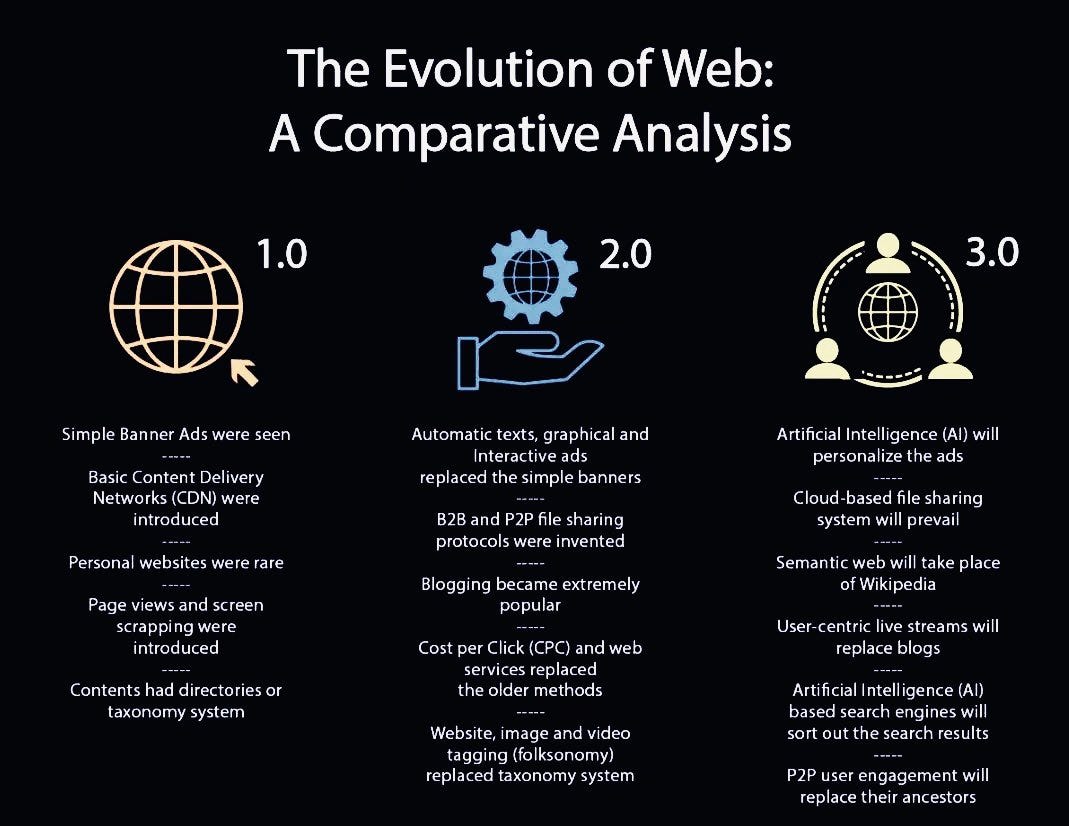
During its first generation, the web was mainly a hub of information and ‘documents’. Simply, a platform hosting information written in the hypertext markup language (HTML), with little or no user interaction with the website.
The emergence of more advanced programming languages including HTML and also the evolution of the computer and the internet enabled the creation of web platforms with more user interactivity. A web platform where users can interact with the website to a very large and also with other users visiting the website, thus the birth of Web 2.0
Coined by Darcy Dinucci in 1991 to imply a second generation of the web evolution; the term ‘web 2.0’ is a collaborative and participative web platform that allows its users to perform social activities on the web such as generating their own content and interacting with content generated by other users of the platform and also with the users who generated this content.
Several web 2.0 applications have had a major influence on our everyday life. From blogging platforms to video hosting and sharing platforms where users can interact with content, generate and share their own content. With the web 2.0 resources, commercial applications have been built on the Web, and information from a web 2.0 platform can be distributed to and used by other platforms via information distribution algorithms such as web APIs and RSS (RDF Site Summary)
Web 2.0 platforms are hosted on a server with one entity controlling activities on the platform. This control is unlimited and spans almost every aspect of the platform including content generation and information distribution on the platform, personal profile creation, and personal profile details.
Owners of these platforms hence possess total control of the platform. This serves some positive purposes as owners of the platform can easily control activities on the platform to ensure that it complies with the terms and conditions specifications. This ability to censor content generated on web 2.0 platforms leaves users with the role of ‘mere participants’ who hold almost zero control over how they are treated on the platform.
On the dark side, owners of web 2.0 have in many instances misused their access to every activity on their platforms including confidential information about the users of the platform. Information about topics of interest has also been censored or put down by the controllers of these platforms in cases where such information is against their interests or gives put vital information on some issues which expose certain parties related to the platform.
Having known the enormous influence information has on the audience, parties directly concerned with a subject and other interested parties tend to modify information reaching out to the audience as regards the subject. Putting away some aspects of the information going out, modifying it to suit their interests; and in most cases Suppressing others who have access to more knowledge about the subject from sharing this information. If there’s any specie in the information age that has been endangered by web 2.0, it is the freedom of speech.
While the centralized internet has arguably created a healthy internet, its dark side is big enough to override these imagined regulations. Cryptocurrency speakers and enthusiasts are currently having a rough time with video hosting platforms as well as blogging platforms. Articles and videos related to cryptocurrency are being censored and put down and in some cases, their profiles on these platforms are banned or restricted as the case may be.
This simply attacks a topic of interest that people needs to have the right information about, while topics like this do not pose any threat to human life or negatively disrupt existing information, many harmful activities and contents are left to float on these platforms.
Failure of web 2.0 in these aspects has once again left internet users scrambling for a healthier environment where they hold some or at least, total authority over how their generated contents and personal information are handled by the administrators of the platform — a decentralized platform where users are in charge of themselves and others have almost no direct control over their activities.
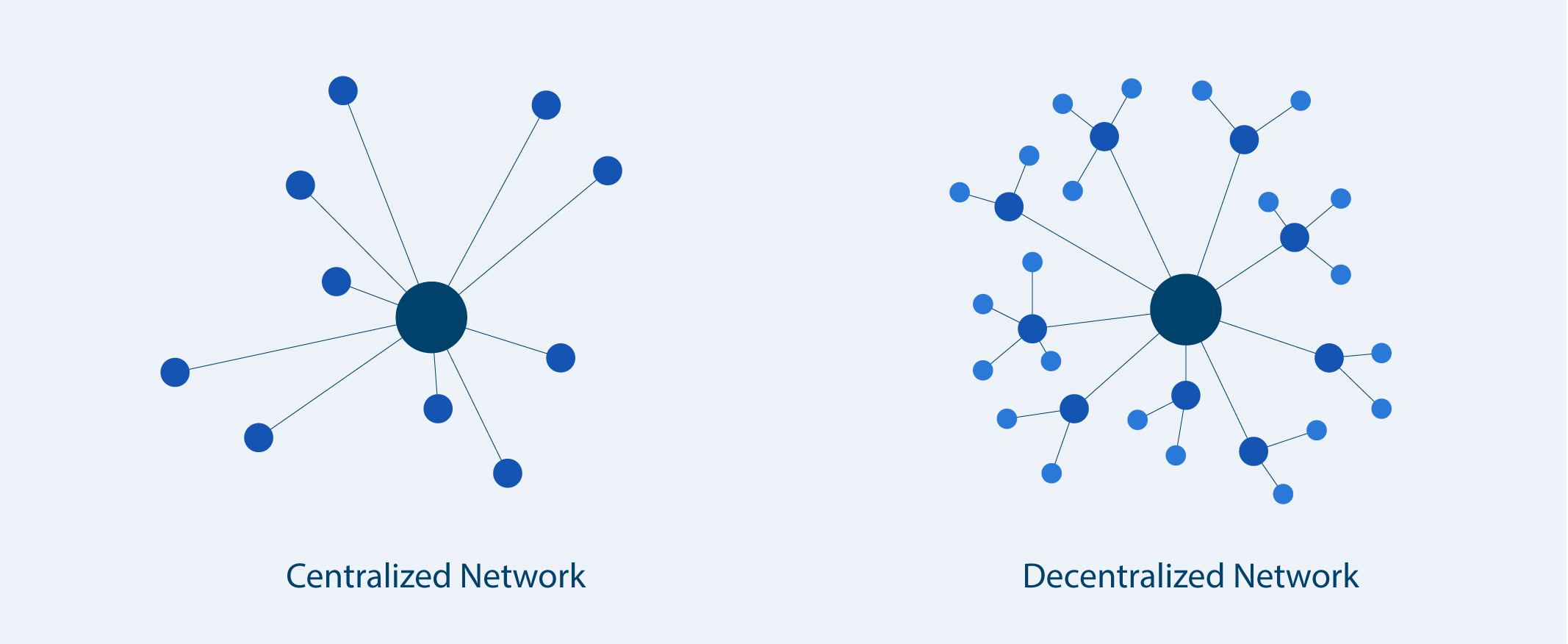
In a decentralized internet; each user is like a well-fenced building in an estate and each building is fenced individually with another common fence protecting the whole estate. This depicts an independent platform where the users are independent of the administrators and other users as each profile is hosted differently on the platform.
In contrast to centralized platforms, decentralized web platforms present a disseminated governance system where each member has tangible control of their activities. Decentralized web platforms are also known as WEB 3.0 platforms.
Web 3.0 technologies redefine the back end of the web. They distribute equal rights to each user while the web front end remains relatively the same and the front end works as usual. The back end of the internet is structured to serve equal rights to users.
The web 3.0 revolution is led/enabled by blockchain technology. The blockchain is a ‘chain of blocks’, Blocks are permanent stores of immutable data/information. These include information such as agreements between the parties in the transactions; the name of the sender, name of the recipient, and the amount transacted.
Web 3 platforms are powered by the blockchain technology Source
A block could store just any information, in cryptocurrency transactions which is the most popular context of blockchain applications, a block holds records of all recent transactions.
For new information to be stored, a new block must be created. The new block is referenced to the previous block, information cannot be added to the previous blocks and its information cannot be edited.
Each block contains a record of data and an identical hash (a cryptographic code) that identifies the block. To ensure more security and stability of the blockchain, the blockchain servers (node) are run by each user of the blockchain, every user running a node verifies each block before it is created.
Web platforms built on the blockchain copy this concept too. Each user who creates an account on the platform owns an account that runs on the blockchain. Activities by each user are verified by other users and are stored on the block. The block is immutable, hence these activities including contents generated by the user and the user profiles are stored permanently on the blockchain and cannot be censored or removed completely from the blockchain. This solves the problem created by the centralization of the web in web 2.0.
Web 2.0 platforms continue to wallow in centralization and censorship by administrators of these platforms as complaints from content creators on these platforms continue to rise. Emerging web3 platforms on the other hand have delighted their users with their immutability and decentralization. Content creators on these platforms are rest assured of the safety of the content they generate as well as the safety of their platforms which they have worked so hard to build.
Web3 platforms offer immutability and censorship resistance, one would wonder how it regulates unhealthy activities on the platform…
Web 3.0 technologies create multiple points of entry to platforms and as well, multiple control units. These units are in fact controlled by the whole users on the network. It employs specialized algorithms and technologies such as Artificial Intelligence (AI) protocols to ensure that the system works for the users just the way they (individually) want it.
Like a ‘plug and play’ system, connecting your wallet to a platform is all you need to experience a world of possibilities. Web3 platforms preserve user identity and data.
That being said, most web 3 platforms also offer a flexible means of remuneration — Cryptocurrency. Depending on the blockchain platform where a Web3 platform is hosted, participants in the network can be rewarded using native cryptocurrencies.
Cryptocurrencies are cryptographic tokens that run on a blockchain. They are flexible stores of value. Most blockchains, enable users to access certain features of the blockchain. These tokens can be easily transferred from one user to another. In contrast to certain web 2.0 platforms, this flexible means of remuneration relieves the users of the huge stress they go through to monetize the contents they create on web 3.0 platforms. Given the ability to monetize (most forms of) participation on web3 platforms, interactivity on the web is enhanced as every user is incentivized to participate in form of creating content or interacting with the platform itself.
The future is ‘decentralized’. Some Web 3.0 projects are developing decentralized versions of existing internet facilities including VPNs, SDKs, and Routers. This extra equipment in synergy with websites built on distributed networks will power the next generation of the web and internet.
A major barrier to web 3.0 adoption is the complexity of these platforms and the fact that most blockchains currently do not (or poorly) scale. The pronounced complexity makes it hard for average tech enthusiasts to use these platforms. Blockchain as a concept is still emerging and a majority are yet to grasp how it actually works.
Unable to scale, most blockchains are ‘heavy’ and get even heavier as more users adopt their technology. This decreases efficiency…a major turn-off. Nevertheless, there’s still a long way to go for a concept as young as Web 3.0
Ridiculous fees apart, using decentralized exchange services has been really fun! Using DeFi services on platforms where fees and efficiency issues are fixed brings a true feel of decentralization.
The comfort, the security, the speed…oh well, just many things! DeFi protocols are mavericks and make centralized exchanges look so ancient despite being just about a decade old, lol.
My frequency of using centralized exchanges has decreased over five times the initial. If we can get rid of fake volumes, centralized exchanges are obviously bowing down to decentralized exchanges; in terms of volume, user base, and application.
The fact is, centralized exchanges aren’t even real competition to contemporary decentralized exchanges the difference is clear. Mainstream trading system will probably get usurped by DeFi protocols.
In addition to decentralization, security, and efficiency; Automated Market Maker, the protocol powering trading on decentralized exchanges is the main technology poised to put centralized exchanges to rest. AMMs are built to ensure organic liquidity and create real-time trading effects. Unlike centralized exchanges, AMMs are all shades of good. In the real sense, it’s AMMs Vs CEXes!
Despite years of efforts and modifications, fake volumes have continued to bite down on the reputation of centralized exchanges. Aided by exchange officials or solitarily, cryptocurrency projects could easily fake buy and sell orders to lure investors who are attracted by high volumes as proof of demand and liquidity.
This fake liquidity and high demand would quickly dry up as soon as the manipulation ends. Well, if the manipulation was able to lure enough investors and traders, then the decline will be gradual. If the project is unable to drive real demand, the liquidity dries up once again. Investors are only left to mourn their losses in cases like this…the ripple effect continues.
Apart from projects luring investors with these volumes, exchanges as well adopt this strategy to boost their numbers and attract users. Exchanges or cryptocurrency projects…I can’t tell who did this first.
Trading and liquidity manipulations on centralized exchanges also tarnish the organic effects of buys and sell. High volumes of huge buys, yet the very little effect on prices. Unfortunately, these positive effects are wiped away by relatively lesser sell orders. Everything looks programmed! For unstable projects, this phenomenon is even clearer.
The inability to estimate the depth of the liquidity pool and the effects of buys and sells on the price makes trading harder and less fun. I’m no trading expert, but being unable to access the originality of the trading activities for a particular token makes trading unthinkably tough.
Centralized exchanges and their technology have served for the time they dominated the space. No doubt, they flourished due to the incredibly handy services they offered. In essence, these services were the best available.
In contrast, Automated Market Markers, despite not being without their own shortcomings are programmed to be highly organic and responsive. Like a real-time trading system, every bit of supply and demand creates a relative effect. Traders and investors are handed efficient tools for making decisions and projects are represented for what they truly are…at least for that point in time.
Thanks to liquidity pools, AMMs provide a basket of exchangeable assets to enable unrestricted trading for the period in which the liquidity providers wish to leave their assets on the pool. The transparency of the liquidity pool allows traders to make their decisions.
AMM protocol ensures that every buys and sells effect reflect relatively on the asset price. AMMs are not completely resistant to manipulations, this is evident in the rampant rug pulls. But on the brighter side, these actions are transparent; an important feature of blockchain technology.
Smart contract technology also creates an avenue for ‘liquidity locking’. This solves rug pulls to an extent. Liquidity locking ensures that provided liquidity cannot be removed for the period of time specified in the locking process.
It’s not just centralized exchanges; trading systems around the world will surely adopt AMM strategies sometime in the near future. In my opinion, it is the future of trading and exchange.
So, you just used a Decentralized exchange and learnt about a liquidity pool for the first time , probably not your first time but you just began to wonder how exactly this works. Unlike the rampant centralized exchanges, DeFi exchange platforms do not have buy walls and sell walls, yet the exchange of assets is unrestricted. Even a cryptocurrency veteran would wonder how this works exactly.
Decentralized exchanges are powered by Automated Market Maker (AMM) protocols which leverage liquidity pools to ensure a seamless exchange of assets while retaining blockchain-level security. AMMs? We will learn about these in my next article. Understanding liquidity pools — the underlying technology which powers automated market markers is our current objective.
So, what is a liquidity pool?
Imagine a basket containing two kinds of fruits in a barter trading system; taking one of these fruits requires you to replace them with an equal value of the other fruit. Now, this is basically how DeFi exchanges work. The basket here is the liquidity pool.
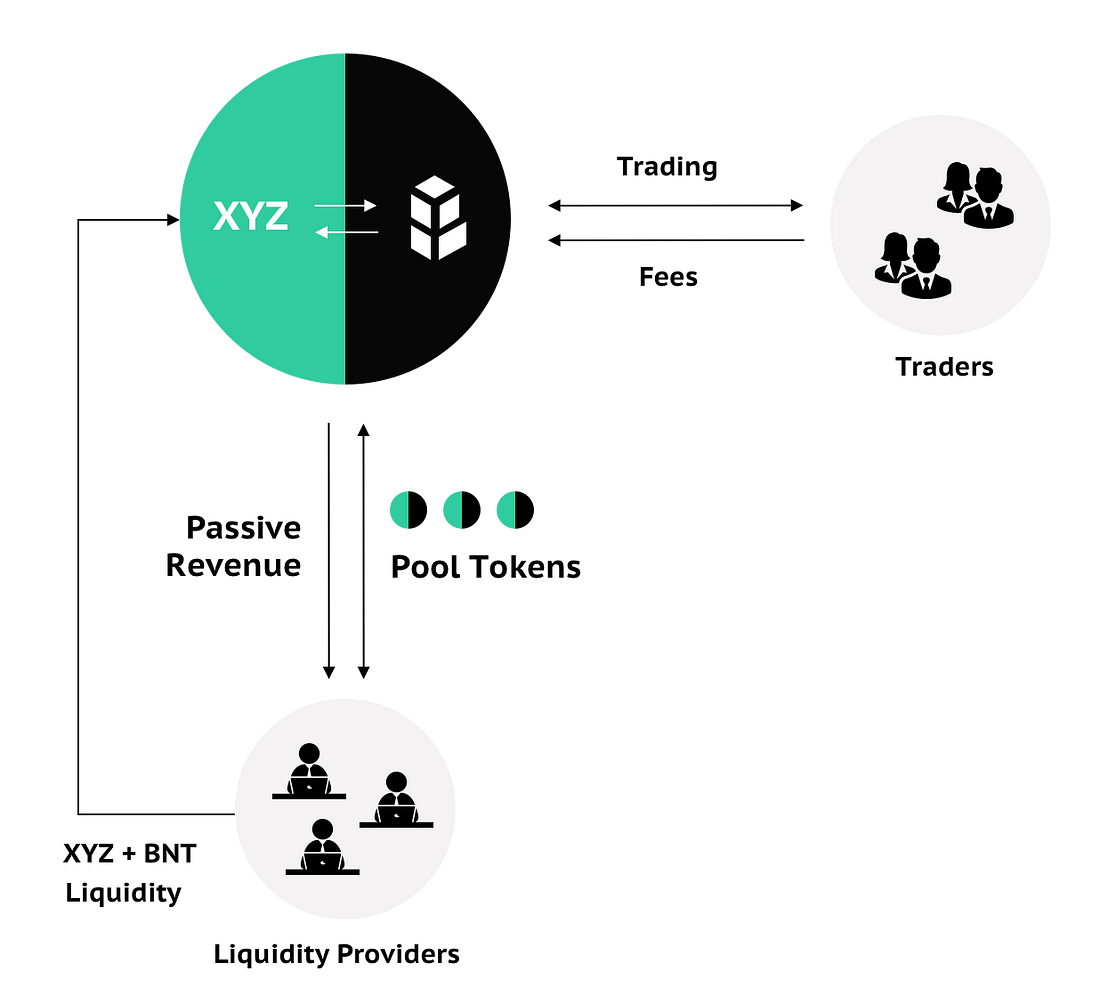
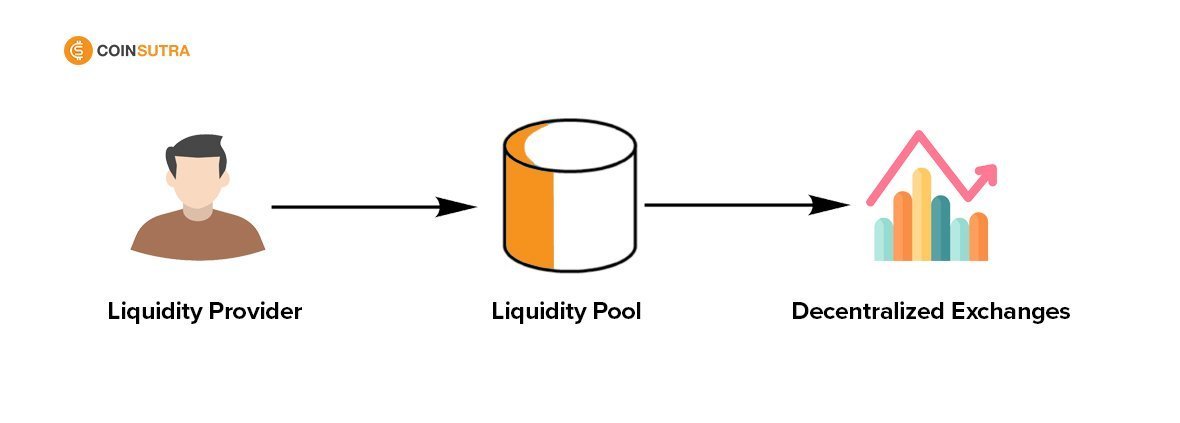
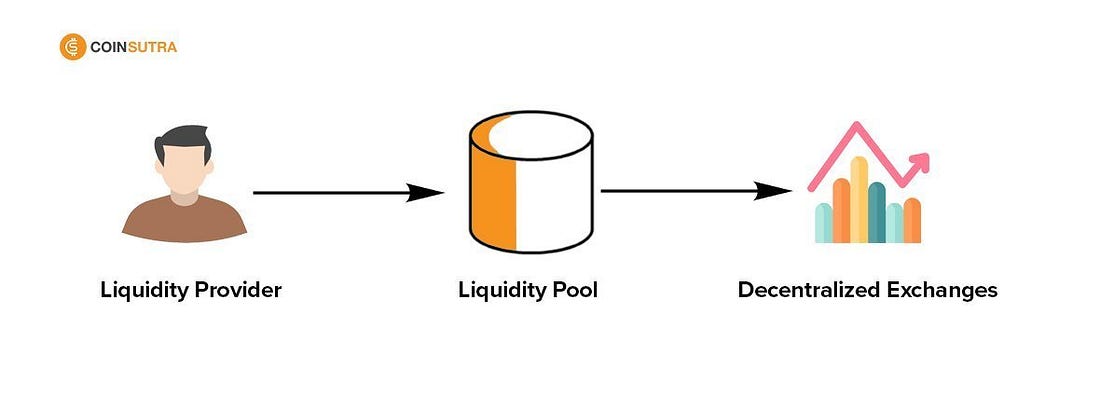
Liquidity pools are collections of tokens locked in a smart contract which allows the borderless exchange of tokens in the pool. Contributors who provide these tokens and lock them in the pool are known as Liquidity providers.
To provide liquidity, a liquidity provider locks up equal values of the two tokens in the pool. The liquidity pool is hence a collection of tokens locked up by the liquidity providers, this pool is available for traders who wish to exchange any of these assets.
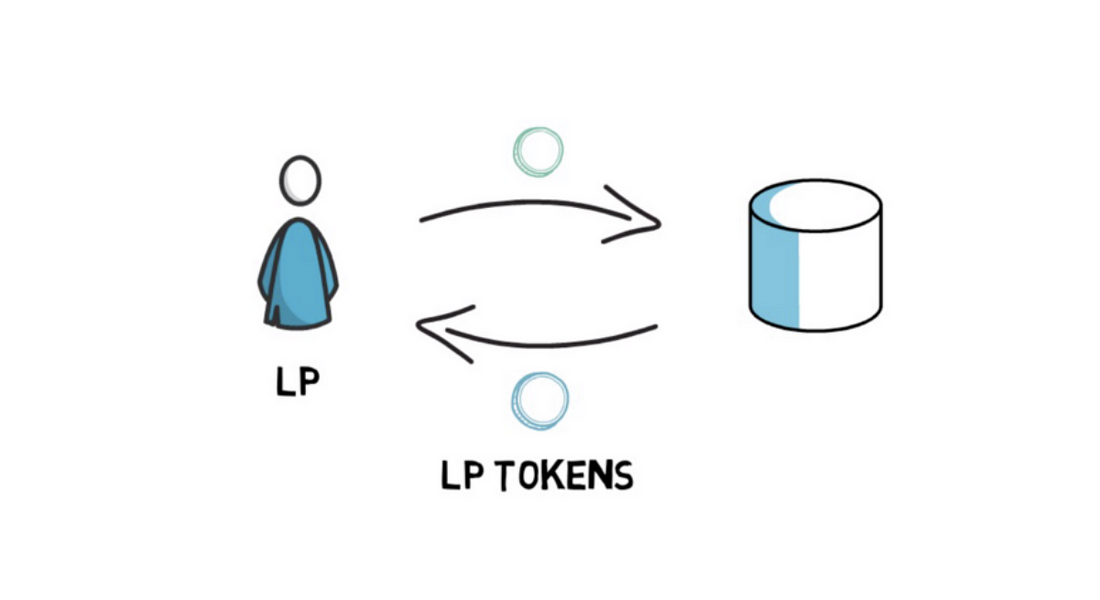
Liquidity providers receive liquidity pool tokens (LP tokens). LP tokens are cryptographic representations of the percentage of the total liquidity pool owned by the individual liquidity provider. Trading fees are distributed amongst liquidity providers according to the percentage of the pool they own.
To further incentivize liquidity provision, certain projects launch liquidity farming programs on their platform to reward liquidity providers according to the amount of liquidity they supply. This is popularly known as liquidity farming. To earn tokens in a liquidity farming program, liquidity providers stake their Liquidity pool tokens on the platform and earn according to the APR and amount of Lp tokens they stake.
However, liquidity provision comes with its own little disadvantage, this is known as Impermanent loss. Impermanent loss is a ‘temporal’ and ‘illusional’ loss incurred by liquidity providers due to variations in demand and values of the tokens they supplied to the liquidity pools.
This is due to a protocol programmed to retain the total value of tokens supplied to the pool. If one of the assets supplied to the pool continues to rise in demand and value against the other, liquidity providers receive the other asset as the supply is increased by traders depositing more of it to the pool
Assuming you supplied 100USD worth of Ethereum and 100USDT, the total value of your Liquidity is 200USD. As the value of Ethereum increases, the amount of Ethereum you supplied continues to decrease while you receive more USDT, this is essentially designed to retain the 200USD you added to the liquidity pool.
The ‘loss’ comes from the fact that the gains which would have supposedly come from the increase in the value of Ethereum will be lost. It’s illusional because there is in fact no loss; your 200USD is sustained, the only difference is that you have more USDT now. It is temporal because if the liquidity provider can wait until the price returns to what it was when this liquidity was provided, they will receive the same amount of tokens they supplied when they withdraw the liquidity.
Liquidity pool is a clever technology, not only does it solve fake liquidity issues, they simplify asset exchange. Liquidity providers also get to earn passive rewards from liquidity provider fees.
Most cryptocurrency suggestions end with the common phrase, ‘Do your own research’(DYOR). To an extent, I see it as the best way to describe the unpredictable nature of everything about the crypto space, every ‘advice’ are mere suggestion and even the ‘professionals’ get it wrong many times. Getting it right most times is even an extremely hard feat. Getting it right every time is utterly impossible, a 70% accurate cryptocurrency advisor is just an illusion, 50% accuracy is almost impossible too, as a matter of fact.
Predictions in cryptocurrency are mere speculations, hence the phrase ‘Do your own research’ charges you to be a master of your own decision and the repercussions of its failure. While these rampant suggestions also form a part of your research resources, their influence on your final decisions is actually your liability as the influencers do not answer for the failure of your decisions.
Hence, you’re literally ‘on your own’. Looking for that cryptocurrency gem to invest in? it actually sounds easier than it really is, despite the fact that it already sounds tough. Just as experienced investors will say, ‘make your decision and stand by it’. Predictions of any kind are 10% calculation and 90% luck. Getting lucky is the only way to get it right, getting lucky is not assured, unfortunately.
Scoring high chances of getting your speculations right and getting lucky in your cryptocurrency investments involve some vital steps of calm inquiries, research, and calculations. The cryptocurrency space is made up of over ten thousand ‘exciting’ projects and new projects coming up every day with equally exciting concepts and clever moves, one will be moved to invest in almost all of them.
Regardless of how much you diversify your cryptocurrency portfolio, you still leave out the majority of the cryptocurrency projects, and each one you leave behind reduces your probability of getting it right with your investment as every one of them stands some chance of making good returns on investment. On the other hand, doing the impossible and buying into as many projects as possible also places you at a higher risk of running into losses, diversification may seem to be the best approach, but in the real sense, it could backfire badly. Streamlining your investments still harbors the bigger risk but is poised to give the best return if you get it right with your streamlined portfolio.
Decisions backed by research are the best approach, making the right inquiries in the course of your research hence becomes equally important. In making your research, some important aspects of the project should be surveyed carefully. Short-term holders and traders certainly have a ‘smaller’ decision to make. Traders could derive their next moves by looking at the seven (7) days price chart of the coin/token and predict the next move by other buyers using human behavior theories. This is very hard, however, investors intending to hold on to their investments for a long time certainly have a harder decision to make as there comes to the need to apply the traders’ and short-term holders’ strategies and as well many other calculations and speculations to arrive at a safer decision.
Just like stocks, gold, and other similar commodities cryptocurrency price movements depends on market trends and the utility of the token. While short-term holders and traders can simply ride with their predicted market trends and take their profits in a short while or simply get out of the trade to minimize their loss, long-term holders expect to hold their tokens/coins for a much longer time, ride with the fluctuations and stay through the adverse times hoping to reap from their persistence and patience at the long run. Hence, careful prediction of the long future is essential.
You should consider the idea behind a cryptocurrency project. Many cryptocurrencies are mere bogus terms with infeasible proposals and concepts. Jumping into such projects is likely to backfire in the long run. Utility is the first thing to look out for. How possible is the concept proposed by the developers? What are the possibilities for developing their proposed solutions into workable prototypes? and what are the possibilities of these prototypes being really applicable to the problem that it hopes to solve?
A project which offers real solutions to problems stands more chances to make massive returns on investments if it finally proves to be a solution. Unfortunately, many cryptocurrency projects make their proposals as flashy as possible and present mouth-watering roadmaps which all end up being mere proposals that may never be realized. Sieving out such projects hence requires an in-depth look at current efforts made by the developers and how workable their current prototypes are. This will give a better insight into the future and enable the investor predicts the future with more information.
Regardless of how feasible a proposal is, it requires capable hands to materialize it, a capable team is also a vital factor to consider before any cryptocurrency investment. How experienced and qualified the team members are increasing the chances of the project’s success. A good team is as important as a feasible goal. A good team knows how best to steer a project toward the right path. Before investing in any cryptocurrency project with a good vision, endeavor to survey the team’s reputation, experience, qualifications, past projects, and leadership scheme. A well-guided project with a good proposal is bound to succeed if other factors should remain favorable, this is also a good point to consider before buying in.
Token generation and distribution schemes could also go a long way to deciding the success of a cryptocurrency project. An outrageous supply scheme scares away investors. Token distribution scheme is also a good factor to consider, who are the holders of this coin/token? And how many tokens are they holding? How many tokens are already in circulation and what is the total supply? Unexplained outrageous supply and distribution of tokens/coins are major red flags.
In practice, a project with a good team and potential utility may override poor token management, however, in a situation where the first two factors are not very satisfactory, risking it more with a poor token supply and distribution scheme is a whole lot of risk.
A look into the community and how the project is being managed is also important. A transparent and decentralized project displays the core virtues of a cryptocurrency project. A good community contributes tangibly to the success of a good project, building a good community is also dependent on how good the management is. A well-managed transparent and truly decentralized project appeals to the cryptocurrency community more than otherwise.
As complicated as cryptocurrency investments could be, good research only improves an investor’s chances of at least not running into grave losses with their choices. The chances of getting it right are also improved, however, it doesn’t assure a successful investment. Sometimes, trusting your intuition might be the best decision to take, good research also feeds your intuition.
If you are a chart watcher, you’ll notice slight price variations on different exchanges. For the majority, this variation is too ‘small’ and ‘not tangible’. Trading price variation across different market pairs and different exchanges is known as ArbitrageTrading. These variations are usually due to differences in demand and purchasing pressure across these exchanges and pairs.
Usually, these variations last for only a short while before leveling up with the rest of the market. Unarguably, the offset in price is usually slight, but they could mean a whole lot…if used correctly.
The popular practice is cryptocurrency traders and investors trading against time and exploiting the periodic variation in values of cryptocurrencies to make gains. Traders are more actively involved in this race against time and demand.
Time and demand play a role in the overall value of an asset, this is a popular concept. But, the effect of time and demand on the value of an asset in different markets is relatively less popular, ‘ignored’ is a more appropriate term. Even in our everyday markets, the price of a commodity doesn’t stay the same in different markets, the cryptocurrency markets aren’t different as regards this.
Market-to-market price fluctuation is commonly overlooked, not just in cryptocurrency but also in mainstream trading scenarios. This market-to-market variation in the value of an asset form the crux of Arbitrage trading.
Differences in price across exchanges can be influenced by the purchasing power of an exchange, this is determined by the ‘wallet weight’ of the traders using these exchanges. The amount of ‘rich buyers’ (whales) in an exchange determines the purchase pressure on the said exchange. This is evident in the impressive spread and high transaction volumes. Such pressure could result in the order books moving slightly faster on the concerned exchange.
Whale influence drives price, more buy force from whales in the market slims down the sell orders while driving the buy orders up and creating good liquidity. This can also go either way, bringing prices down faster. When this happens at different speeds and at different times in different markets, price variation occurs.
This is normal and price variation can be up to 50%. Whichever way the variation goes, provided a difference is created, an Arbitrage trader can swing into action and take advantage of this.
Basically, Arbitrage trading consists of three processes:
Detecting variations in the value of an asset across different exchanges or trading pairs.
Purchasing assets at this reduced price.
Selling the purchased asset at a higher price on another exchange or trading pair.
Easy? Well, not really.
Arbitrage trading is a notably risky venture, just like any other trading activity. However, there seems to be an increased risk, probably why it hasn’t been able to gain huge popularity. Trading arbitrage involves managing a couple of risks. These risks normally arise due to the fast-changing prices and practices of exchanges.
Sometimes the price differences level up after a very brief moment, things could go either way too. Many times, these differences don’t actually exist and the noticed variation is only due to an uneven spread between the buy orders and the sell orders. In the quest to act fast, an arbitrage trader stands a chance of not noticing this development. When this happens, the most possible event is selling at a loss or playing a longer game of time. Sometimes an arbitrage trader could get stuck due to this.
When trading arbitrages across different exchanges for assets that attract tangible withdrawal fees, the risk of losses is increased, relative to the fees. As an arbitrage trader moves assets across exchanges, more spillage and expenses are incurred. To cover up these technical losses, an arbitrage trader must generate a positive net profit. One way to do this is by increasing the purchasing power to maximize the gains. Purchasing power however depends on what the trader can afford, there are strict limits to this.
Arbitrage trading is a game of numbers, speed, and cleverness. Quantity influences the chances of making profits from an arbitrage trade. Acting ‘fast’ is also a vital quality of a good arbitrage trader. Net arbitrage return is obtained by deducting the exchange withdrawal charges and other technical costs from the gross profit. Increasing purchases to compensate for trading and withdrawal charges could also be a good practice. Capitalizing on price variation is profitable practice, however, the sale and buy orders in both markets should be considered.
Thin buy orders on the target market could lead to substantial losses. Inability to win the race against time also results in losses. Best practice would be targeting wide arbitrage in low withdrawal fee assets. This doesn’t come frequently. But when done right, arbitrage trading could prove lucrative.
With an exciting idea in an innovative mind, new products are potentially born. For every new unique cryptocurrency project, the crypto space expands. Over the years, tons of new projects have emerged. These projects proffer solutions to real-world issues through products built on decentralized and distributed networks.
Bringing a new cryptocurrency project to life sounds easier than it could get. An average of over five hundred (500) new cryptocurrency projects emerge yearly and aim for prominence in the crypto space. Surviving this challenge is a struggle. This struggle is even more intense for infant projects. A feasible idea and a practical use case are paramount to the survival and success of new and existing projects. A couple of other factors also contribute to this.
In a capitalist world, financing new ideas to life follow the due process of fundraising and hunting for start-up investors. Successful fundraising generates enough funds for new projects. Apart from funds, it also generates the initial set of believers who have faith in the ambitions of the project. Investors believe in the founders and the potential of the idea they have invested in. Fundraising thus goes beyond gaining financial buoyancy to push a new idea.
For cryptocurrency projects; Public Initial Coin Offerings (ICO) and Initial Exchange Offerings (IEO) present fundraising opportunities. Before the advent of IEOs, public Initial coin offering has been the principal means of fundraising for new projects.
Thanks to Ethereum’s smart contract technology and other blockchains with similar features, new projects can generate cryptographic tokens. These tokens run parallel to the blockchain’s native token. To raise funds for the development of this project, project founders offer a percentage of its total token supply. These tokens are sold to investors at a presumably low price in exchange for funds. Through Public Initial Coin Offering, project founders directly sell these tokens to investors…
Public ICO : How did it go wrong?
Due to a series of infamous events; public ICOs have been marred by scams. Other problems include contract breaches and project failures. This has become unreliable for investors. For project founders, fundraising through public Initial Coin Offering (ICO) has also grown tedious. In public ICO, a project bears the total burden.
Success in raising funds via Public ICO solely depends on a project’s ability to properly market its idea to the general cryptocurrency community. Reaching out to the world outside the crypto space is phenomenal. This would take special marketing skills…and a bit of luck.
In the absence of prominent affiliates or partners, this gets even harder. New projects face the hurdle of creating assurance for intending investors. There is a need to prove beyond doubt, the feasibility of their theories and the importance of the utility they hope to create. Even when properly done, public ICOs haven’t been very efficient for project founders. New projects still face the challenge of pushing their product to the market after a successful Public ICO.
Public ICOs leave new projects bare. Most new projects struggle despite having conducted a successful ICO and raised tangible funds. A good percentage of new projects have also failed to survive this struggle while many more have been limited in their potential. Either way, this spells grave losses for initial investors. These struggles led to an outbreak of ICO scams.
IEO: Exchanges to the rescue?
Initial Exchange Offerings (IEO) have grown since then as an alternative to Public ICO which continues to be riddled with its shortcomings.
An Initial Exchange Offering is a form of ICO conducted by cryptocurrency exchanges. To conduct an IEO, new projects partner with exchanges to oversee their token sale. In contrast to public ICOs, this exchange provides a platform for token sales. Exchanges also influence the marketing of the new project as well as its token sale. Depending on the agreement between the two parties, the exchange could handle the majority of the token sale workload. This lessens the burden of fundraising for the project founder(s).
IEOs solve numerous fundraising issues. In addition to the aforementioned, partnering with a reputable exchange further assures investors of the legitimacy of the new project. With the reputation of the exchange at stake, it is very unlikely that it would partner with shady new projects for fundraising. Exchanges via IEOs simplify token offerings and fundraising programs for new projects.
Exchanges such as Binance, and Huobi have developed fundraising models on their platforms.
Exchanges apply cautions and regulations. These caution and regulations make this process safer for investors who are also their customers. A Project after IEO will be immediately listed on the exchange. The project’s life in the crypto space gets off stylishly. IEOs are thought to salvage the fundraising process in cryptocurrency. ‘Exit scams’ by projects who conducted an IEO is a rare story.
However, it’s never all shades of good. IEOs, despite being a masterpiece also have their shortcomings. In contrast to Public ICOs where projects are free to sell their token to any buyer; token sale one exchanges (IEO) are only open to traders on the specific exchange. Depending on the universality of the exchange and user regulations, the token purchase is limited to a certain set of people. For exchanges whose services are not available in certain geographical locations, investors in such locations will be unable to participate in the initial token sale. Exchanges introduce another level of centralization to initial token sales and fundraising programs. This centralization also improves investor security, but still, its limitation is tangible.
What exchanges consider before listing new projects
IEO projects find it relatively easier to get listed on exchanges than public ICO projects.
But why would exchanges consider listing new projects.?
Regardless of the fundraising process, the listing process for every project is the same. Some reservations might exist where the project has a special relationship with the exchange. Apart from situations like this, consideration for listings is a uniform process for most exchanges.
A project’s reputation speaks for it. A good project is on the trajectory for spontaneous success…most times. The relationship between exchanges and projects listed on its platform is mutual. A shady project dampens the reputation of an exchange. Reputable exchanges are clever to refute approaches by shady projects. Transparency is a vital feature considered in the process of token listing.
A project which satisfies this criterion is further assessed for its fundamentals and vulnerability to regulations. Security tokens might face hardship in listing on exchanges due to regulations that bind them.
Market viability and user base are also considered. However, for a project which satisfies the criteria mentioned earlier, the chances of getting accepted by exchanges grow higher and are expected to gain more userbase and grow in market performance with time.
IEO projects find it easier to get listed on other exchanges. This is mainly because they already satisfied these criteria before their fundraising proposal was accepted by their parent exchange.
Whether you are here for the ‘quick bucks’ or for the technology; one thing is certain, you wouldn’t want to lose your investments to price crashes and the constant fluctuations in the values of cryptocurrencies. Regardless of one’s financial status as an investor, good profits delight every investor. But making profits in cryptocurrency sounds easier than it could actually be…well, sometimes it sounds harder anyways.
“Buy low, sell high”; or better still, “buy the rumour, sell the news”. A couple of phrases have been coined to insinuate the best time to buy cryptocurrencies…and the best time to sell them. Either you are buying when the price ‘appears’ to be crashing or you are buying before an official ‘exciting’ announcement by a cryptocurrency project team. For an investor, any of these two times is presumably the best time to invest in a cryptocurrency project. A huge majority of cryptocurrency enthusiasts are in search of times like this.
But if there is any sector where rules don’t exist, the crypto space will surely be one, if not the only. Price movements, use case valuation, projects’ permanence…you name it. Every aspect of cryptocurrency is highly variable and there are almost no experts and everyone appears to be Predicting. These predictions could go either way.
In the same vein, the “best time” to invest in cryptocurrency projects has been a popular gamble. When to buy, when to sell; it would have been very interesting if anyone could tell for sure the best time to do these. Whenever you have a satisfactory gain or when you’ve had enough of the loss, you can sell off your cryptocurrency holding, hence, the best time to sell is way easier to decide.
However, this is different when it comes to buying/investing. Investing in projects at the ICO level is one of the options. Altcoin projects sell several tokens to raise money for the projects’ development and marketing. Tokens are sold at a relatively low price. Investors predict low chances of tangible price drops below ICO levels. Well, this is the case some of the time, but the story could be very different some other times. Several projects have struggled after their ICO and impatient and unimpressed investors move to sell their stakes below the ICO price. For an investor who bought at the ICO price, it wasn’t the very best time to invest.
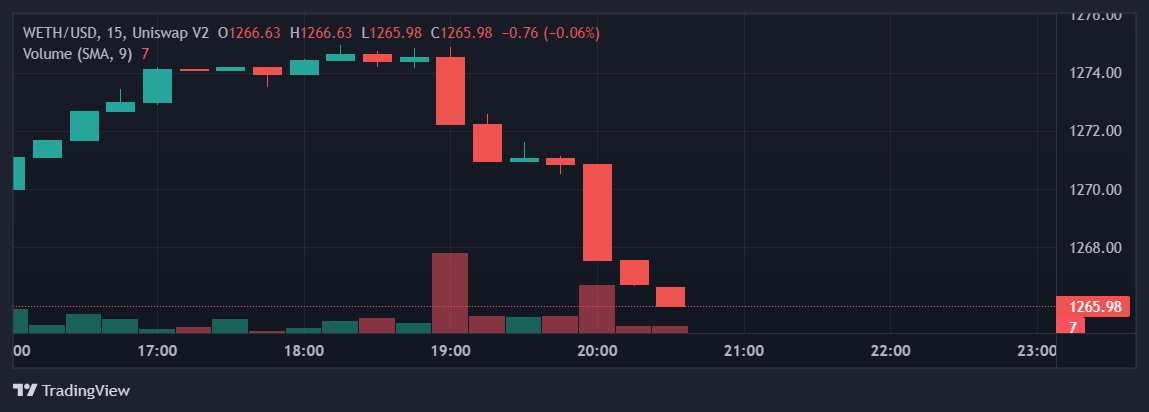
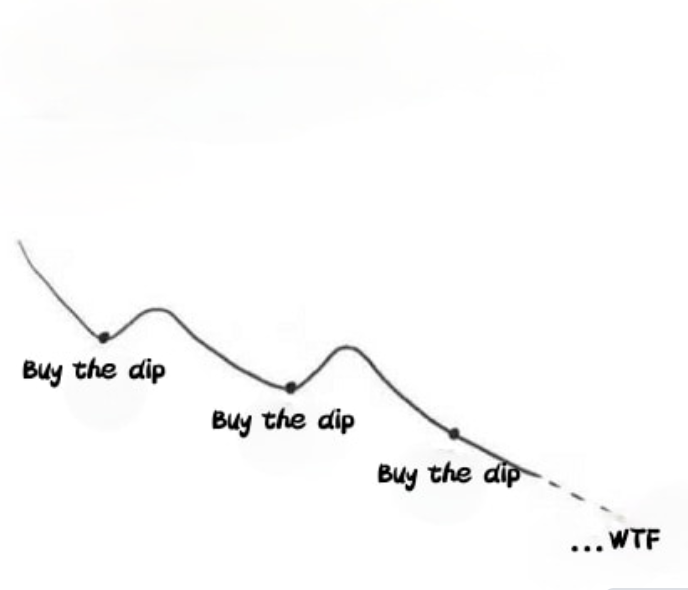
What’s another ‘better’ time to buy? Dip time? Well, learn to buy the dip…I’m finding it too hard to learn that, lol. When cryptocurrency prices dip, the market is only allowing youto invest. Dip times allow you to buy more at lesser prices, sell pressure overpowers the buying pressure and the market comes crashing. After a 10% price drop, buying the dip looks tasty, depending on how exciting a project’s fundamentals are, investors swarm to get some cheap tokens from weak hands dumping their stakes. However, the 10% drop might just be the first of many to come. When this is the case, prices keep crashing and the dip continues, and yes, the dip continues…lol. When this happens, your “best” time appears to be just a ‘good’ time if at all the project completely recovers from the dip.
Well, ‘buy the rumour, sell the news’. The crypto space is not only an innovative zone, it is also home to the biggest marketing hype and propaganda. When in obscurity about a pending announcement, influencers and holders tend to hype a pending announcement. A SpaceX collaboration? A merger with Tesla? Lol, you could see rumours like this fly around in suspense. But these could lead to huge price jerks running in multiples, the actual announcement most times is unable to impress the already elated investors who hope their investments become the project that flips Ethereum…or bitcoin. Investors take advantage of this to buy before the rumour spreads and sell just before the actual announcement. Sometimes the news is worth the hype and the price uptrend continues, but an investor should have less to complain about if the gains were good.
The best time to invest is relative, largely personal and determined by your willingness to hold on for dear life or to sell at a loss, or profit. It doesn’t get any worse than a terrible price drop, but investors stand a chance of recovering if they can hold on till when the price recovers — if it ever does. It is hard to determine the best time to put your money on the road, but it is easier to develop patience for your investments regardless of when you invested or where the price is at the moment. Cryptocurrency investments are risky and good research only lessens your chances of hitting the rock with your investment, but a good HODLing attitude increases your chances of striking gold with your investments.
Prior to the hard currency era, the barter trade system attaches value to real goods. Even in that era, real goods become a token of exchange. The valuation of an item depends on its availability and the demand for it. Tokenization is as early as ‘exchange’ itself.
A Token is a store of value attached to a concept, an event, or a project. Tokens attached to a project tend to embody the value of the project itself. A token hence is a representation of the value of the concept it is attached to. In simpler terms, a token derives its value from the concept or project it is attached to.
Tokenomics in plain terms is Token economics. Broadening this definition, tokenomics, it’s the science of token valuation, it encompasses every financial aspect of a token attached to a project and every effort of the project which affects the value of the token.
With the pitfalls of the barter system over-shadowing its advantages, concerned governments sort better ways to exchange and ease the burden associated with the barter system. This gave birth to our present-day idea of Tokenization. Introducing many solid materials as a store of value, and finally issuing Currencies as a store of value, these governments not only tokenized the market and the commodities traded, they tokenized the country/community as a whole.
Tokenomics in cryptocurrency
Blockchain technology has gained numerous applications. As a versatile technology, it supports several use cases depending on how it is been developed and the applications built upon it. For some of these applications, it is used plainly as a blockchain.
However, for most blockchain projects, cryptographically generated tokens are created to allow their users to perform some activities on the blockchain. Such blockchain projects are said to be Tokenized. cryptographic tokens assume the role of a token in its real sense.
Cryptographic Tokens attached to blockchains are generally known as cryptocurrencies. Apart from enabling users of the blockchain to perform activities on the blockchain, it incentivizes the users and represents both the financial and technological strength of the project. Cryptocurrencies reflect the value of the blockchain project which is attached.
What’s in the economy?
Token generation and distribution
Scarcity breeds value, this is a prominent idea in tokenomics. Cryptocurrencies are not indifferent to this. The rate of generation of blockchain tokens and the distribution scheme affects its reputation and subsequently value. Cryptocurrencies are generated via mining or staking as the case may be. Smart contracts blockchains also allow the creation of separate tokens for applications running on them.
For Proof-of-work blockchains whose tokens are generated by mining, miners are rewarded with tokens for solving puzzles and mining blocks. The number of tokens rewarded per block determines the rate at which the tokens are generated and this also affects the distribution. Blockchain developers introduced the concept of ‘halving’ to reduce the mining rewards over time hence reducing the rate of generation and distribution in order to build value. Projects with pre-mined tokens are often discriminated against as this is already a poor tokenomics practice.
Proof of stake blockchains rewards their users for locking up a certain number of tokens in their wallets or in a staking pool. This is a passive way of generating tokens. The number of tokens rewarded to each staked depends on the number of tokens they have locked up in their wallets or in the pool. Proof of stake blockchains also meets some discrimination as a passively earned token hardly earns enough reputation. Users are more eager to sell off passively earned tokens.
For the above reason, proof of work blockchain tokens usually get valued more than proof of stake blockchain tokens. There may be exceptions to this due to reasons mentioned below.
The functionality of the blockchain and utility of the token
Regardless of the generation and distribution scheme of any cryptocurrency project, the functionality, and utility of the blockchain is paramount. This simply explains why ripple sits third on the market capitalization ranking with over forty (40) billion tokens in circulation. How does the blockchain work? and what use is the blockchain? A good cryptocurrency investor must first ensure that the project answers these questions satisfactorily.
For national currencies, the GDP and financial stability of the nation play major roles in its valuation; for cryptocurrencies, it is the functionality of the blockchain and its use cases. The problems a blockchain solves and the population which adopts it (or will adopt it) is enough to drive the value to the moon or to the mud, regardless of how it is been generated, the amount in circulation, or how it is been distributed.
Developing a good use case for a blockchain project and working towards building a flexible blockchain that achieves this is the master key to a valuable blockchain token. A good generation and distribution scheme adds even more taste to this. A good example is bitcoin which sits first in the capitalization rankings with just over eighteen (18) million tokens in circulation.
Viability and the overall reputation of the project
How active a project is and the reputation of the project, the community or team behind it, affects the value of its tokens notably. The XRP army or the bitcoin maximalists? these are two very popular communities in the crypto space. The role they played/are playing in driving the value of their associated cryptocurrencies rings a bell across the crypto space.
A community standing behind a project and propelling its success has proved to be of value over the years. A good tokenomics practice may include building a great community around a project. However, this cannot be achieved without at least a promise of a potential good utility for the token.
This promise backed up with visible proof of hardwork from the team towards achieving this goal and also sincerity and transparency from the team is the first step towards attracting a good user base. The user base builds the community, and continued dedication and good practices by the team grow this support and solidifies the stance of the community on the project.
Considering a project’s tokenomics as an investor/enthusiast
.
The crypto space has a very dynamic atmosphere, with new projects springing up frequently and existing ones striving to gain ground in this very competitive industry. Each project comes in with a new concept and a proposal that aims to solve an issue. Written carefully in their whitepapers are plans and road maps towards achieving this stated goal. Each paragraph comes with a promise and a vision.
Despite these promises and carefully crafted proposals, a higher percentage of new projects fail. Most existing projects are merely struggling to retain their investors, stay in the game and make progress. This is always below the expectations of the investors who are compelled to invest in these projects because of the visions…and promises.
Each project which fails to live up to its promises incurs grave losses on the investors and drums home the importance of careful investigation prior to investment. Taking a deep look at the tokenomics of a cryptocurrency project cannot be over-emphasized.
A project which fails to present a feasible use case and a flexible functionality is a huge gamble. Having a good branding, token generation and distribution scheme may appeal to the shallow view of investors. For a clever investor, a shallow view appeal should be a mere attraction. A closer look at the feasibility of the proposals and the abilities of the project team is paramount to building trust and making careful investments.