
Category: Educational contents

  • How to DCA (Dollar Cost Averaging) like a pro.

    How to DCA (Dollar Cost Averaging) like a pro.

    dollar cost averaging

    You’ve been told to keep throwing in more money on your crashing asset to reduce the average purchase price. Saylor bought over 20k bitcoins at an average price of about $34,000. Considering the difference between the highest and lowest prices he bought them; that’s a long journey and a whole lot of Dollar Cost Averaging (DCA).

    Dollar Cost Averaging?

    What does that even mean? Well, if you have the habit of buying more of a particular asset even as its price keeps falling down the cliff, then you’re Dollae Cost Averaging, without even knowing the general term for what you are doing. A majority of cryptocurrency investors do this a lot, myself too. A pure show of belief and dedication…or just greed.

    Even your favorite Twitter influencer told you at least once to “fill your bags at these prices”. Even as the price goes lower, you still fill ‘those bags’. Dollar Cost Averaging and hoping for better days. Sometimes they come, other times…well, bagholding is also part of the game. If you are an active DeFi participant or a meme token connoisseur, you probably have tons of tokens you might never sell again. You kept buying down the molehill and now there is no way back up the dark pits. It happens.

    The advice to keep buying the dip and HODLing is a popular one, but there’s something you’re not being told…yet.

    In a space filled with thousands of projects claiming superiority, it is easy to lure investors with well-crafted promotional pieces. Everything runs down to why you should invest and continue doing that even when it all looks dark, or at least hold on to your investments and not exit the market even when you’re in gains. Influencers use bold words and appear more experienced than the larger majority; sometimes they really are. Other times, they are simply putting out their personal opinions and perceptions. This space still remains the most unpredictable investment option.
    The main factors guiding your choices should be your personal convictions through detailed research and experience. External suggestions are only resources to help your research process and shouldn’t form the main basis for your decision.

    That being said, Dollar Cost Averaging is a brilliant move…when done right. Getting it right isn’t a mathematical issue too. But consider these…

    Before buying more of a crashing asset, questioning the reasons for the loss in value might be important to your decision. Getting greedy when others are fearful is unarguably a good move, but sometimes this could also backfire; in reality, this move is always risky. Taking time to make certain considerations before ‘getting greedy’ increases your chances of averting some disasters. Price may dip badly in cases of irregular acts by the team behind the project you are invested in, this always drives the price nuts and could possibly dip to its last point. 

    If a crash isn’t due to some extreme reason which affects only the project then there are chances of making a recovery. Pulling a recovery depends on two factors; the project making the right moves and the market reacting positively to its move. Recovery cannot happen without these two factors being met satisfactorily.

    Taking a good at the team behind the project and their reaction to the dip is surely an important move to make. How the team is reacting to the drop in the value of their project and how they hope to get out of the ditch. In a situation where the team is already ‘exit scammed’ then this might not be possible. ”Almost impossible” is a better way to put it. Well, ‘impossibility’ is an illusion in space. But if a project team is gone for real, recovery is far-fetched.

    Alright, there are chances for recovery; but to what extent? Certainly, if a project is determined to keep working harder after a huge price drop, it is poised to pull back some losses, sometimes the pullback is not relative to the drop. For a project which experienced a 70% price drop, making a 70% gain from their current position still keeps them below their former top level. This indicates the extent to which a project needs to go before a complete recovery. Well, sometimes it is easier to go up from the bottom.

    While DCA is plausible and you’ve been advised to invest what you can lose; considering some or all of these also goes a long way to reducing your potential losses…at least.
  • Making the most out of your cryptocurrency investment.

    Making the most out of your cryptocurrency investment.

    cryptocurrency investment

    Two contrasting messages; “cryptocurrencies are the best-performing assets in the past decade” and “cryptocurrency investments are Risky!”. Same topic, different assertions, both of them correct. While many have made life-changing wealth through cryptocurrency investments, a lot more have a very different story to tell. While I’m not an advocate of cryptocurrency investment as just a ‘money-making’ scheme, losing out on any investment isn’t pleasant regardless.

    Came for the technology, stayed for the money…and vice versa. The majority of participants in this space are clearly interested in cryptocurrency investments’ ability to generate mind-blowing returns in a very short period of time. Those 500% gains in 48hrs aren’t something you see anywhere else; in crypto, it happened very frequently. I mean, who wouldn’t want to turn $8,000 into 5 billion dollars in just a few months?

    But more frequently than not, investors suffer huge losses on their cryptocurrency investments. This is partly due to the volatility of cryptocurrency prices; investors have a share of the blame anyways. Stepping into a space like this, the first thing to note is the fact that everything is time-bound. Price rises for a while, it also falls for a while…even your influencers’ shill tweets don’t last forever; it takes a dump to get them deleted.

    Well, that’s by the way. It’s exciting to be in a space where constant fluctuation is a norm, it’s the volatility that makes the money, and drains it too. Playing safe is a virtue. Going all in could work; but most times, the story is different. Even when you have invested ‘what you can lose’, it’s still unpleasant to see it crash. In this space, crashes are usual…and harsh.

    Informed investing could save you a lot.

    One popular mistake is ‘chasing pumps’. It’s human nature to chase trends and the fear of missing out is a huge drive. Investors rush to these hot shots with hopes of reaping from the next possible gains.

    This works, sometimes. It’s an uncertain market anyways and anything is possible, but being a successful investor hardly comes from jumping on trends. 50% gains, the rush kicks in. Speculators take the space and the project in question gets mentioned everywhere. The trend goes on, enthusiasts buy in with only a little idea of what the project is really about.

    TA analyses, hypes from influencers, gains on trading pairs…these things are enough to sweep anyone off their feet. But regardless of how hot the hype blows, clever investors will certainly do their own research before buying in.

    In profits, you should take some

    Cryptocurrency’s volatility means an investor could make crazy gains in a very short while. 5X, 10X…these are huge returns; in crypto, they are in fact meager returns and happen very often. Well, they could also go either way at the same pace.

    Filled with expectations of even crazier gains in the near future, an investor who already made tangible gains is caught in a dilemma. Cryptocurrency markets are fast-moving, double-digit price drops could happen in a blink of an eye, but selling after some ‘little’ gains might be too early. Despite having hit the initial target, things still look promising.

    “This could be a life-changing opportunity”…investors usually have these words running through their mind as the project they invested in continue to look healthier and promising, even after making some crazy gains already. Greed sets in — normal human behavior.

    To take profits or to continue holding? Any investor would find it hard to decide, especially when you are just a few steps away from hitting your target.

    Take a time to consider some conditions that are personal to you. What was your initial target? Over everything, why did you make this investment in the first place? To pay off your rent or to fix some debts? Probably a very different reason, but the level of importance is best known to you.

    Imagine waking up to a 30% drop? Jaw-dropping! It could be the other way around. But either way, what are the chances that you will take this event with your head held high? In a situation where you already hit your target but decided to hold on for a little while but things quickly go south. The regrets are huge, but are relative and could vary depending on the investor and the condition.

    Nevertheless, it still hurts to see the project you were invested in making crazy gains after you have sold off your investment. The sideways movement constitutes this dilemma.

    With this in mind, selling off your bags at once is a bad idea. Selling them in parts at different targets is probably a better approach. Thing is, selling in parts at different targets might mean you get out of the market with less; but if the price continued to go up, you’ll leave the market with more than you would have if you sold at your first target. If the price drops after you sold a part at your first target; you’ll leave with lesser, but the loss is tamed.

    Dealing with the ‘Winter’

    Every cryptocurrency investor wants the chart to stay green and never red; at least, until they get to their target and sell-off. Only a few realize that the path to their target is filled with trials and tribulations. Now I said that the religious way, lol. If you’re wondering; I’m one of those investors who want the greens to prevail at all times. I mean, who doesn’t? well, only the guy waiting to ‘buy at a discount

    Nevertheless; dips are inevitable, regardless. The chart goes red whenever a holder decides to exit the market, partially or completely. The extent of the dip depends on how many people exit the market and how much control they have over the distribution. This is the main reason why whale movements are studied and dreaded. A whale exiting the market could shake it badly, and the market could ‘tank’ depending on the whale’s holdings.

    Dips are not only ridiculous, but they are also (very) poisonous. Cryptocurrency dips are sinister; not only are they sudden, but sometimes they are wild. 20% loss within 20 minutes. It happens faster than that most times, everything a cryptocurrency investor dreads. Well, you were warned. This space is more volatile than chemistry lessons. Poor comparison if you ask me.

    For intending investors, the dip time is usually the best time to buy. Maybe the coin is just pulling the strings and you know…as the saying goes, ‘it always shines after the dark’. So, if it’s dip time, then it’s buy time…but that’s not always the case.

    The normal idea is always to buy the dip and hopes it doesn’t dip further from your purchase price. Moves like this have come out good sometimes, however many times, the current dip point is just the tip of the iceberg as more dip comes after the initial dip and leaves those who bought the initial dip at loss. Ready to buy the dip? Maybe you should give it a little thought and invest some time in making a little research.

    It is very important to study the events which resulted in this sudden slash in price. Getting greedy when others are fearful is unarguably a good move, but sometimes this could also backfire, in reality, this move is always risky. Taking time to make certain considerations before ‘getting greedy’ increases your chances of averting some disasters. Price may dip badly in cases of irregular acts by the team behind the project you are invested in, this always drives the price nuts and could possibly dip to its last point, I mean, the team is gone!

    Investing in what you can lose doesn’t mean you should actually lose them; it means you should try and make the most out of them. Making the most out of your cryptocurrency investment takes a level of carefulness and bold moves too. Playing safe should be considered at (all) times.

  • Sharding: Perfect answer to scalability?

    Sharding: Perfect answer to scalability?

    sharding
    Source

    Blockchain is in fact a powerful data storage technology. Every block carries a set of specialized information about the network; more popularly a record of expenditures and wallet balances. In cases where the blockchain is not just used for cryptocurrency transactions; a block could consist of patient information, supply chain record, details of an inventory…any digital information you could think of.

    The set of data on each block consists the block size. Just like your device memory and disks, each of these blocks occupies a space on the blockchain. The blockchain expands in size with every new block added. This works well but breaks down where the blockchain will need to store a huge amount of data accumulating over a very long period of time.

    Continuing this way, the blockchain expands to a point where it becomes ‘heavy’. A heavy blockchain comes with certain efficiency issues. Blockchains like this scale poorly.

    In computing and data storage, a truly scalable system is able to maintain a flexible size amidst ever-increasing data and is limitless in the amount of data it can carry. Blockchain start-ups face this problem commonly as the struggle to achieve a truly infinite scalable blockchain continues. While many blockchain projects boast of being scalable, they mostly fall short of their ‘claims’. Only a few can boast of reasonable scalability. These claims of Infinite scalability are mostly a marketing jibe used by many ‘Ethereum killers’

    If device memories could be expanded without limits and our devices can work well with some high-capacity cryptocurrency nodes running on them, then seeking scalability solutions wouldn’t be a thing. But each transaction on the blockchain generates a lot of data. These generated data need to be stored; accessed and assessed on the blockchain. Memory expansion is also not limitless, ‘heavy’ blockchains are notably sluggish and inefficient. Scalability is desired for high data structures like the blockchain and its node.
    Ethereum’s archival nodes currently sit at over five (5) terabytes (5Tb), the actual blockchain size well over a hundred (110) Gigabytes, and each block adds two (2) Megabytes to this already huge figure. Ethereum blockchain according to many ‘will never scale’ and in 2019, Bloomberg reported the Ethereum blockchain is ‘almost full’.

    Scalability and memory friendliness are both very appealing features and are vital for mainstream adoption. In recent times, Ethereum gas price has risen very high and the cost of running transactions on the blockchain could get unbearable at some points.

    Different projects have sought fixes for poor scalability through different tweaks, all centered on limiting the rate at which the blockchain expands. A very unique one is Sharding

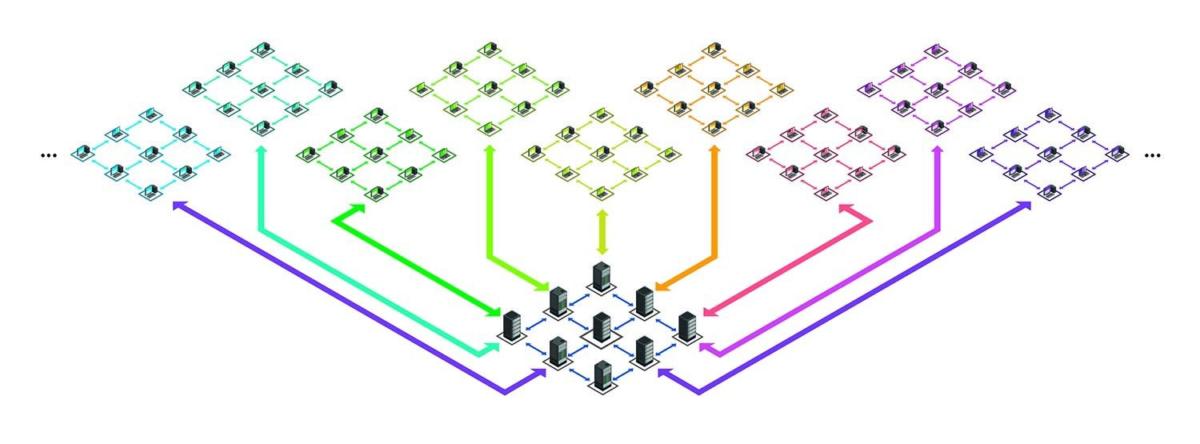
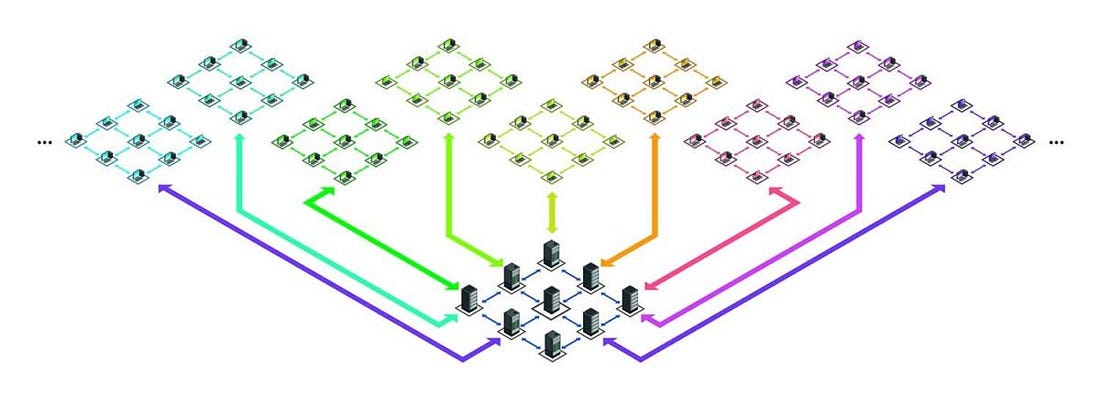
    Regardless of how fast a blockchain grows, splitting the blockchain into smaller interconnected units presents pieces of lighter ‘blockchains’ reduces the executable size considerably. This is the main idea behind sharding. As part of the upgrade to Ethereum 2.0, Ethereum developers are planning to adopt this technology to split the Ethereum blockchain into lighter pieces. Zilliqa, Polkadot and NEAR blockchain are already using the sharding technology to make their blockchain lighter and their network faster.

    Source

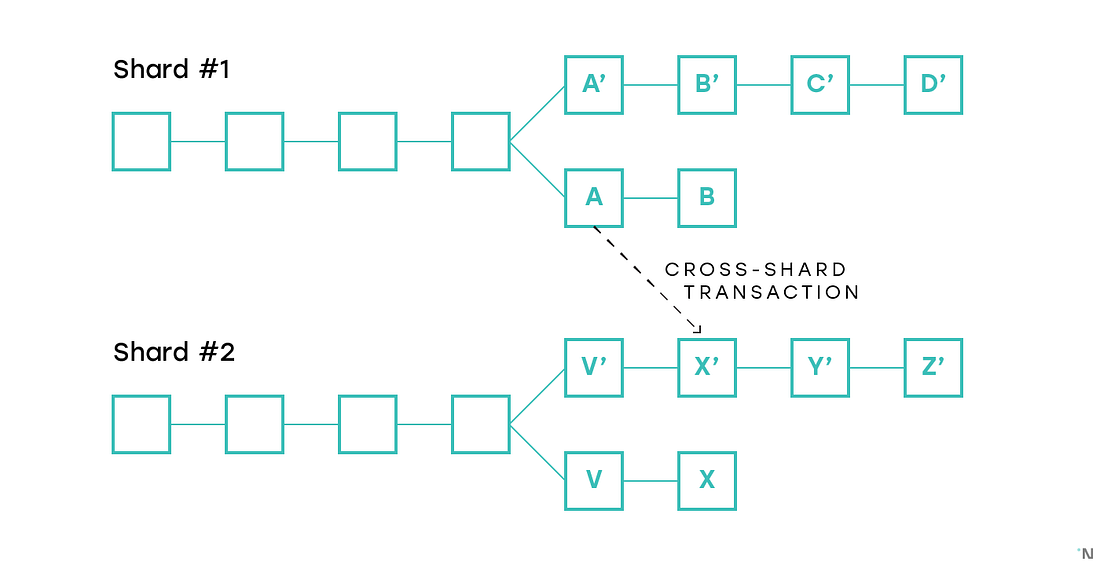
    The Sharding idea is to make a blockchain more efficient by partitioning it into lighter units. These ‘pieces’ of blockchains are known as ‘Shards’. Each shard store different types of data and are independent of other shards. Sharding on Ethereum will split the blockchain into 64 shards. Consider these shards as interconnected units that consist a blockchain.

    Blockchain projects using the sharding technique are adopting different strategies to create competent communication between the shards. Zilliqa uses a sharding version known as Partitioned sharding, where shards don’t communicate with each other directly through a central relay. NEAR protocol and Polkadot use State sharding, where shards communicate with each other through a state, or central relay. Ethereum blockchain will use the State sharding technology.

    Sharding comes at a cost — security. The fact is, most scalability protocols sacrifice security and decentralization for speed and efficiency. Sharding might be just another example. Splitting the blockchain into shards creates units of independent blockchains with relatively less security. These shards could be attacked individually in an attempt to compromise the blockchain. A successful attack on any of the shards affects the rest of the network.

    Despite a lot being done already in developing this concept, blockchain sharding is pretty much an emerging technology pioneered by just a few blockchain projects. There’s a continued attempt to develop it to a more competent level. Few shortcomings currently, but in essence, it has shown a lot of promise as a solution for blockchain scalability. Whether it is a ‘perfect’ answer to scalability or not is a question of how successful these projects working to optimize it become.

  • Here’s how you can get back your spent cryptocurrencies!

    Here’s how you can get back your spent cryptocurrencies!

    double spending

    Alright, I’ll make two guesses; first, you’ve surely spent a whole lot of cryptocurrencies and smart contract tokens and you’d love to have some or all of them back again. Now I don’t just mean transaction fees. I’m personally bad at guessing, but even if I got the first guess wrong; I’m sure about the second. Who wouldn’t want to eat their cake and have it back? Depends on how tasty the cake is!

    Well, thanks to some old blockchain tweaks, you could get your tokens back after spending them. And this is not some pro-hack article. Don’t get too excited anyways, this won’t come easy…if possible, at all.

    This phenomenon is more properly known as Double spending.

    Source

    During blockchain’s earliest days, developers argued the possibility of a user interrupting the network to revert their expenses. This was a possibility. Satoshi’s initial presentation of bitcoin via the bitcoin whitepaper featured plans to prevent double-spending using digital signatures and a peer-to-peer network.

    We propose a solution to the double-spending problem using a peer-to-peer network. The network timestamps transactions by hashing them into an ongoing chain of hash-based proof-of-work, forming a record that cannot be changed without redoing the proof-of-work.

    Bitcoin whitepaper

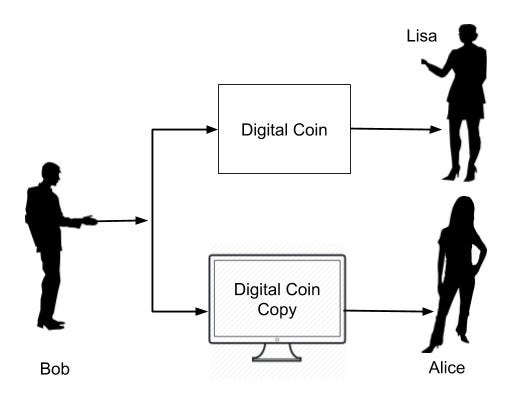
    Double spending is the possibility to interrupt the normal flow of information on the blockchain to enable a user to regain previously spent cryptocurrencies.

    source

    The blockchain is literally a ‘chain of blocks’. Each new block is linked to the previous block and identified using a unique hash. The latest block represents the current state of the blockchain and carries every recent information including wallet balances. If certain conditions are met, the blockchain could be intercepted and the current block modified or changed completely. This modification can enable someone to reclaim already spent assets.

    For someone to double spend, a secret block has to be mined that outpaces the creation of the real blockchain. They would then need to introduce that chain to the network before it caught up — if this happened, then the network would recognize it as the latest set of blocks and add it to the chain. The person that did this could then give themselves back any cryptocurrency they had spent and use it again.

    Investopedia

    The blockchain design ultimately limits the risk of a double spending attack happening. With the distributed control of the network to the miners, executing a double spend attack becomes hard and nearly impossible…depending on how guarded the network is. Blockchain networks like bitcoin and Ethereum with a large number of miners with varying computing powers will be relatively harder to breach. Each block is screened by miners before they are confirmed and added to the blockchain. Bad blocks are screened out in the process. Sneaking in a secret block will be a tough task on well-decentralized blockchains.

    Double spending attacks are much likened to 51% attacks. The attacker will need to control at least 51% of the total computing power of the network to execute a double-spend attack on the network in a proof-of-work blockchain. Similarly, the attacker will need to control over 50% of the staked token supply to execute a double-spend attack on a proof-of-stake blockchain.

    Lots of big words thrown around already. You’re probably just here to learn how to retrieve those sold coins and sell them again. Well, that’s simple enough…at least you have an idea of how to go about it now. No jokes though but while the distributed ledger technology makes double-spend attacks hard, there have been reports of attempts to launch this attack on certain blockchains.

  • Taproot and Serenity: How the big players are getting better.

    Taproot and Serenity: How the big players are getting better.

    taproot and serenity

    Have you ever wondered what it takes to get to the very top? A whole lot, right? A bit more than that. As if that’s not enough, it takes, even more, to remain at the top. This is the case for the two biggest cryptocurrencies — bitcoin and Ethereum.

    Worth over a trillion dollars and more than half a trillion dollars respectively, bitcoin and Ethereum have been an example to every other cryptocurrency and blockchain project. Much of the developments around this space revolve around them. Ethereum’s ecosystem particularly houses countless cryptocurrency projects and its technology and management tactics have been copied by even more projects.

    After the blockchain itself; Ethereum Virtual Machine (EVM) is arguably the most brilliant invention in the crypto space, following it closely is smart contract technology…also developed by Ethereum. Bitcoin represents a whole lot; more than just a technology, it represents an economic and political revolution. For this reason, the very top spot is well deserved. Apart from this, I’d tip Ethereum to go to the very top.

    At the top, these two projects continue to refine their technology and set the pace for other projects. Recent developments and improvement proposals have seen the bitcoin blockchain get even more potent and the Ethereum blockchain is set to undergo one of its biggest upgrades ever.

    In a move that hopes to ‘solve’ cost and efficiency issues, the Ethereum blockchain will be moving from Proof of Work to Proof of stake. The upgrade to Ethereum 2.0 also known as SERENITY is expected to bring moment-defining changes to the Ethereum ecosystem. This upgrade changes Ethereum’s consensus algorithm to proof of stake.

    Source

    The move to proof of stake is expected to add more flexibility to the Ethereum blockchain, a feature it terribly lacks. Proof of work algorithm is a complex computing protocol. Running a node for a proof of work blockchain requires enough computing power and of course, a whole lot of electrical energy. Working on computer resources, proof of work operations pile pressure on the device resources, store an enormous amount of data, and consume the device memory in an outrageous manner. Poorly scaling blockchains like Ethereum and bitcoin would consume double to three-digit gigabytes on your device and heat up the device.

    Proof stake algorithm is energy-conserving in all aspects. Due to its memory friendliness and relative simplicity, it makes judicial use of computing resources. Staking process also provides a more flexible token generation algorithm in contrast to the very complex proof of work. Getting rid of the mining process saves the electrical power required to mine tokens.

    Moving to POS spares Ethereum blockchain from this turmoil, guess that’s why it was named SERENITY! Well, it’s serenity and peace at last for Ethereum believers and skeptics. An amazing move…arguably.

    Elsewhere, bitcoin has just completed its first upgrade since 2017.

    At block 709,632, bitcoin’s Taproot upgrade went live. Bringing into life what has been described as the biggest bitcoin upgrade since its inception the Taproot upgrade is bitcoin blockchain’s first upgrade in the last four years. Over five months of thorough testing and optimization, the Taproot finally grows out!

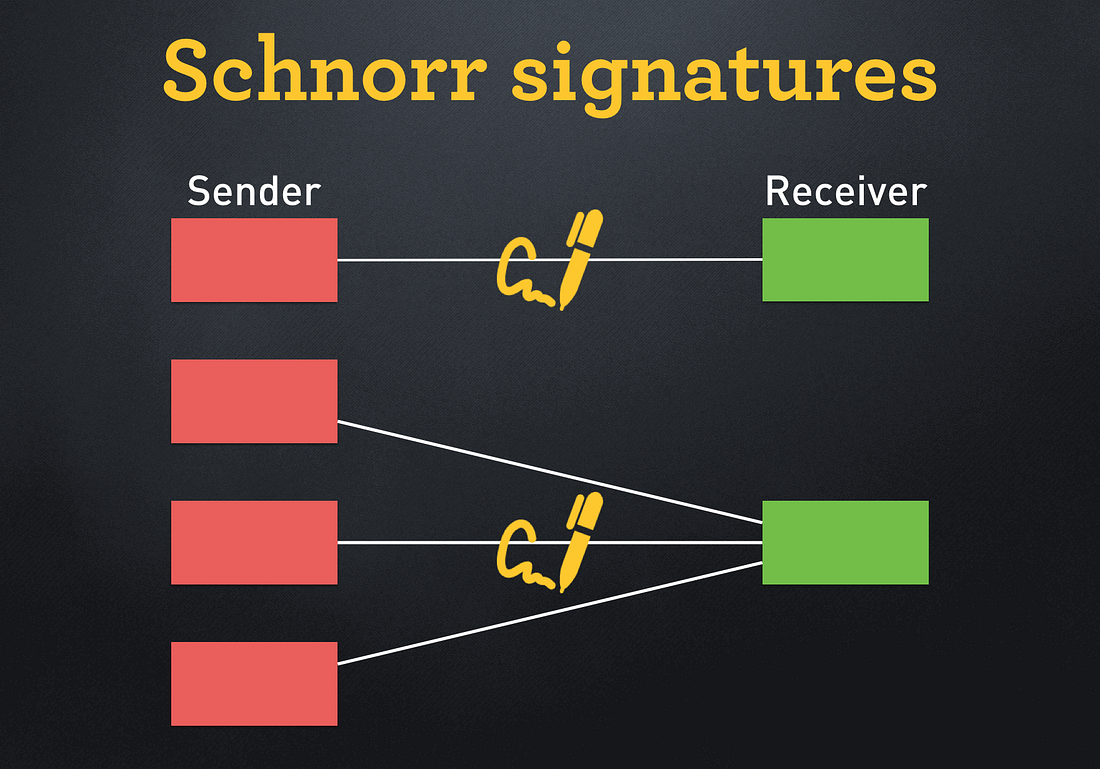
    In addition to the current “Elliptic Curve Digital Signature Algorithm” (ECDSA), the Taproot upgrade introduces the “Schnorr signatures”. ECDSA creates a signature from the private key that controls a bitcoin wallet and ensures that bitcoin can only be spent by the rightful owner. When used to sign multiple-signature transactions, the Schnorr signature algorithm adds a privacy layer to multi-signature transactions.

    ‘Privacy layer’ might sound too complicated for what the Schnorr signature actually does. The Schnorr signature combines the signatories of a multiple-signature transaction into one signature. The individual signatories in this transaction are a little bit more ‘hidden’ as the transaction is represented with only one signature.

    In addition to improved privacy for multisig transactions, the Schnorr signature can be used to significantly reduce the size of multisig payments and other multisig-related transactions, for example lightning channel transactions. It not only makes these transactions more private and secure; trimming the size of the transactions’ data makes for more efficiency in execution.

    I’d say the Schnorr Signature is the real game-changer. Currently, smart contracts can be created on bitcoin’s core protocol layer and also on the Lightning Network. The lightning network is a payment platform built on bitcoin, it improves bitcoin transaction speed and enables almost instant transactions. Smart contracts on the Lightning Network are notably faster and less costly when compared to smart contracts on the bitcoin core blockchain.

    By compressing multiple signatures into a single signature and greatly reducing the size of multiple signature transactions, the Taproot upgrade is set to add a whole new level of efficiency and speed to smart contracts on the bitcoin core blockchain and the lightning network as well.

    Taproot makes bitcoin stronger; Serenity will restore orderliness on the Ethereum blockchain. Two game-changers, occupy the topmost position. Developments in these two projects means a lot to the overall growth of the crypto space. With the Schnorr signature, bitcoin will power relatively more efficient applications, gain even more utility and more adoption. If successful, the Serenity upgrade will solve the biggest issues limiting Ethereum blockchain’s adoption. Either way, these two projects won’t be matching the breaks any time soon.

  • Securing your personal wallet(s) in a wild environment.

    Securing your personal wallet(s) in a wild environment.

    wallet security

    In a space of a few months, I’ve seen an alarming number of people lose their crypto assets. The number of victims is mind-blowing, but the fact that these assets were stolen from their personal wallets makes it even more surprising.

    Personal wallets are thought to be a better option for the safekeeping of crypto assets than exchange wallets. Trustwallet and MetaMask are amongst the best mobile wallets to store your crypto assets, this is where the full surprise comes in. Most of these victims stored their assets in either TrustWallet or MetaMask, yet these assets were lost in the most tragic way.

    Crypto assets are precious stuff, the thought of losing them is a pain only the bearer can properly explain…I actually doubt if anyone can properly explain the feeling that comes with losing a crypto asset.

    Maybe I need to correct an impression; your cold wallets are still safe. These hacks aren’t directly on the blockchain. Perpetrators have developed special social engineering techniques and some good technologies to support their fraudulent activities.

    Keeping your assets in a personal wallet is thus not the only thing that keeps you safe. In addition, keeping your wallets ‘safe’ is also vital. It’s a bit complicated, but here are a few tips to help.

    Keep your wallet SAFE

    Crypto assets are the best items to steal; yeah, that sounds a bit crazy…I know. Thanks to the anonymity features of cryptocurrency, a successful heist of crypto assets are hardly traceable. Perpetrators easily go away with stealing cryptocurrencies, especially when they don’t belong to a big organization. This put individual investors at high risk without tangible external security support.

    Mobile wallet users are not only vulnerable to hacks, but physical theft also happens at a high frequency. With these in mind; the importance of keeping your wallets safe can not be overemphasized. Keep it as safe as possible. Yes, your wallet and your phone too.

    Just like a dangerous chemical, keep them out of reach. Everyone is capable of siphoning your assets if they get sufficient access to them. For a cryptocurrency investor using mobile wallets, your phone should be private property. This means lesser freedom with how you share them with anyone apart from yourself.

    Sounds harsh but you might have to be strict with your mobile phone and disciplined too. Unsupervised use of your devices by any external person is a poor security practice.

    If you feel these rules are hard to adhere to, then consider getting a separate device for your cryptocurrency wallets. Probably the best practice.

    Keep your Phrase/key SAFE

    Here’s one piece of advice, “if you can’t keep secrets, then consider learning them before investing in cryptocurrency!”. Not just cryptocurrency, the internet, and most other forms of investment. Your keys, your investments; every vital detail of your involvement in cryptocurrency should be kept as secret as possible. Now that’s one hell of a task, but one you must perform if you must have a nice story to tell about your investments.

    Blockchain-level security protocols are almost impossible to breach without external aid, hackers are aware of this. As a matter of fact, most hacks are actually socially engineered. The easiest way of getting your security breached is through you. Hackers are social engineers; most hacks are done with tips given up by the owners of the accounts. Keeping your security details safe is your obligation. Social hackers devise means to obtain these details or helpful hints about them (your details) from you.

    Developing strong passwords is just one step toward your security, keeping these passwords safe is another (more) important step. Each of these is a tedious and sensitive process. A couple of writings on security tips suggest the best practice in password development. Taking a look at these tips, developing abstract passwords is the safest way to do it.

    A password without reference to common knowledge of you is unarguably harder to guess. Popular ways of developing passwords such as; a combination of your name, birth date, and other notable dates, hobby e.t.c have simplified ‘hacks by guessing’ in many known cases. An abstract password makes guessing harder for the intruder. However, a strong password not properly stored is in fact weaker than a weak password. It all boils down to one thing; ‘keep it secret, as much as you can’.

    Interacting with Decentralized applications (DApps)

    Decentralized applications are utility platforms built to interact with the blockchain and sometimes your wallets. They possess connectivity features that allow your wallet connects to the platform. This connection gives the platform certain automatic access to your wallet. Administrators of these platforms or hackers can harness this short-term breach in intact blockchain security to meddle with personal wallets. Original DApps can also be cloned to target unsuspecting users.

    For a personal wallet user, ensure to doublecheck the DApp’s website to ensure that you are visiting the right website. Also, do well to confirm the audit report of new DApps. Ensure that the project team is a trustable one and wouldn’t meddle with your assets as you connect to their website.

    Watch out for Scammers

    All those glitters are not gold. Regardless of how many times this warning is sounded, people still get unhealthily drawn toward shiny things. Shiny ideas, shiny projects, undeserved gains. The simple truth is, “if it sounds too good to be true, then it’s probably not true”. But greed clouds personal cognizance and in the pool of our greed, everything sounds good and everything is possible…like getting $3000 daily from a $1000 investment in a shady mining firm.

    Human greed is the biggest tool for scammers, tricking your greed and getting the best out of it. The most tactical scams are simply ones most developed to put your greed to work in the best way. Scams are the biggest threat to every cryptocurrency investor. Falling into one is way easier than you’d think but also relative to your greed level. Greedy investors are more vulnerable. Fix your greed, said it for the second time!

    Strategies used to break into user accounts are ever-evolving, everyday birth a new way to get to break into ‘secured’ profiles, looking out for existing and emerging means of scamming investors, and taking precautions to stay safe from them by applying advised security measures is the most effective way to protect your funds and stay safe in the internet

  • Tim Cook owns “some bitcoins”; should you?

    Tim Cook owns “some bitcoins”; should you?

    tim cook bitcoin

    A billionaire’s investment in any project should easily run into hundreds of thousands and probably millions. With that in mind; I’ll make a wild guess… Apple’s CEO Tim Cook owns at least TWO full bitcoins. That’s a wild but very conservative guess for a man presiding over a company worth more than the entire market capitalization of bitcoin and who sees cryptocurrency as an ‘interesting’ idea.

    Cook’s revelation comes as a little surprise to me. For a guy as brilliant as him; it might be easy to ignore ‘the future of money’ but a bit harder to ignore the best performing ownable asset over the past decade. Hard to say why Apple’s CEO bought a cryptocurrency but whatever the reason is, it is probably the same with other wealthy individuals who have added bitcoin to their portfolios over the past decade.

    Too bad, his revelation didn’t rally the crypto market, probably because he didn’t confirm if his company will be adding any cryptocurrency to its balance sheet or showing any form of special support for crypto products. But Tim Cook adding a cryptocurrency to his portfolio is actually a big deal.

    Hey, before going further, have you Followed us on Twitter?

    Cryptocurrency just like most other investments is a very risky venture, there’s unarguably a more pronounced risk when it comes to cryptocurrency. The often outrageous fluctuations and nerve-spinning volatility give it a good place amongst “a thousand ways to die in the west”…that wasn’t meant to scare you!

    But whether you should consider bitcoin and cryptocurrency investment just because some popular names are invested in it is simply not advised. These popular people are regarded as smarter and more informed; but, making your own research and personal considerations have worked even better most times.

    Blockchains are one of the most interesting inventions of the past couple of decades. The ability it poses and its numerous applications are certainly one to look out for. Cryptocurrencies aside, blockchains are one of the most advanced computing protocols which are unsurprisingly gaining mainstream attention.

    Source

    An immutable store of data, a flexible network for building almost anything on the internet, the list is endless. Venturing into the crypto space is as good as swimming in the oceans of blockchain technology, and getting used to what has been a tangible offset of traditional ways of data storage, internet, and finance…to mention a few. Regardless of the risks, these features should make you give it a try.

    Even if the technology fails to impress you, it is hard to ignore the fact that cryptocurrency investments make mouth-watering returns. For investments in the last decades, cryptocurrencies have made the biggest return on investments, posting up to 20X gains.

    The ‘fast money’ idea is surely an unhealthy one and an investor who really wishes to be successful in the crypto space must first get rid of this orientation and embrace the technology and avoid being over-expectant of their crypto bags. Regardless, there is an already proven fortune in cryptocurrency investment, but just like every good thing, this takes a lot of time and requires some good level of patience and persistence.

    Source

    To spice it all up, cryptocurrencies come with some enticing level of freedom and privacy in the management of your finance and the performance of some core financial activities. Probably this doesn’t sound so clear to you, but here in the crypto space ‘you are your own bank’, guess that sounds better! You don’t need a stockbroker to help you invest in cryptocurrencies, the simplicity makes it possible for a total noob to invest in cryptocurrency and manage this investment.

    Now should you invest in bitcoin or any other cryptocurrency? Personally; I’d say yes, but that could be a very wrong source for your answers. You probably already own a few cryptocurrencies for different reasons…making some profits is a common one. Regardless of deep you are invested or will be investing in cryptocurrency, understanding the basics and making informed decisions is paramount. Albeit tons of compelling shills on the internet, an informed investor is healthier for the project and other investors too.

  • Bitcoin is stronger with its ‘Taproot’

    Bitcoin is stronger with its ‘Taproot’

    A couple of weeks ago; you could simply describe bitcoin as ‘a sophisticated payment technology’ and still make a whole lot of sense. Very reasonable when you consider the fact that the bitcoin blockchain which powers the alpha cryptocurrency is built to simplify peer-to-peer financial transactions while employing some very clever tokenomics and economic principles. Bitcoin maxis would easily frown when you describe their beloved investment this way; but yeah, I’m no maxi.

    This description categorizes bitcoin as a payment technology. Sorry, but you can shake that idea off now.

    Hello Ethereum! Not so soon anyways…guess I got too stoned by the thought of what can be achieved with bitcoin following its latest upgrade. More private transactions, increased efficiency, and of course smart…

    Hey, before going further, have you Followed us on Twitter?

    In case you missed the news; at block 709,632 the bitcoin taproot upgrade went live. Bringing into life what has been described as the biggest bitcoin upgrade since its inception the Taproot upgrade is the bitcoin blockchain’s first upgrade in the last four years. Over five months of thorough testing and optimization, the Taproot finally grows!

    And if you’re still wondering how big this is for bitcoin and cryptocurrency, it is HUGE.

    In addition to the current “Elliptic Curve Digital Signature Algorithm” (ECDSA), the Taproot upgrade introduces the “Schnorr signatures”. ECDSA creates a signature from the private key that controls a bitcoin wallet and ensures that bitcoin can only be spent by the rightful owner. When used to sign multiple-signature transactions, the Schnorr signature algorithm adds a privacy layer to multi-signature transactions.

    ‘Privacy layer’ might sound too complicated for what the Schnorr signature actually does. The Schnorr signature combines the signatories of a multiple-signature transaction into one signature. The individual signatories in this transaction are a little bit more ‘hidden’ as the transaction is represented with only one signature.

    In addition to improved privacy for multi-sig transactions, the Schnorr signature can be used to significantly reduce the size of multi-sig payments and other multi-sig-related transactions, for example, lightning channel transactions. It not only makes these transactions more private and secure; but trimming the size of the transactions’ data makes for more efficiency in execution.

    Smart contracts? Arguably the most important feature of the Taproot upgrade…

    I’d say the Schnorr Signature is the real game-changer. Currently, smart contracts can be created on bitcoin’s core protocol layer and also on the Lightning Network. The lightning network is a payment platform built on bitcoin, it improves bitcoin transaction speed and enables almost instant transactions. Smart contracts on the Lightning Network are notably faster and less costly when compared to smart contracts on the bitcoin core blockchain.

    By compressing multiple signatures into a single signature and greatly reducing the size of multiple signature transactions, the Taproot upgrade is set to add a whole new level of efficiency and speed to smart contracts on the bitcoin core blockchain and the lightning network as well.

    An efficient smart contract platform with privacy features for multi-sig transactions unlocks more possibilities for the bitcoin blockchain. In a blink, you could think about a handful of new applications this could power.

    With a ‘Taproot’; the bitcoin blockchain is stronger than it has ever been. Technologically this is a huge step forward. Bitcoin to 100k EOY? Well, ‘effect on price’ is not a yardstick for measuring technological breakthroughs. If it was, bitcoin climbing past $0.1 million would be an understatement.

  • Polygon’s ZKEVM promises scalability and compatibility with Ethereum blockchain.

    Polygon’s ZKEVM promises scalability and compatibility with Ethereum blockchain.

    Polygon’s ZKEVM

    Polygon had a Bullrun type of move over the past week, they’ve got a lot going on and the market reflects that. Nailwal and his team are obviously killing it. At least, Paulo and his Tether team now have a new platform to print the ‘all important’ USDT. Not trying to throw shades…just stating the obvious. In the middle of a strong bull run; that move was quite impressive, but it wasn’t without a trigger. Polygon had announced an announcement.

    Well, cut the wait…if you did wait at all. Polygon is launching a scaling solution for Ethereum. Ethereum’s inability to scale has turned out to be a good business itself. A handful of projects only exist because you might have to pay over $20 to execute a smart contract transaction on Ethereum mainnet, and sometimes more…or less. Optimism, Arbitrum, Binance smart chain, Fantom opera chain, Avalanche, and Polygon itself; you’ll be making up a huge list if you attempt to mention every multi-billion-dollar projects that are relevant because Ethereum is slow, heavy…and boring. The mainnet itself might not scale anytime soon, but these fixes and alternatives are somewhat more efficient. Fast and cheap; the common features.

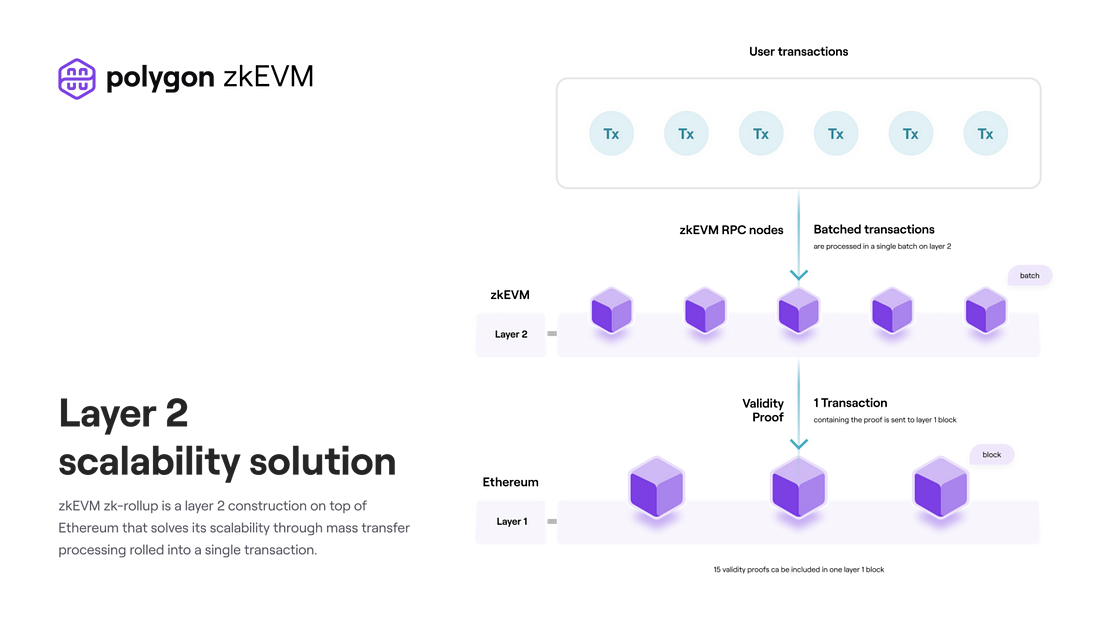
    One other thing in common; they sacrifice decentralization and security. The blockchain trilemma. When some of these cross chains aren’t halted by the validators, they are incredibly fast and could execute smart contract transactions for a few cents. The constant on-chain mishaps and halts defeat the goal of sovereignty and decentralization. Polygon’s Zero-knowledge Ethereum virtual machine (ZKEVM) will leverage layer-2 technology to develop an efficient scaling solution for Ethereum that maintains Ethereum blockchain-level security.

    Layer-2 scaling solution is a collection of infrastructures designed to take the bulk of your activities on the Ethereum blockchain away from the main net. Moving away from the main net and utilizing scalability infrastructures gives projects built on layer-2 certain clear-cut advantages.

    Leveraging cleverly built resources, Layer-2 projects are building sustainable facilities on the decentralized layer of the most used and innovative blockchain to date. This fast-growing space is welcoming completely new projects as well as existing projects delving into the second layer to build a more efficient version of their products.

    ZKRollup speeds up smart-contract transactions and offers a cheaper transaction cost by mass validating transactions. Transaction validation is hence simplified and facilitated as a huge number of transactions are validated at once. ZK-Rollups play the ‘exit game’ ingeniously and perfect the shift from Ethereum’s congested layer-1 while ensuring better functionality than the closely related ‘optimistic rollups’.

    We knew that Ethereum needed to scale. We knew that ZK Proofs were the best way to do so. We knew that EVM-equivalence was the secret sauce that would empower both devs and users. So we built Polygon zkEVM, the next giant leap for Ethereum.

    Polygon’s ZKEVM is compatible with Ethereum’s Virtual Machine; developers on Ethereum can easily port their projects or build new ones on Polygon’s ZKEVM without necessarily making changes to their codes or having to learn a new coding language. Polygon’s ZKEVM will go live, pending completion of public testing.

  • The Saga: Solana is building a blockchain-based smartphone.

    The Saga: Solana is building a blockchain-based smartphone.

    solana smartphone

    A blockchain-powered smartphone is a popular topic, despite not being in relevant existence. A topic of widespread discussions and rumors over the years. Building the core functionalities of a smart device on the blockchain is expected to add a layer of privacy, security, anonymity, and overall improved performance. Relative to contemporary gadgets; a device built around the blockchain should have more flexible support for the decentralized web, seamless value exchange facilities, and other provisions of blockchain technology. While many blockchain enthusiasts will be expecting top-level immutability in a blockchain-focused smartphone; everything about a blockchain phone has been mere speculation…a Saga.

    Looks like we are close to the end of a long-running Saga.

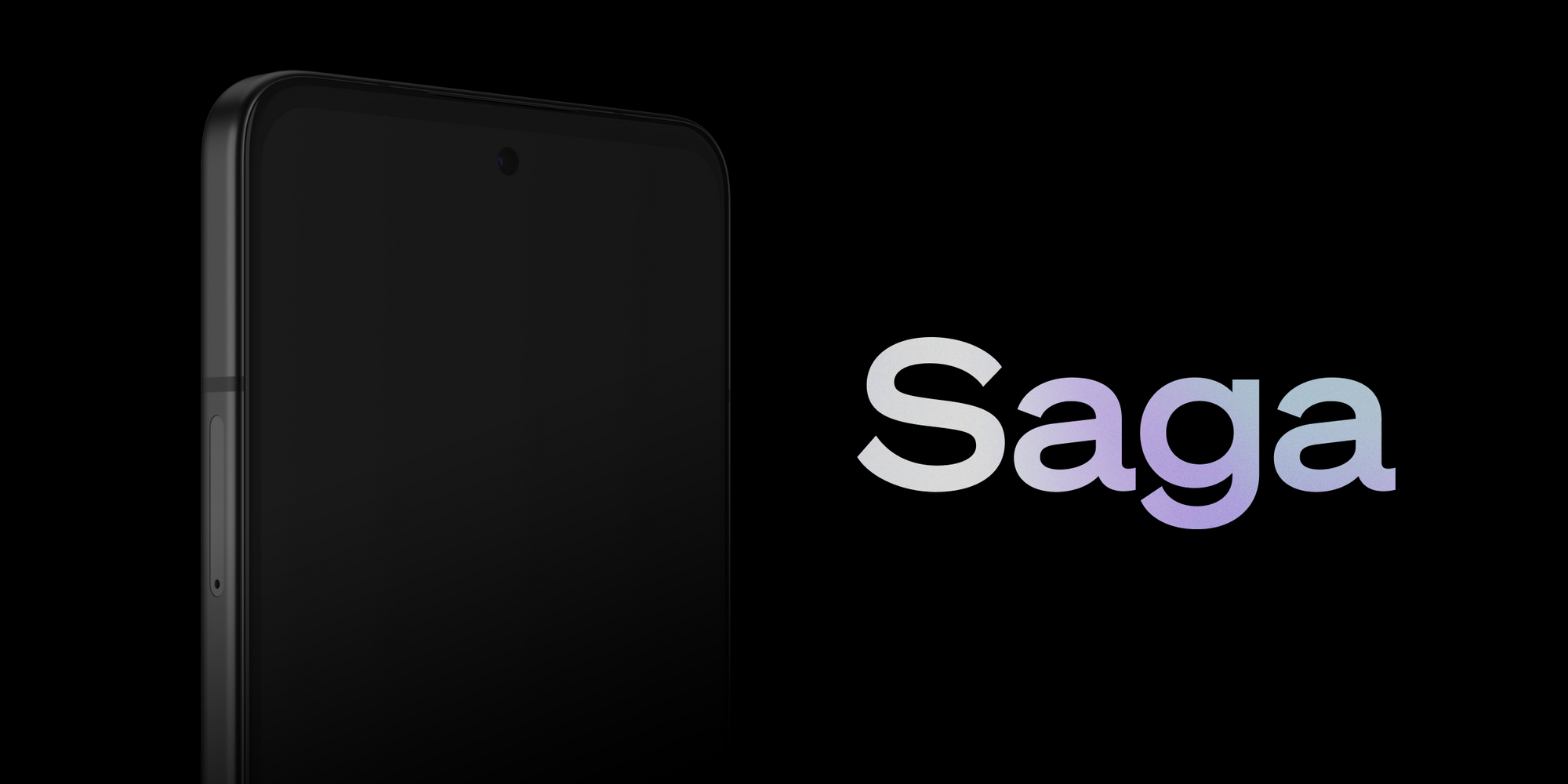
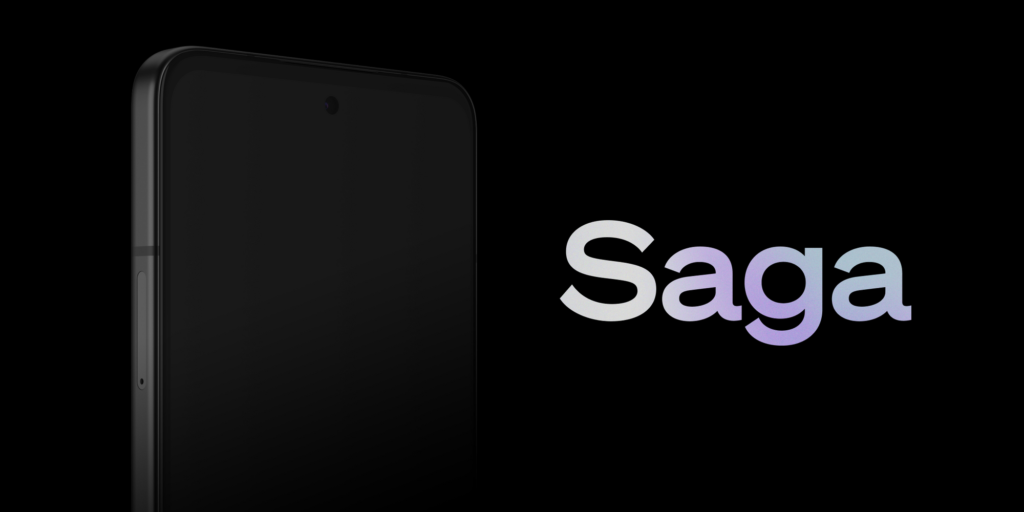
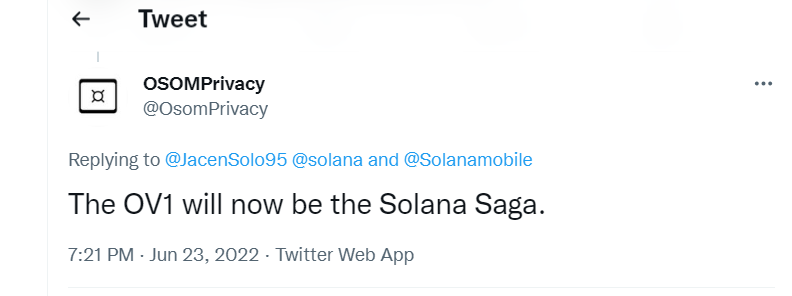
    Privacy-focused tech company — Osom, has announced that it would be partnering with a popular blockchain project — Solana to produce Solana Saga; a blockchain-focused smartphone built on the Solana blockchain. Solana Saga is an improvement from Osom’s OV1 which was expected to be released later this year. As part of the partnership; Solana Saga will be released with core functionalities built on the Solana blockchain.

    When not switched off by the validators; Solana is a super-fast blockchain featuring support for smart contracts and decentralized applications. Dubbed ‘Ethereum killer’ (a name it shares with tons of other similar projects), Solana presents faster and cheaper transactions relative to the Ethereum blockchain. Thanks to an overall improved throughput; Solana boasts a rich ecosystem with a handful of reputable projects, mostly NFT and DeFi projects.

    Working on the Solana Saga, the blockchain project will be looking to team up with the Osom team and integrate Solana blockchain into the core functionalities of the device. Efficient support for Web3 applications will surely be the main feature of the Solana Saga. Osom is already hands-on with privacy as a feature, they will be looking to develop blockchain-level privacy with the Solana team.

    Solana Saga will run on Android OS and flaunt some impressive memory and processor features. 512GB storage memory and 12GB RAM; Solana Saga fits into the everyday smartphone user’s memory capacity cravings. A big 6.6-inch screen and a 50MP rear camera quality. Saga will come with some pretty attractive features and bodywork as well. It is expected to be rolled out in 2023 with pre-orders underway already.

    Well, my opinion probably doesn’t even matter; Just like the Solana coin, Solana Saga will be surely swooped by a sea of buyers. Part of the perks includes an NFT, I’d expect an NFT sort of craving for the new Solana phone. With Sam and his co ‘researchers’ from the Alameda group putting their weight behind any Solana project, there’s surely enough purchasing power on the way.

    A mobile phone project for a blockchain that “is still in its beta-testing phase” is an audacious move…unarguably. A dollar for every time Solana blockchain goes off would make anyone rich; pun intended. Solana’s instability and regular outages are a bigger problem than the scalability issues it claims to solve. Albeit relatively young and obviously brilliant, Solana developers still have a long way to go in developing their blockchain to industry standards. A mobile phone project is somewhere down in the hierarchy in terms of relevance. Any true enthusiast will choose a stable and secure Solana blockchain over a Solana smartphone. $1000 for Solana Saga even makes this decision more likely.

    Anyways, “numbers go up”; anything to bring this to fruition is considered fair in the crypto space. Osom probably received much-needed funding as part of the deal. Pushing back productions and overhauling functionalities to integrate web3 support isn’t an easy decision. However, this partnership could afford to wait. A stable and more reputable blockchain fits in better. Solana might satisfy the latter, but can’t say the same about the former. At least, the beta testing stage should be done first.
    If the crypto space and the world is ready for a blockchain smartphone is uncertain too. We are hardly ever ready, but penetrating a blockchain phone into the gadget market will take some advanced effort and marketing skills. While Solana might have financial strength, it goes beyond that.
    Solana’s price shot up 30% on the announcement; it’s fair to say that the first goal was achieved. The big doubt is on the success of the Solana Saga in penetrating the market and functioning to users’ taste…this is even more important. There should be a backup plan in case the Solana blockchain goes off unexpectedly (or expectedly); they will be needing that…a lot. Not technical advice though, I’ll be looking forward to Saga too.