Tag: Ethereum

  • Pay in crypto: Popular platforms where cryptocurrency payment is accepted.

    Pay in crypto: Popular platforms where cryptocurrency payment is accepted.

    With the recent wave of adoption, you’ll soon be able to make purchases at your favorite kiosk and pay in crypto. Don’t forget to leave a good tip. You might be impressing the next store. Well, I guess I’m a little bit backward; many small-scale stores already accept cryptocurrency payments. Without government approval, clever merchants are devising ways to include a two trillion-dollar sector in their payment option.

    Even if you don’t fancy cryptocurrencies, you face a dilemma, one of which is missing out on the future of money and technology. And if you don’t fancy cryptocurrency, then you simply don’t understand it. Making payments with cryptocurrencies is a fun exercise, except when you are paying transaction and withdrawal fees…arguably.

    While you wait for your closest store to add a cryptocurrency payment option, here are some popular platforms where you can spend your cryptocurrency in exchange for desired services.

    Travala

    Cryptocurrency enthusiasts are naturally adventurous, you surely wish to explore the world. Aviation firms offer a comfortable means to travel around the world, but you’ll have to pay a fee; a fare actually. Mostly in fiat. You have crypto and you wish to travel the world too. Yes, you can! Travala.com offers cryptocurrency payment options for flights with over 500 airlines. Here, you can also book your stay in thousands of hotels worldwide. Travala offers cryptocurrency payment options for recreational activities in some of these locations. Bitcoin, Ethereum, BNB, and a couple of other cryptocurrencies are accepted on Travala.

    Hostinger

    So, do you have an idea you wish to bring to life? The internet is one of the best media to flaunt your ideas and create an audience. Getting a website is one way forward. Hostinger is one of the most popular web hosting platforms and offers incredible rates for different web hosting plans. On Hostinger you can pay for and renew your web hosting plans using cryptocurrencies. Don’t worry, it is incredibly swift and you’ll hate paying with fiat when you experience it!

    Shopify

    Shopify is a powerful tool for merchants, it offers merchants an efficient avenue to host their businesses on the internet and perform swift exchanges without worrying about the complicated aspects of e-commerce. Shopify is currently used by millions of merchants to amplify sales and promote their businesses. You can do the same as well, Shopify simplifies e-commerce. And yes, you can pay for these services with your cryptocurrencies. Shopify accepts payment in cryptocurrency for merchants as well as consumers.

    Pornhub

    The adult video business is a booming one, it has always been. With millions of people streaming adult videos every minute, it is in fact a hot shot. Pornhub is the leading platform in adult video retail. Following a fallout with mainstream payment facilities — Mastercard and Visa, Pornhub has added cryptocurrency payment options for premium content on their platform. You can easily subscribe for the most satisfying content using your cryptocurrencies. Bitcoin, Ethereum, Tether, and BNB are currently accepted.

    PayPal

    The payment giant is used by over twenty million merchants around the world for swift payments. PayPal offers users a way to send and receive money as individuals or merchants. The swift payment platform is available to people in most parts of the world, a majority making fiat payments. In addition to fiat payment options, PayPal also allows you to make and receive cryptocurrency payments. Bitcoin and Ethereum are currently accepted. Pay your pal…in crypto.

    Twitch

    Live video streaming is fun, for the streamer and the spectators as well. With Twitch, gamers and other content creators find a medium to share their activities with their audience and also expand their followership. Twitch is one of the most popular live streaming platforms. Payments on Twitch can be made using cryptocurrencies.

    Axa Insurance

    Bitcoin is your best insurance option, but that’s simply hard for most people to understand. Mainstream insurance firms are pretty much functional anyways. It is however, very possible to combine both. If you’re already insured in crypto and wish to diversify your insurance, mainstream insurance companies offer financial protection against future unfortunate events. As a cryptocurrency holder, Axa insurance offers you an option to pay for your insurance plans in cryptocurrency!

    Tesla

    Self-driving and electric cars are the future. Through his electric car manufacturing company, Elon Musk gives us a look into the future. Electric cars are evolving and in constant development. Teslas are cool; I mean who doesn’t want one? And when you can easily swap your bitcoin for a Tesla, it’s even more fun. Bitcoin payment option is available for coiners who wish to purchase a Tesla. Tesla Model 3 looks cool, you might want to check the model X too. I wouldn’t swap a whole bitcoin for a Tesla though, but that’s a personal decision.

    Off-White

    Fashion is a vital part of lifestyle; you certainly have to embrace it. Off-white, the popular designer brand has delivered tongue-wagging clothing designs over the years. Off-white sneakers and clothing are cool, but what’s even cooler is that you can now pay with bitcoin on the checkout page. Happy shopping!

    Wikipedia

    The internet is home to unlimited resources. Information is littered throughout the web. Wikipedia is almost a web on its own. Thanks to thousands of contributors, Wikipedia has created an online encyclopedia with detailed information about almost everything. Millions of internet users have found this platform resourceful. If you’re one of them, consider donating to the world’s biggest encyclopedia. Cryptocurrency donations are accepted.

    Cryptocurrency and blockchain technology has lasted for over a decade, yet the past three years are the most significant in terms of legal involvement. Bans, regulations, acceptance; we have seen a lot of these in the past few years. It gets intense and more positive each new year. This looks like the year cryptocurrency finally penetrates the central government. Before that happens, consider booking your next flight with cryptocurrency. Safe flight!


  • Non-Fungible Tokens might replace Netflix Subscriptions!

    Non-Fungible Tokens might replace Netflix Subscriptions!

    Obviously not the best series on Non-fungible Tokens yet, but if you’ve been following this series; one thing for sure is, you realize that NFT isn’t just about creating art and selling them or buying art on NFT marketplaces. Check out the previous part, hopefully, you’ll be able to get your flight tickets as NFTs in the very near future. NFTs are here to stay, the question is how far they will go in penetrating the most important aspects of human life, especially where it concerns flexible ownership structure and ownership verifications.

    We’ve discussed a few of these possible applications and again, we take a look at a few others.

    Consider following us on Twitter

    Media ownership

    Unarguably the most popular application of NFTs. You probably own a number of digital art NFTs. The weirdest images are hitting NFT marketplaces and getting sold for some tangible price. Artists are jumping in to at least make a living through their craft. Musicians and video content creators are also exploring the chances of distributing ownership rights of their media via NFTs. Non-fungible tokens have proven to be competent in this aspect, obviously.

    non-fungible tokens

    It’s no news that “NFT arts are overhyped”, arguments about ownership of these sold arts continue to heat up too. Regardless, NFT arts continue to grow even stronger.

    Paid online subscription

    Netflix and chill? Even if you’re not a fan of movies, you still have to subscribe to a couple of online services. The only tangible change in online subscriptions since they became a thing is the cost of a subscription. The technology and the user interface…basically the same thing. Not really so progressive, in my opinion, especially when there are available alternatives that work even better. Paid Subscriptions, in contrast to the aforementioned application, are rather time-based and not a one-time redemption process.

    NFTs still come into play, regardless. Developing NFTs to represent and validate subscriptions will improve the accuracy of financial estimations. Not just that; NFTs are immutable, and subscriptions cannot be maneuvered if they are issued as NFTs.

    Meal tickets and food stamps

    We’ve mentioned ‘tickets’ in almost every part of this series, and you’d at least agree that the current tradition of carrying physical tickets is getting boring. It’s arguable if anyone ever found them aesthetically appealing. NFTs are the best bet if we’re ever going to go paperless in ticket vending. Meal tickets, food stamps…presenting these at the counters is so 1980s.

    NFT tickets are a perfect replacement. In addition to adding the very much-needed flair to the ticket vending system, NFT tickets are easier to disburse, handle and redeem. Redeeming NFT tickets at the counter is as easy as buying coffee with the bitcoin lightning network and easier than surfing through your wallet to find a frail-looking paper ticket.

    The list is actually inexhaustible; it only takes a little more exposure to realize a couple of other ways digital signatures could replace a number of existing options in some concerning areas. You surely have a few suggestions, share them!

  • DeFi for Noobs.

    DeFi for Noobs.

    decentralized finance
    Source

    If you live in the crypto space for a day, the acronym ‘DeFi’ comes your way almost twice per hour. No doubt, my statistics are right…or very close to it. The crypto space is a very dynamic environment and everything moves so fast, but you must be living under a rock if you’ve only got to hear about DeFi a few times. You’re unlikely to discover this article if you live under a rock anyways. So, the most probable case is that you’re yet to fully grasp the concept of DeFi.

    Swaps, farms, pools, and ‘connect wallet’ lol. Like a ‘plug and play’ system, connecting your wallet to a website is all you need to experience a whole world of fun …and risk. Yeah, accidents on DeFi platforms could get very popular and your first encounter might be through an exploitation report. But DeFi is way more positive than this.

    DeFi is an acronym for Decentralized Finance. Decentralized financial systems comprise applications built on top of blockchains that facilitate ‘permissionless’ financial services and provide seamless options for running financial activities. DeFi hopes to introduce the core virtues of blockchain technology to the financial system. Bitcoin introduced the concept of ‘decentralized means of payment’ which runs on a distributed ledger system, the blockchain.

    DeFi is a blockchain notion. It encompasses every attempt by blockchain and cryptocurrency projects to create a decentralized replacement or alternative to real-life financial activities.

    From Bitcoin blockchain itself and its lightning network to decentralized exchanges and financial institutions built on the blockchain; blockchain technology has dived deep into the economic sector and is making attempts to create a new and better way of handling financial activities.

    Contemporary and emerging DeFi projects are, expanding the scope of decentralized financial systems. They are shifting the paradigm from ‘portable means’ of payments to smart contract applications running independently on a parent blockchain and offering advanced financial services such as insurance, lending, wealth management, and an array of other financial management using blockchain resources and exhibiting desired blockchain features such immutability, security, privacy, speed and interoperability.

    Smart contract blockchains are hence home to DeFi projects, Ethereum particularly is housing the majority of DeFi projects. Augur, one of the earliest smart contract projects on the Ethereum blockchain and a popular DeFi project offers a decentralized alternative to advanced financial instruments such as index trackers and futures. Aave (LEND) runs on Ethereum Blockchain and provides decentralized lending and borrowing service. Binance Smart Chain (BSC) and TRON blockchain smart contract layers also facilitate DeFi and provide resources that allow DeFi projects to thrive.

    Amongst the numerous enticing features of decentralized finance projects, ‘liquidity farming’ has gained its place as the most exciting exercise in decentralized financial systems. The idea of leveraging DeFi protocols to generate annualized interest returns of up to 30% of your initial investment and a couple of other benefits will surely impress any investor. Due to this, DeFi presents enticing opportunities for cryptocurrency investors to dive into the crypto space — a major cause of the recent boom in DeFi projects.

    DeFi has benefited highly from incentivization. Flexible staking opportunities, high-interest loans on lending platforms, and high APR liquidity farm rewards…you might want to give up your agriculture career and join crypto. Well, you can do both.

    DeFi isn’t without some shortcomings anyways. DeFi space marks a huge resemblance to early crypto space. The emergence of new projects which are mostly a copy of already existing projects with just very little differences; bogus promises, pump and dumps, naive and gullible investors, shady project teams, and ‘get rich quick’ schemes. It has become a hotspot for ‘decentralized accidents’.

    Nevertheless, it is still a brilliant invention and is developed to fix these major issues. Mainstream firms are also impressed by the potential of decentralized financial systems.

  • Staking rewards and Liquidity Farming: Is DeFi ‘free money’?

    Staking rewards and Liquidity Farming: Is DeFi ‘free money’?

    Just like most other hyped blockchain concepts, DeFi has become a goldmine for many believers. Unfortunately, a tangible more has a relatively different story to tell; but that’s a topic for another day. Diving in early into deFi and exploring the vast opportunities it offers has earned this class of people, life-changing opportunities. Luckily, it is benevolent enough to benefit even newer participants as well.

    DeFi is powered by lots of brilliant algorithms, protocols, and project teams, but as usual; it is the ‘money-minting’ potential that attracts most participants. A Normal phenomenon in this space. Well, I wouldn’t blame an investor for levitating towards a platform that promises a 10x annual return on investment, hassle-free. Not just the rewards, the projects’ tokens go parabolic too.

    It takes a special conviction to ignore the high APRs on DeFi staking pools and liquidity farms. Like the early days of cryptocurrency mining scams, these rewards seem too good to be true. Actually, they are true; at least they work as stated. But these DeFi incentives aren’t really ‘free money’

    Most airdrops aren’t even free money in the right sense. Airdrops are known for the ‘free money’ tag and have maintained this reputation over the years. But the tasks associated with certain airdrops are in fact more worthwhile than the airdrop rewards. Staking and liquidity farming is, however, different in many ways.

    One is a tokenomics and marketing strategy; the other is a proper reward for a (vital) service; staking and liquidity farming have become the most accessible and arguably lucrative DeFi opportunities.

    Staking is a low-risk reward program that incentivizes token holders for locking their assets in the staking pool. Staking rewards are flexible and Annual rewards may vary depending on the platform and circumstances. Most DeFi staking programs are flexible too and stakers can unstake their assets from the pool at any point in time. Others might require locking your assets for a specified time during which these assets cannot be unlocked or can be unlocked with penalties. The DeFi staking process is simplified and is a popular choice for micro and medium investors. Most investors prefer staking over liquidity farming for some reasons…

    Liquidity farming on the other hand provides investors an opportunity to earn more tokens by locking their assets in the liquidity pool. Assets locked in the pool enable seamless swapping of the locked tokens. A liquidity provider locks an equal value of a pair of tokens/coins. Other holders can swap any of the pairs in a simplified swap transaction. This is powered by Automated Market Makers.

    Liquidity providers are in fact one of the most important parties in decentralized exchanges. The role they play is irreplaceable. The reward for this role is the liquidity provider fees. Some projects go ahead to set up an extra incentivization scheme — Liquidity farming. Liquidity farm APRs are usually higher than single-side staking.

    ‘Free money’ might have different definitions by different people, but amongst these two, Single-side staking would fit into most of the definitions. Liquidity farm rewards are more of compensation for a very important service. Liquidity providers risk losing a tangible percentage of their investments to impermanent rewards depending on the volatility of the market and the assets they supplied to the liquidity pool.

    Want some free money? Well, you are better off staking your assets in a suitable single-side staking pool. Sometimes, liquidity farm rewards aren’t enough to pay for the impermanent losses incurred by variations in asset value. In contrast, staking rewards are closer to being ‘free’.

  • Stay safe; use a Dex.

    Stay safe; use a Dex.

    No pun intended; I’m not poking fun at the popular COVID-19 prevention slogan. But if that’s what will make you refrain from centralized exchanges for a while, then I’ll happily do so. My frequency of using centralized exchanges has decreased over twice times the initial. If we can get rid of fake volumes, centralized exchanges are probably rubbing shoulders with decentralized exchanges; in terms of volume, user base, and application.

    Despite years of efforts and modifications, fake volumes have continued to bite down on the reputation of centralized exchanges. Aided by exchange officials or solitarily, cryptocurrency projects could easily fake buy and sell orders to lure investors who are attracted by high volumes as proof of demand and liquidity. This could happen anywhere though, but it is more prevalent in centralized exchanges. Centralized exchanges and their technology have served for the time they dominated the space. No doubt, they flourished due to the incredibly handy services they offered. In essence, these services were the best available.

    Hacking centralized exchanges is unarguably the most profitable for cryptocurrency scammers. The incidence of exchange hacks lead to the loss of huge amounts of funds. Mt. Gox, Bitfinex, Binance, Kucoin…the list is actually inexhaustive. Getting access to hot wallets of custodial exchanges is a jackpot for hackers who are in a constant attempt to break their way through.

    Funds on centralized exchanges are in fact not owned by the ‘owners’. ‘Not your keys, not your coins’. Regardless of how ‘SAFU’ the exchange promises you about the safety of your assets, your cold wallet which you (and only you) hold its private key is the safest place to store your cryptocurrencies. Blockchain technology assures fund security, but this is only when they are truly in your custody, and this is as long as you’re the (only) one with the knowledge of your wallet’s passcodes and private keys.

    So, here’s a simple fix; decentralized exchanges…

    Unlike the rampant centralized exchanges, decentralized exchanges do not have buy walls and sell walls, yet the exchange of assets is unrestricted. Even a cryptocurrency veteran would wonder how this works exactly. Well, decentralized exchanges are powered by a number of protocols that allow users to swap assets seamlessly without third-party holding custody of their assets before, during, and after the swap.

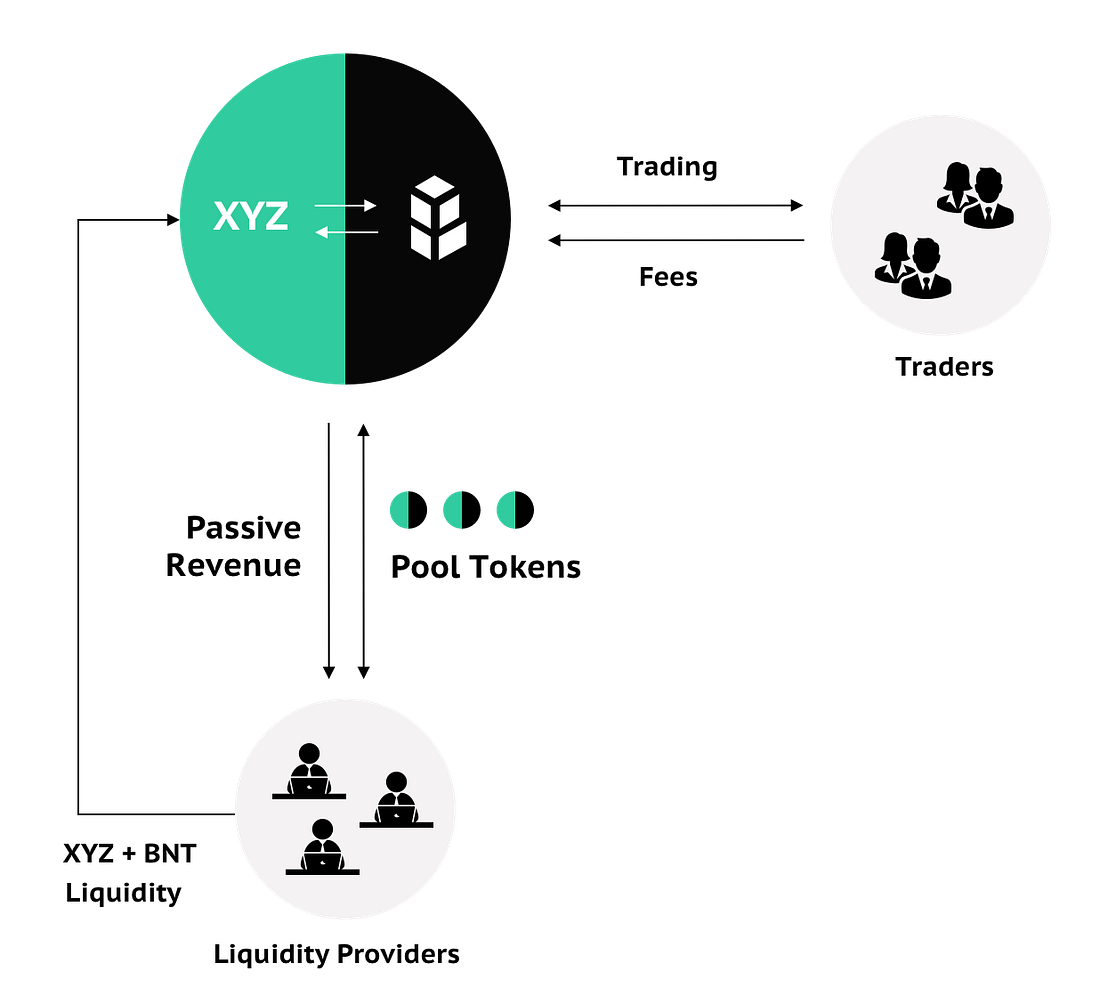
    Decentralized exchanges are powered by Automated Market Maker (AMM) protocols which leverage liquidity pools to ensure a seamless exchange of assets while retaining blockchain-level security.

    Source

    Automated Market Markers are programmed to be highly organic and responsive. Like a real-time trading system, every bit of supply and demand creates a relative effect. Traders and investors are handed efficient tools for making decisions and projects are represented for what they truly are…at least for that point in time.

    Thanks to liquidity pools, AMMs provide a basket of exchangeable assets to enable unrestricted trading for the period in which the liquidity providers wish to leave their assets on the pool. The transparency of the liquidity pool allows traders to make their decisions.

    AMM protocol ensures that every buy and sell effect reflects relatively on the asset price. AMMs are not completely resistant to manipulations, this is evident in the rampant rug pulls. But on the brighter side, these actions are transparent; an important feature of blockchain technology.

    Albeit certain shortcomings too; here’s how decentralized exchanges keep you safe(r).

    Custody of assets

    Decentralized exchanges provide ‘blockchain-level’ security by allowing users to exchange their assets without having to give up their private keys. Private keys give everyone complete control over their individual cold wallets. The security of assets in these wallets is only compromised when the wallet owner gives away their private keys. The recipient of this private key assumes ownership of the concerned wallet and assets therein. In centralized exchanges, asset owners are not in possession of their wallets’ private keys; these keys are rather held by the exchange and are in complete control of the assets in their possession.

    In cases of exchange scams, or accidental demise of the holder(s) of this key, assets held in these exchanges are completely lost and there are little or no chances of the holders reclaiming their lost funds. This won’t be the case in a proper decentralized exchange as wallets and asset ownership are not compromised in any way, holders retain private keys to their individual wallets and simply connects to the exchange and enable their assets for trading.

    Programmed and time-based permissions

    Decentralized exchanges require certain permissions to interact with your wallet sufficiently to allow asset swaps, but these permissions are essentially approved by you and last as long as the particular swap is executed. Once a swap is completed, the permission is retrieved. The protocol will need to make another request before regaining this access to execute another transaction. This ensures that you retain control of your assets at any time you’re not interacting with the platform.

    In-wallet assets’ resistance to exchange exploitation

    Decentralized exchanges run into hazards too. Countless technical exploitation has been reported on certain decentralized exchanges and defi platforms. This is more rampant with DEXes offering other specialized services powered by novel protocols. Flash loan services have been subjects of exploitation and a large number of assets have been lost in the process. However, this doesn’t affect assets in wallets even if the wallets have interacted with the platform. Fraudulent smart contract codes can avail hackers of a sustained connection to personal wallets, but this is a special case. Assets safely stored on wallets are safe, even if the DEX runs into hazards.

    In addition to preserving your identity and allowing you to swap assets from the comfort of your (personal) wallets, decentralized exchanges are evolving to keep your assets as safe as possible while you perform core exchange activities. Stay safe; use a DEX

  • Bitcoin can still trade above $100,000 in 2022

    Bitcoin can still trade above $100,000 in 2022

    Bitcoin topped $68,000 last year, and if you lived through that moment, you’d be left in awe of what the space has become since this time. Even more awesome is the state of things by the time you get to read this article. But that’s if you didn’t jump to the first paragraph to get to the point where I listed reasons why bitcoin will climb to $150,000 in the next 50 days.

    Here’s a spoiler, that part doesn’t exist. You could still find a few hopium laying around the corners of crypto Twitter. The crypto space is adding to the relevance of Elon Musk’s new playground.
    At least, he could have some money to run the ship before the verified users start paying up their $8. Well, this is unrelated but the rocket man recently checked into a Twitter space just to say ‘Doge to the moon’!

    Even if you don’t love Twitter, you’ll love Mr. Musk. An absolute gentleman! Don’t read that twice.

    Away from Twitter and away from the charts, cryptocurrency has taken a bad hit this year, the worse it ever did. Trashed reputation, air-proofed strength. It once looked like a very strong space. If we’re considering percentage losses, it’s still doing better than the 2017 crash, but that’s not a story to tell to anyone who bought the top. Heard Nayib Bukele’s bitcoins were stored on FTX. That turned out to be a joke, but what a story it would have been.

    Tesla did test bitcoin’s liquidity and couldn’t move the market with billions of dollars in bitcoin sold. That used to be impressive, guess not anymore, we could drop to zero if anyone tries something similar right now.

    If there’s any advice that almost went completely wrong in crypto, it’s the one that encouraged you to invest in ‘blue chips’ turns out that are blue rugs. But that’s fine, at least we still have NFTs to keep us going. Brilliant FTX investors did demonstrate the best use case for NFT — money laundering. Probably the single-use case that has steered the values in the way we have seen.

    Next in line for capitulation? I guess not, that Ronaldo and Binance NFT partnership finally happened. The greatest footballer that ever lived will be dishing out some rare art and footage with the popular exchange. With other exchanges falling apart and Binance standing strong for now, NFTs might just pick steam again, NFA.

    But then, what else could go wrong? Bored Apes announces that their monkey pictures are truly valueless and floor prices crash to two decimal point ETH while bitcoin drops below $10, 000. That’s just one zero short of the $100,000 mark. That’s an awful take, even in the words of a crypto Rockstar.

    But the drums are still sounding. Thanksgiving is almost here, but things are still looking scary. Halloween got extended. Time to give up on your dreams and face reality. If you bought bitcoin anywhere near the 2021 top, you’re certainly ending the year at a loss. But one bitcoin always equals one bitcoin. A faulty arithmetic, but still works for people who have developed a Micro strategy for cryptocurrency investment.

    Anyways, it’s the last quarter of the year and crazy things happen. Shiba Inu at $1 is on the cards as well.

  • Survival struggle: Layer-1 edition.

    Survival struggle: Layer-1 edition.

    Aptos launched with a speed of less than 10 transactions per second. Well, that’s some distance from the promised 160,000 transactions per second. Every layer-1 blockchain is a ‘game changer’, at least until they start to get the heat.

    Somehow Ethereum still manages to be one of the best layer-1 blockchains in a midst of countless ‘Ethereum killers’. I know that sounds different in the ears of a random airdrop hunter who just received 700 Aptos and sold them at $7 each. That’s, some loss anyways, a little wait would have added more bucks to that. But it’s free by the way. A good compensation for one of the harshest crypto winters I’ve witnessed.

    Sui blockchain is on the way, Cristiano Ronaldo would be proud. Heard he’s got an NFT deal with Binance. Would be a good coincidence if he launches his own ‘Rare’ collections on the Sui blockchain.

    Siuuu! You could hear that from every corner of the stadium or crypto Twitter.

    Aptos somehow isn’t the game changer anymore, it only launched a few weeks ago! We are finally putting the “Ethereum Killer” phrase to rest. The space has moved on; from Solidity and Rust to ‘Move”

    Two move blockchains with super-rich VCs launch in the same year. Even if these chains don’t amount to any good in the end, they surely stretched a few pockets. We can take that as a win.

    The 2021 pumps favored cross-chains and their redesigned copies of UniSwap DEX. Even dead projects from 2017 could rebrand to the ‘Swap’ suffix, launch liquidity mining programs and score some 10Xs before going back to their previous position. All good anyways, crypto influencers had some nice play over there.

    I might put in a few more paragraphs after this but before that; What’s your favorite layer-1 blockchain? Quick guess; the one with an airdrop in view. Airdrop hunting used to be about social media tasks, now it’s about testnets. An upgrade, really. Even the noob internet gamer could run some testnet node and make some quick bucks; sell off at launch and head out in search of the next game changer.

    Tons of layer-1 blockchains, yet the space is still in search of the next big thing in smart contract blockchain. Gavin Wood came close with Polkadot. Sam and any other member of the Solana team did a plausible job with the Solana blockchain. Cool blockchain! You might want to check their timetable so you can have a feel before it’s switched off for the day. Ten days on, four days off, a balanced two weeks roster.

    Pun intended… Not sure anyone would laugh at that anyways.

    If we could get serious for a second, maybe we can have a flashback and check how innovative the new layer-1s created every day really are. A well-written whitepaper and some ‘gamey’ UI designs on the official website. Then, a couple of million raised in ICOs and IEOs. Like the dotcom boom, blockchain developers are the next lineage of billionaires…and meme coin influencers.

    It only takes a few months before the ‘game changer’ gets riddled with meme coins and shady ‘otherworldly’ NFTs and of course; several exploitations and exit scams.

    We’ll surely have a conversation about the VCs churning millions into these projects. But that’s when I get sober from the last Cup of coffee. Don’t expect a SEC investigation report anyway. I just need to know how my writing career can be funded. Maybe a DAO will do. Or a layer 1 writing platform. Perfect!
    While I draft my pitch and whitepaper, the heavily funded layer-1s struggle to remain in the Ethereum killer discussions.

    It’s uncertain who comes out on top.
    We’ll get to know that in time, before then, I’d really like to say that it feels good to write on this platform again!

  • What the merge means for Ethereum blockchain.

    What the merge means for Ethereum blockchain.

    You’ve heard it several times; “the merge is coming”! A normal cryptocurrency investor couldn’t care less what this actually means anyways. As long as it sends the price “to the moon”, we’ll be fine. Well, same here…almost. But the merge means so much more for Ethereum and blockchain technology. A whole lot of developments are coming to the most used blockchain. Ethereum defeating its current problems holds a lot of importance for the whole space. The Merge is an important step in Ethereum’s journey towards scalability.

    What is the Merge

    Scalability and memory friendliness are both very appealing features and are vital for mainstream adoption. Currently, Ethereum gas price has risen very high and the cost of running transactions on the blockchain could get unbearable at some points.

    Ethereum’s archival nodes currently sit at over five (5) terabytes (5Tb), the actual blockchain size is well over a hundred (110) Gigabytes and each block adds two (2) Megabytes to this already huge figure. Ethereum blockchain according to many ‘will never scale’ and in 2019, Bloomberg reported the Ethereum blockchain is ‘almost full’.

    In computing and data storage, a truly scalable system is able to maintain a flexible size amidst ever-increasing data and is limitless in the amount of data it can carry. Blockchain start-ups face this problem commonly as the struggle to achieve a truly infinite scalable blockchain continues. While many blockchain projects boast of being scalable, they mostly fall short of their ‘claims’. Only a few can boast of reasonable scalability. These claims of Infinite scalability are mostly a marketing jibe used by many ‘Ethereum killers’

    Source

    Regardless of how fast a blockchain grows, splitting the blockchain into smaller interconnected units presents pieces of lighter ‘blockchains’ that reduce the executable size considerably. This is the main idea behind Sharding. As part of the upgrade to Ethereum 2.0, Ethereum developers are planning to adopt this technology to split the Ethereum blockchain into lighter pieces. Zilliqa, Polkadot, and NEAR blockchains are already using sharding technology to make their blockchain lighter and their network faster.

    The Sharding idea is to make a blockchain more efficient by partitioning it into lighter units. These ‘pieces’ of blockchains are known as ‘Shards’. Each shard stores different types of data independent of other shards. Sharding on Ethereum will split the blockchain into 64 shards. Consider these shards as interconnected units that constitute a blockchain.

    Blockchain projects using the sharding technique are adopting different strategies to create competent communication between the shards. Zilliqa uses a sharding version known as Partitioned sharding, where shards don’t communicate with each other directly through. NEAR protocol and Polkadot use State sharding, where shards communicate with each other through a state, or central relay. Ethereum blockchain will also adopt the State sharding technology.

    Ethereum developers plan to implement the sharding technology and switch to the proof of stake algorithm. The sharding technology will improve Ethereum’s scalability while the proof of stake consensus will do away with the bogus proof of work consensus to deliver an overall more efficient Ethereum blockchain

    The beacon chain went live in the last quarter of 2020 marking the first step towards implementing Proof of stake consensus on the Ethereum blockchain. The Merge will piece the Proof of work mainnet together with the Proof of stake Beacon chain. Completing the switch to Proof of stake and preparing the Ethereum blockchain for Sharding implementation is a very important part of the Serenity upgrade. The efficiency of the Ethereum blockchain sequel to the sharding implementation will depend on how well the merge can unite the POW mainnet and the POS beacon chain and prepare the Ethereum blockchain for the Shard chain implementation.

    The merge was initially proposed to happen in 2023, recent developments hint at an early release. According to Ethereum developer, Justin Drake, the merge chain could go live as early as august 2022.

    What does this mean for the Ethereum blockchain?

    When the Merge happens, Ethereum will be just one step away from finally completing one of the most important deliverables of the Serenity upgrade. The shard chain will be the third and final step in implementing the sharding technology as the Merge completes the Proof of stake consensus implementation.

    This is expected to bring tangible efficiency and make the Ethereum blockchain truly scalable. But Sharding comes at a cost — Security. The factis, most scalability solutions sacrifice security and decentralization for speed and efficiency. Sharding is just another example. Splitting the blockchain into shards creates units of independent blockchains with relatively less security. These shards could be attacked individually in an attempt to compromise the blockchain. A successful attack on any of the shards affects the rest of the network.

    The merge confirms the switch to the Proof of stake consensus algorithm lined up as part of the proposed upgrade. This algorithm, just like Sharding is known to improve efficiency and reduce block size…and security as well. Several Ethereum competitors are found lacking in security and decentralization, but relative to Ethereum Blockchain, they are incredibly fast, efficient and cheap. The Merge could be a step closer to a faster, cheaper, and more efficient Ethereum blockchain; unfortunately, it could also be a step closer to a centralized and less secure Ethereum blockchain.

  • How regulations impact crypto; positively

    How regulations impact crypto; positively

    I think we should take back every word we uttered when we accused mainstream financial institutions of trying to stop “the crypto revolution”. Revolutions always come with a storm, but when they threaten the globe with depression, they should be checked. Now by ‘depression’, I mean mental and economic.

    It’s been a while since I stumbled upon crypto philanthropy projects, only similar ones I’m aware of are comedians trying to make fun of Bankman’s effective altruism; sorry, Excessive altruism. I know he’s made a couple of good records; multiple Forbes mentions and appearance and surely one of the few very good men that gave other people’s money away. Anyhow you see it; I think he’s made a name for himself. His friends at the national media houses and his million Twitter followers can attest to that.

    Enough of Sam though, but this whole ‘blurb’ is about him and how effective regulations would have saved millions of crypto gamblers (or investors) from a $10 billion incident. Just in case you are already taking back your words as we discussed earlier, I’d suggest you put a pause on it. Yeah, put a pause because the regulation attempts have never really been about investor protection.

    If the United States government ever dipped its feet into crypto, it’d surely have some money stuck in FTX. Well, FTX US wasn’t part of the massacre and the funds should be safe. Even if Nayib left his nation’s bitcoins on FTX as the jokes told, he’d be glad to put an end to the losses he’s been counting since he put his nation’s money into bitcoin at ATH. I’m sure he is secretly DCAing or trimming his losses.

    Regulations would have saved the collapse if there was ever an attempt at that. Unfortunately, that was never the case, and every word about stopping a revolution was factual. Even the United States officials were only bothered about the “super shadowy coders” whose only job was to deploy codes and use the blockchain… for fun. The real threats make donations to election campaigns and take front rows in political discussions.

    At least the People’s Republic of China banned cryptocurrency mining and every crypto-related activity in the country, but I’m sure Jinping was more bothered about the portion of the nation’s power supply consumed by the miners in the country than the safety of the people’s fund in the firms that attempts to replace fiat.

    About replacing fiat, I think we are devising a better way to go about it. Here’s my personal theory; exchanges and other custodial institutions are carting away investors’ and users’ funds and giving them (worthless) tokens as a replacement. That way everyone will have enough cryptocurrencies and less fiat. Revolution, yeah!

    I guess most nations didn’t care about protecting their citizens since they’ve been already told that cryptocurrency isn’t a nationally recognized business. Every man to himself, the government is staying away from this one…until the next bullrun! About the investor, we wait on Sir. Bitboy for answers. You can save your statements about his paid shills, at least he didn’t give anyone’s funds away…literally. I suggest he takes a look at Sam’s new body build as portrayed by the New York Times (not sure I got that right).

    I’d have loved to make a few statements about the new relief fund program by Binance’s tactician, but this blurb is limited to 600 words. I love to call it a blurb since it literally doesn’t even make much sense. But anyways, if this was cool to read, consider following us!

  • Invest in crypto? No, steal it.

    Invest in crypto? No, steal it.

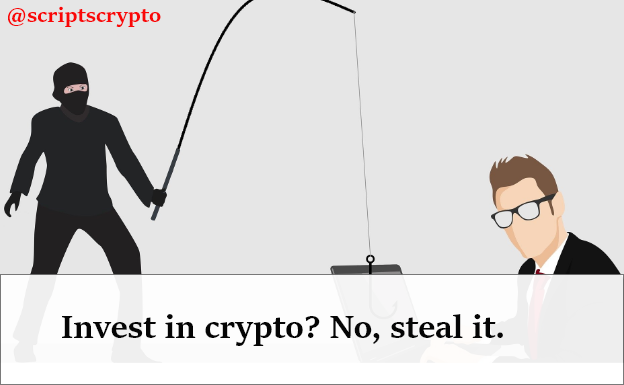
    Keep the ‘technology’ talks by the side; only a few really care about it anyways. $190 million in a day is the perfect definition of ‘quick bucks.’ While the random cryptocurrency investor spends most of his sleep time dreaming of 1/10th of that figure, a Blackhat investor is living his dream, ten times. The biggest part of the story, but not the only one. Would love to introduce you to the first (and probably last) part of our Keeping up with the Solanas series. I get it; there’s no way you will enjoy that if your wallet was drained overnight.

    You might be counting your losses due to the bear market, but hackers and ‘exploiters’ are carting away with life-changing figures in their successful plays. Old Optimism users smiled home with a few thousand OP tokens as their airdrop rewards, a certain exploiter has an even bigger reason to smile. Over 20 million OP tokens gained, no thanks. Depending on when you read this article, this could be worth some pretty figures.

    Through seasons and cycles, millions of dollars worth of cryptocurrencies are lost to scammers and hackers in numerous ways. Phishing attacks, giveaway scams, exchange hacks, protocol exploitations…you name it. As technology advances and space grows, the security of assets dwindles as well. Tricks to strip holders of their investments are evolving every day, and these sets of people are seeing more success than everyone else, regardless of the season.

    I’d have taken coding more seriously if anyone told me there are millions of dollars in it for me. Quick ones and grossly easier. Well, the easy part is arguable. These exploitations are carried out by taking advantage of some loopholes in underlying codes through complex processes. These events are always traced down to a vague figure while the affected team finds a fix. The majority of DeFi protocols have suffered similar ‘exploitation,’ and each time, this is not traced back to the project teams. But exit scams have dropped in frequency…well, I don’t like coincidence!

    The time you spend bridging your tokens across different networks will be more yielding if you invest it in hacking classes and hacking the bridging platform itself. That advice is worth $190 million, depending on how you take it. More decent advice, stick to the normal process. But the race to those good easy bucks isn’t as easy as predicted. The profits and losses are part of the thrill. The money comes fast, three-digit percentage gains in 24hrs, no other investment sector offers that currently…none that I know of. Successful cryptocurrency investments can be life-changing, otherwise… The reality is, money is lost as fast as it is gained.

    Apart from trading, the crypto space is home to a long list of earning opportunities. Developers earn life-sustaining salaries by working on personal projects or getting hired by blockchain start-ups. Popular artists and even less popular ones have made seven-figure returns from selling their digital multimedia on NFT marketplaces. The bull season saw traders and Holders make jaw-dropping gains from their old and new investments. Cryptocurrency has created an incredible number of millionaires.

    Advising you on wallet safety tips might be ironic at this point. A point where even keeping your investments in your personal wallets and saving your private keys can’t even keep you from getting hurt. The ghost is busted, but it’s not just phantom, it’s the whole crypto space. The fading reputation isn’t even as concerning as the declining safety levels. The banks should be laughing along with the hackers laughing to them. Maybe if you take your hacking classes seriously, you will be laughing with them too…Not Financial Advice.