Author: cryptocurrency scripts

  • Liquidity pool: What is it?

    Liquidity pool: What is it?

    Liquidity pool

    So, you just used a Decentralized exchange and learnt about a liquidity pool for the first time , probably not your first time but you just began to wonder how exactly this works. Unlike the rampant centralized exchanges, DeFi exchange platforms do not have buy walls and sell walls, yet the exchange of assets is unrestricted. Even a cryptocurrency veteran would wonder how this works exactly.

    Decentralized exchanges are powered by Automated Market Maker (AMM) protocols which leverage liquidity pools to ensure a seamless exchange of assets while retaining blockchain-level security. AMMs? We will learn about these in my next article. Understanding liquidity pools — the underlying technology which powers automated market markers is our current objective.

    So, what is a liquidity pool?

    Imagine a basket containing two kinds of fruits in a barter trading system; taking one of these fruits requires you to replace them with an equal value of the other fruit. Now, this is basically how DeFi exchanges work. The basket here is the liquidity pool.

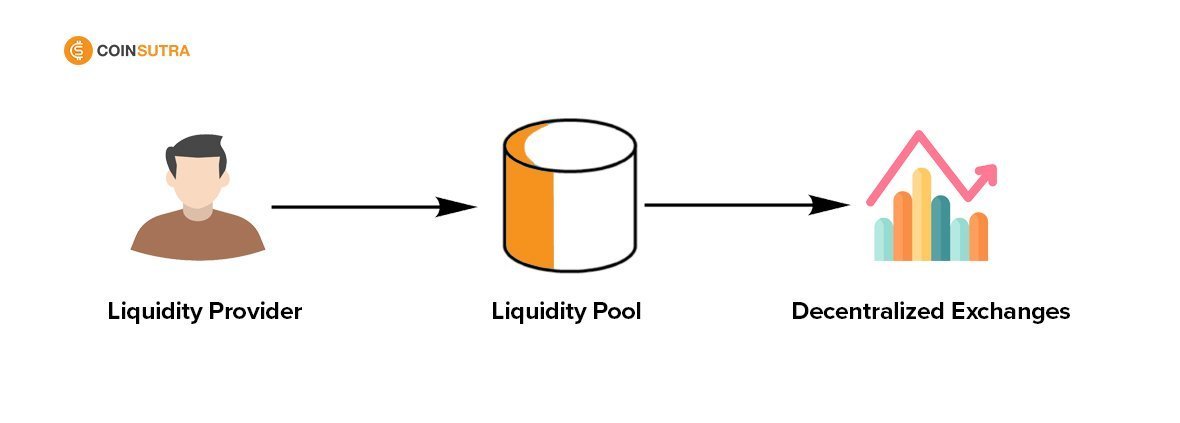
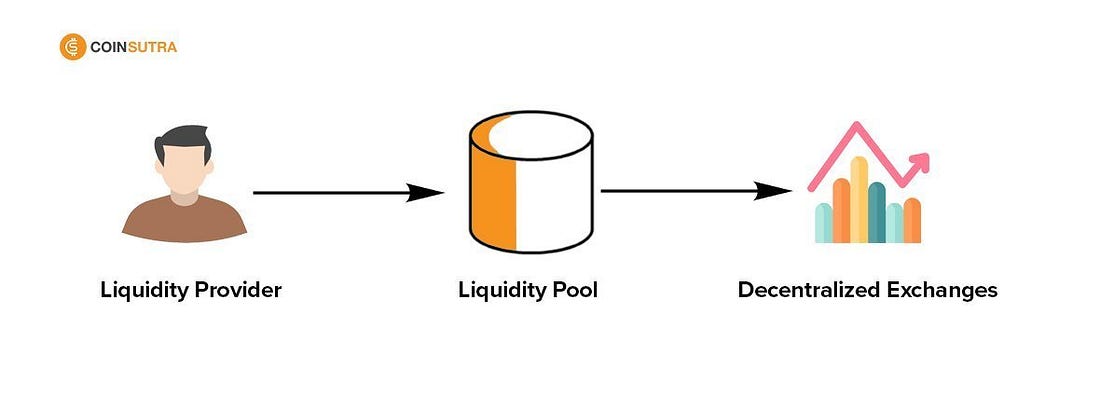
    Liquidity pools are collections of tokens locked in a smart contract which allows the borderless exchange of tokens in the pool. Contributors who provide these tokens and lock them in the pool are known as Liquidity providers.

    To provide liquidity, a liquidity provider locks up equal values of the two tokens in the pool. The liquidity pool is hence a collection of tokens locked up by the liquidity providers, this pool is available for traders who wish to exchange any of these assets.
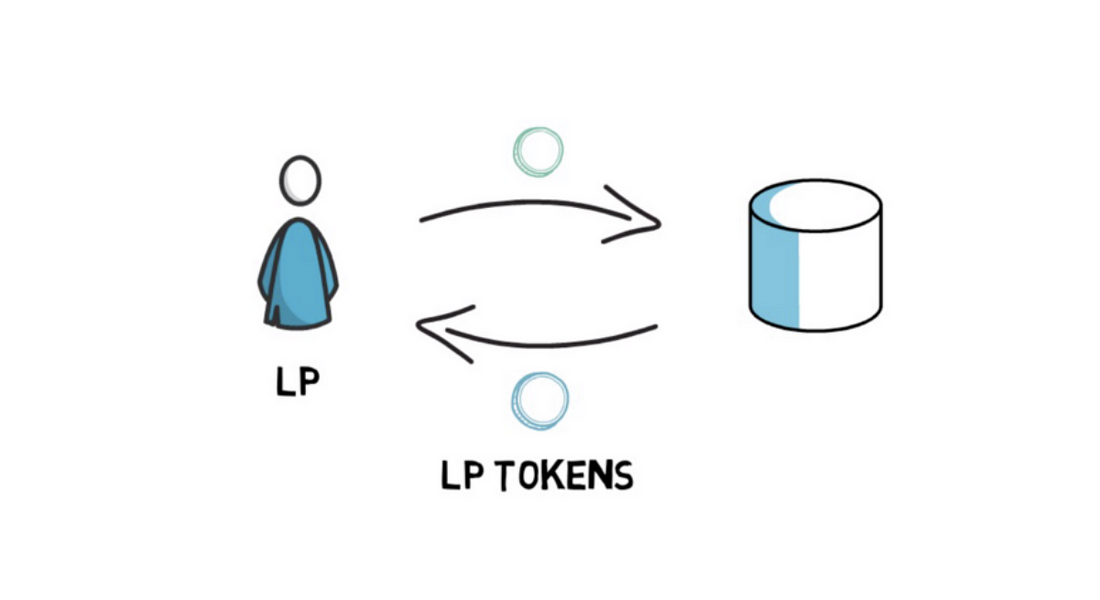
    Liquidity providers receive liquidity pool tokens (LP tokens). LP tokens are cryptographic representations of the percentage of the total liquidity pool owned by the individual liquidity provider. Trading fees are distributed amongst liquidity providers according to the percentage of the pool they own.

    To further incentivize liquidity provision, certain projects launch liquidity farming programs on their platform to reward liquidity providers according to the amount of liquidity they supply. This is popularly known as liquidity farming. To earn tokens in a liquidity farming program, liquidity providers stake their Liquidity pool tokens on the platform and earn according to the APR and amount of Lp tokens they stake.

    However, liquidity provision comes with its own little disadvantage, this is known as Impermanent loss. Impermanent loss is a ‘temporal’ and ‘illusional’ loss incurred by liquidity providers due to variations in demand and values of the tokens they supplied to the liquidity pools.

    This is due to a protocol programmed to retain the total value of tokens supplied to the pool. If one of the assets supplied to the pool continues to rise in demand and value against the other, liquidity providers receive the other asset as the supply is increased by traders depositing more of it to the pool

    Assuming you supplied 100USD worth of Ethereum and 100USDT, the total value of your Liquidity is 200USD. As the value of Ethereum increases, the amount of Ethereum you supplied continues to decrease while you receive more USDT, this is essentially designed to retain the 200USD you added to the liquidity pool.

    The ‘loss’ comes from the fact that the gains which would have supposedly come from the increase in the value of Ethereum will be lost. It’s illusional because there is in fact no loss; your 200USD is sustained, the only difference is that you have more USDT now. It is temporal because if the liquidity provider can wait until the price returns to what it was when this liquidity was provided, they will receive the same amount of tokens they supplied when they withdraw the liquidity.

    Liquidity pool is a clever technology, not only does it solve fake liquidity issues, they simplify asset exchange. Liquidity providers also get to earn passive rewards from liquidity provider fees.


  • Chasing ‘hot shots’ is less likely to make you rich!

    Chasing ‘hot shots’ is less likely to make you rich!

    crypto investing

    Off to the market! And what are we buying today? The most popular cryptocurrencies? Floki Inu; the meme coin based on Elon Musk’s dog has gained some steam. Funny how that sounds but the rocket man has cemented his reputation as the king of memes and everything that comes with it. Crypto investing is quite an interesting venture.

    Doge, Shiba, Floki…each of these projects hit the ground running with the mouth-watering gains they post. They do this despite not having any tangible use case…well, memes and ‘charity’ are good use cases nowadays. Anyways, ‘numbers go up!’.

    So, you are going to ditch your stable coins or some of your previous investments for the ‘next 100x’? It’s human nature to chase trends and the fear of missing out is a huge drive. Investors rush to these hot shots with hopes of reaping from the next possible gains.

    This works, sometimes. It’s an uncertain market anyways and anything is possible, but being a successful investor hardly comes from jumping on trends. 50% gains, the rush kicks in. Speculators take the space and the project in question gets mentioned everywhere. The trend goes on, enthusiasts buy in with only a little idea of what the project is really about.

    TA analyses, hypes from influencers, gains on trading pairs…these things are enough to sweep anyone off their feet. But regardless of how hot the hype blows, clever investors will certainly do their own research before buying in.

    What’s your ‘hot shot’ story? Various tales will surround the rush. Successful or not, conditions differ. But…

    Cryptocurrency trends are birthed by an idea or concept gaining relevance over time. Memes, DeFi, NFT…these ideas existed way before they caught the attention of the greater number of people in the space.

    The real gainers in any case of these concepts breaking out are the pioneers who believed in these ideas and supported them with their time and their capital. Being amongst the pioneer investors in any concept could fetch you over a 1000x gain as the case may be. This, however, comes with its own challenges.

    Chasing trends definitely keeps an investor ‘restless’. Traders are meant to do this normally, but investors who buy tokens with a plan to hold on to them until the gains start coming are meant to exercise patience. Patience is a joke word for an investor chasing trends.

    2–5X gains (or some terrible to manageable losses) and the hype dies; then unto the next one. A patient and more enduring investor who makes enough research probably already made some crazy gains from the same project and is still holding on knowing the hype could return with even heavier waves.

    Chasing trending projects puts an investor in the way of higher risks and lesser gains as the hype and trends are naturally meant to cool off at a point. Buy high, sell low…a common story amongst trend chasers.

    Cryptocurrency investment gives room for countless opportunities, but reaping from them would require clever decisions and a lot of patience too. The more time you spend chasing trends, the more risks you’re exposed to and the more losses you may incur.

    Depending on how far the project goes, a lucky investor might make tangible gains from chasing trends, but that only means that a patient investor who invested before the hyped kicked in already made way more. Well, it’s better to make little gains than to miss out entirely, but most times, things don’t work exactly as presumed.

  • Will GameFi do better without Play-to-earn?

    Will GameFi do better without Play-to-earn?

    gamefi

    What’s your biggest attraction towards GameFi projects? if we are being honest, play-to-earn will form majority of the answers…probably 100% of the answers. Axie infinity’s success quickly influenced an outpour of decentralized gaming projects with earning opportunities for gamers and investors alike. Binance smart chain’s ‘Cryptoblades’ posted astonishing price gains as users flocked to the platform to play the game which rewards them with tradable tokens and Non-Fungible Tokens. 

    Success stories from players littered the crypto space as more people flocked to the platform. A ton of other similar platforms would quickly emerge, a new trend was birthed! A lotof users testified to earning more than their annual salary from simply playing ‘games’ on the blockchain.

    Hypes, disappointments, and inefficiencies; many of the new and existing blockchain-based games failed to meet up with users’ expectations; financial and technological expectations. Technically, most of these games were far from properly developed. Users would describe them as ‘3D casinos’.

    You’d expect these shortcomings for projects built on an impatient community of users with high hopes of turning their financial conditions around by simply playing games on blockchain platforms.

    “It’s a scam!” says users whose expectations weren’t met by the new game released by developers after just three weeks of development. But technical issues are hardly the main disappointment. Lamentations steam mainly from users’ inability to earn as much as expected from the games. In some cases, users run into losses leading to more intense ‘scam’ allegations.

    GameFi projects easily suffer huge price losses and endless backlash. Investors, disappointed with the low earning potentials continue to air their views in the sternest way, further confirming the fact that cryptocurrency enthusiasts are in fact more concerned about the earnings, and not the gameplay itself.

    Well, it’s reasonable.

    Source

    The direct juxtaposition of gaming and earning in GameFi projects haven’t really worked best as normal human greed gets the better of these projects. little shortcomings result in heavy price drops and loss of interest. In a space where investors are quick to suspect ‘scams’ (and rightly so); emerging technologies like GameFi face a huge war between good and Bad…and the ugly.

    But, how far has GameFi gone exactly? I’ll say, ‘very far’. Unfortunately, this is hard to realize when players are more focused on earning and will gladly shove aside a good game if it doesn’t offer a good earning opportunity. Passion aside, GameFi platforms have attracted more users in a very short period of time than most popular games. 

    EA Sports’ FIFA21 recorded an astonishing 31 million players on both PC and consoles, an additional 6 million players from its previous record. Taking into consideration, the rate of adoption and resource availability, GameFi platform has outperformed even the most popular football game. Axie infinity has reportedly recorded an excess of a million daily players!

    This impressive growth is, however, influenced by earning opportunities as human greed comes into play once again. Despite the enormous number of daily users, players on GameFi platform hardly complain about technological shortcomings if the earnings are good. To be fair, most people would do the same, why complain when the money is good? Rhetoric with a simple answer.

    While most mainstream games don’t have direct earning opportunities, players develop a way to make external earnings by contributing to the games’ growth. Popular ‘Call of duty’ players make tangible income from showing their gameplay on streaming platforms. Game critics and analysts make good incomes as well. In plain words, players flock to these games for the real fun they drive from just playing the game.

    In contrast, GameFi’s Play-to-earn gets rid of the fun and users care least about the gameplay and how fun they are…the money will bring the fun, lol.

    Will GameFi do better without play-to-earn? Well, YES and NO.

    Withdrawing earning opportunities from decentralized gaming platforms will allow faster technological growth, however, an opposite effect is expected on adoption as fewer people will play without earning; very few.

     NO, for short term, and Yes, for long term. Taking off earning opportunities will inevitably reduce participation, but on the brighter side, the pressure to deliver in a short period will be taken off the shoulders of game developers. Project development will as well move more smoothly as price talks won’t impede development. In the long run, the release of well-developed games with really fun and interesting gameplay will drive even more users.

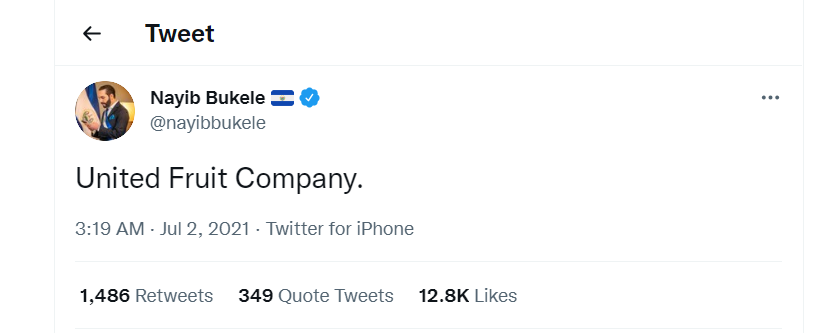
  • United Fruit Company? El Salvador’s bitcoin bill might be more than just a financial move.

    United Fruit Company? El Salvador’s bitcoin bill might be more than just a financial move.

    El Salvador's bitcoin

    El Salvador holds well over 200 bitcoins, the Central American country is waxing stronger in its efforts to cement bitcoin’s position in the national economy. With about seven hundred bitcoin in the bag, Nayib Bukele and his team are working toward a historic financial revolution. El Salvador’s Chivo wallet could process the transfer of a penny and charge as little as ‘zero’ fees! Hitting at the very heart of global finance, these developments are growing more popular as the rest of the world watches.

    Built on top of a ‘fragile’ economy, El Salvador’s bitcoin project would worry anyone who genuinely cares about the nation. Like a double-edged sword, adding bitcoin to the nation’s reserves could swing the nation towards any angle. Financial foul play aside, volatility of the bitcoin type is a very interesting event, one most countries dread. On the bad side, A 10% loss within an hour? Well, a solid economy is in a better position to deal with such, not one hanging on a thread with seven million citizens at stake.

    Albeit the challenges and risks, El Salvador has remained obstinate and persistent. One would question the motivation for such dedication. Just a technological revolution? Well, that would be enough reason to be fair. The current financial system is technologically backward and needs a push. Nayib might as well be on a mission to liberate his country from financial captivity.

    But, is that all? Well…

    Not apples, bananas are arguably the most unique and iconic fruits. With a unique and familiar appearance, bananas boast a completely different taste and texture. Flexible, bananas can be eaten plainly, prepared in many forms, or mixed with almost anything…milk inclusive. Its flexibility also stretches to how plating and presentation; casually or formerly, bananas retain their prestige and hygiene regardless of how they are being served.

    Clothed in a fine fleshy casing that can be easily removed (when ripe), bananas are one of the few fruits with a natural consideration for human health. The soft and smooth essence discovered after the peel could easily fit into your diet to give you a proper meal. Bananas are hard to hate; literally. You’d ‘go bananas’ when you consider how amazing this fruit really is.

    Well, much praise for the iconic fruit, but its contribution to human nutrition is not the only reason for its prestige; at least not in the context of this article.

    Our love for bananas dates back many decades ago, the fruit also grew in prominence around this time as people continued to explore its goodness. At the very onset of the banana boom, the 1899 merger between Boston Fruit Company and Banana Trading Concerns sparked what would become a rollercoaster in history. 

    United Fruit Company, the birth child of this merger would soon grow into a reckoning force in the banana trading business, generating millions of dollars via its fruit trade. Located in the central east United Fruit Company rapidly grew into a global force, gaining political and military support from countries far and near.

    United Fruit Company’s activities in the central east would soon metamorphose into gruesome tales of political, military, and financial complications. With so many dollars at hand and the ability to make even more through the booming banana business which they majorly control; United Fruit Company gained the ‘alpha’ status. Maneuvering through a series of financial, political, and military foul play, they were simply untouchable.

    Most of United Fruit Company’s shady financial activities were aided by the centralized and non-trackable dollar. The USA itself has gained much control of central American countries including Panama, Nicaragua, Costa Rica, and Colombia. Their influence in Central America further simplified United Fruit’s dealings in this region.

    Well, it’s hard to say for certain if Nayib’s dedication to cementing bitcoin’s place in his country’s economy is related in any way to these past events, but it looks very likely. Bitcoin’s technology not only distributes technological power but also decentralizes economic and political power. Its ability to create a unified and generalized economy makes it a potential ‘object of peace’.

    Unified economy, political and economic decentralization; might as well not be Nayib’s motive for making bitcoin a legal tender. Traceable and verifiable financial transaction? Every bitcoin transaction can be easily found and traced on the blockchain. Unlike fiat, every record of holders, emissions, and distributions can be found on the bitcoin blockchain. This makes for financial transparency, the opposite of which has aided countless financial foul plays.

    El Salvador’s president’s tweet remains a mystery, a possible connection to the bitcoin bill is also uncertain despite looking very likely. Jack Dorsey hopes bitcoin ‘creates world peace’, Nayib Bukele might be on a mission to put this into play. United Fruit Company’s activities might have triggered a worldwide movement. Whichever way this goes, it’s exciting to find out!

  • Can bitcoin fix the Global economy?

    Can bitcoin fix the Global economy?

    bitcoin

    Remember the scenes from the 2014 movie; ‘A million ways to die in the west’? I’ve lost memories of most of them. However, I still remember the scene where a dollar bill was put up as a wager for a shooting challenge. ‘Take your hat off boy, that’s a dollar bill!’ The excitement, the respect, it was a whole dollar bill. Fast forward to our contemporary society, dollar notes and every other fiat note are nowhere close to commanding that level of value and respect.

    Years of continuous use by an ever-growing population of people, years of continuous printing by an ever-running printing machine; the value of fiat currencies has suffered so much from inflation and poor economic practices. 

    Staying true to its initial value is a losing war that it is tired of fighting and has given way to a steep-speed fall in value. The United State dollar remains the most widely used medium of comparison to the other fiat currencies, but despite this wide use and good economic backup, its value has been on a free fall over the past couple of decades.

    A rather logical stuff, considering the fact that a higher percentage of dollars in circulation today were printed over the past five years. Other currencies have seen similar irregular inflation as the global economy continues to show instability. You’d agree that the current global economic system is imperfect, I’d say it is almost ‘completely faulty’. Despite surviving for so long, the fiat system and centralized currency issuing scheme haven’t really been so efficient. The parabolic fall in value over the years is a result of these shortcomings.

    While dogecoin is taunted as the currency of a new world out of earth, bitcoin has surfaced in arguments over a healthier medium of exchange on earth. Could both work? Elon Musk has a better answer for the former, I’ll share my opinion on the latter.

    Bitcoin; it’s been one concept against tons of relatively older systems. The banks, the fiat system, the valuable metals, altcoins…dogecoin. For a concept that has seen such audacious growth in the past decade, it is not a surprise that bitcoin is constantly in many arguments. Thanks to the bitcoinners too; these maximalists find a way to throw bitcoin into every financial argument. To be fair, many of their argument over the superiority of bitcoin as an alternative to many contemporary financial systems is valid to a large extent; even though I don’t agree with bitcoin’s perfection.

    bitcoin

    Bitcoin’s technology flaunts generality and portability. If you’re not running a bitcoin core node, then you just need a lightweight application to manage your financial activities all by yourself. While this is convenient in the normal sense, it is not without certain shortcomings. Regardless, this shifts the power to the users in contrast to the current system where the ‘managers’ in the custody of your assets hold the upper hand.

     Decentralization and ‘personalization’ put you in charge, a concept growing in acceptance in our contemporary world. In this case, bitcoin offers what the current generation longs for. Superior? In this case; bitcoin wins over traditional systems.

    Bitcoin’s generalized value creates a global value system and a uniform currency. But how healthy is this? It is hard to say what a currency backed by a globalized financial system will look like, but if bitcoin succeeds at becoming one, then it will be an exciting experience. A financial system of this nature is largely unsustainable. 

    The segregation of national economies serves a good purpose itself. Placing different countries in charge of their financial success isn’t bad. Bitcoin’s generality contests this, an idea I don’t buy. Bitcoin doesn’t tick all the boxes for me; this is one of them.

    ‘There will ever be twenty-one million bitcoins’. Bitcoin’s fixed supply is regarded as a fix for inflation. For me, that works. Yes, it does. The global economy is riddled with unregulated inflation. Millions are printed from the tin air, just like the tether machines. Seriously, the tether system depicts the global economic system to a large extent. 

    Bitcoin cannot grow in total supply, circulating supply may vary as a couple of millions of bitcoins remain unmined and thousands of bitcoins are being lost to mismanagement and accidents. Instead of growing in supply; bitcoin can only grow in value, we have seen this play out very well.

    Price stability? We all agree that bitcoin has a very huge work to do as regards this. Volatility is a huge turnoff if bitcoin or a similar technological solution will make it to the top of the global financial system. Despite an over 97% loss in value since its inception, the dollar has remained ‘relatively’ stable. Yes, compared to bitcoin the annual variation of the dollar’s valuation has remained constant. Exceptions to this are special periods like wars, pandemics, and related global or national situations. In contrast, bitcoin loses significantly when Elon Musk tweets, jokes apart!

    Speed and cost-effectiveness? If the lightning network works the way it is proposed to, then bitcoin will have little to worry about as regards the speed of transaction confirmation. Lightning technology presents super-fast bitcoin transactions. However; if it fails to live up to the bidding, the bitcoin blockchain’s current speed isn’t fit for use on a large scale. 

    Imagine waiting for minutes to have your coffee after paying in bitcoin as transactions must be confirmed before your purchase is handed to you. A really tough situation. With fiat in your hands, you can pay for tangible commodities without having to pay a fee each time. This is different with bitcoin as well as many other cryptocurrencies. Paying a fee every time? There must be a better way to do it! Bitcoin doesn’t solve this.

    Eco-friendly? Bitcoin is not any better than the current financial systems as regards this. While it is not necessarily worse, it is not better. Intensive use of fossil energy for bitcoin mining and intensive use of similar energy for running financial activities in today’s systems, both systems fail at this. However; if bitcoin is dubbed as a ‘perfect’ fix for global finance, it should address energy use and environmental compliance.

    Bitcoin has made a bold statement. This statement is largely price-wise, apart from this it hasn’t progressed so much in technology and adjusting to fit the reputation of a better alternative to the global financial system and even a store of value. Relative to its competitors it is still in its early stage and has enough room to grow. With clever minds piloting its growth, it stands a chance of penetrating the global financial system; actually, it’s safe to say that it’s already done so. But this is just the beginning of a very long journey.

  • Why you should consider investing in decentralized solution(s).

    Why you should consider investing in decentralized solution(s).

    cryptocurrency investment
    source

    A couple of disclaimers on cryptocurrency investment advice and endless warnings, ‘cryptocurrency investments are very risky ventures…and the earth is flat’. Well, one is a fact; the other is probably another way to look at facts. A little focus will tell you which is which…just a little teaser there, but that’s by the way.

    Alright, fact is, the earth is a sphere, and cryptocurrency investments are very risky, but that’s just another way to look at facts. Risks and rewards are related, sometimes this relationship could get toxic. The crypto space has been buzzing for a while now, anyone who took the risk before this time must have reaped from that audacious move. Recent strives by cryptocurrency and blockchain technology have once again flared the hunger to invest in decentralized solutions, but many are still scared to join the bandwagon

    Source

    It’s human to get scared, but it’s mastery to stay in complete control of these fears and ride against the waves. While some investors are hardly overpowered by their fears, others would need tons of advice to make a choice.

    But that’s by the way; Cryptocurrency just like most other investments is a very risky venture, there’s unarguably a more pronounced risk when it comes to cryptocurrency. The outrageous fluctuations and nerve-spinning volatility give it a good place amongst ‘a thousand ways to die in the west’…that wasn’t meant to scare you! For experienced investors and risk-loving individuals (like myself!), volatility is a very tasty stuff, but sometimes it might burn hands.

    source

    Here’s why you should consider taking the risk

    The Features

    Before you bought your first stock, you probably made a couple of research and calculations, a very good number of investors do clever research before putting their money on the road; a very important step in investments. Venturing into the crypto space, the scenario is almost the same. But in general, blockchain technology that powers cryptocurrencies glitters with many enticing features which are just too good to be ignored. ‘All that glitters are not gold’, yeah, I’m sure you said that to yourself at some point, but if gold glitters, then you’re closer to hitting gold if the glitters get more enticing.

    Source

    For a technology, blockchains are one of the most interesting inventions of the past couple of decades, the ability it poses and its numerous applications are certainly one to look out for. Cryptocurrencies aside, blockchains are one of the most advanced computing protocols which are unsurprisingly gaining mainstream attention. An immutable store of data, a flexible network for building almost anything on the internet, the list is endless. Venturing into the crypto space is as good as swimming in the oceans of blockchain technology, getting used to what has been a tangible offset of traditional ways of data storage, internet, finance…to mention a few. Regardless of the risks, these features should make you give it a try.

    The Future.

    A very quick follow-up to the aforementioned point. The features of blockchain technology are currently under-utilized and for any attentive investors, this technology is just starting to gain global recognition, and the only way is ‘up’! the future of cryptocurrencies and blockchain technology may be speculative, but that’s a common step for inventions poised to change the way things are done globally, taking a look at the bigger picture, cryptocurrencies, and blockchain are one for the future, the limits are beyond reach, better said, there are no limits and impossibilities are just weak words thrown around by people who find it hard to chase dreams. This is the same for cryptocurrencies and blockchain technology.

    Source

    Cryptocurrency investments are risky, but it is even riskier not to take a close look at the future and your biggest regret might be not securing a part of the future. Stocks will still be a part of the future, same as digitized precious metals and fiat currencies, but cryptocurrencies are poised to be the newcomers and might be an important part of the future. Shaun the risk, secure a place in the future, try making your way into the crypto space.

    The Fortune.

    I seriously resent the idea of cryptocurrency investments as a “get rich-quick scheme”. But it is hard to ignore the fact that cryptocurrency investments make mouth-watering returns. For investments in the last decades, cryptocurrencies have made the biggest return on investments, posting up to 20X gains. The ‘fast money’ idea is surely an unhealthy one and an investor who really wishes to be successful in the crypto space must first get rid of this orientation and embrace the technology and avoid being over-expectant of their crypto bags. Regardless, there is an already proven fortune in cryptocurrency investment, but just like every good thing, this takes a lot of time and requires some good level of patience and persistence.

    Source

    Your Tesla stock might have made you some good gains over the past five years, but most cryptocurrencies have made way more during this same period of time, this is unarguable. With more risks come even more rewards, dive into the ocean, take the risks, give it some time, reap the fortunes.

    The Freedom

    Stocks are great, digital gold are good investments too, but what about an investment that gives you total control over what you own? Decentralization in cryptocurrency gets rid of third parties and middlemen in handling some core financial activities such as blockchain-level send and receive. The freedom of being able to send a store of value across to anyone anywhere and not worry about exchange rates and delays due to the banks not processing payment, or even decline of payment because of some blurry reasons is something you should really pay some attention to.

    Source

    Cryptocurrencies come with some enticing level of freedom and privacy in the management of your finance and performance of some core financial activities. Probably this doesn’t sound so clear to you, but here in the crypto space ‘you are your own bank’, guess that sounds better! You don’t need a stockbroker to help you invest in cryptocurrencies, the simplicity makes it possible for a total noob to invest in cryptocurrency and manage this investment. Decentralization in cryptocurrency cuts off the middleman in most core management procedures.

    Still need to be convinced, you certainly have your reservations, but if anything can change your opinion, it’s one of these four…

  • Consider these while doing your own research.

    Consider these while doing your own research.

    investment research
    source

    Most cryptocurrency suggestions end with the common phrase, ‘Do your own research’(DYOR). To an extent, I see it as the best way to describe the unpredictable nature of everything about the crypto space, every ‘advice’ are mere suggestion and even the ‘professionals’ get it wrong many times. Getting it right most times is even an extremely hard feat. Getting it right every time is utterly impossible, a 70% accurate cryptocurrency advisor is just an illusion, 50% accuracy is almost impossible too, as a matter of fact.

    Predictions in cryptocurrency are mere speculations, hence the phrase ‘Do your own research’ charges you to be a master of your own decision and the repercussions of its failure. While these rampant suggestions also form a part of your research resources, their influence on your final decisions is actually your liability as the influencers do not answer for the failure of your decisions.

    Hence, you’re literally ‘on your own’. Looking for that cryptocurrency gem to invest in? it actually sounds easier than it really is, despite the fact that it already sounds tough. Just as experienced investors will say, ‘make your decision and stand by it’. Predictions of any kind are 10% calculation and 90% luck. Getting lucky is the only way to get it right, getting lucky is not assured, unfortunately.

    Scoring high chances of getting your speculations right and getting lucky in your cryptocurrency investments involve some vital steps of calm inquiries, research, and calculations. The cryptocurrency space is made up of over ten thousand ‘exciting’ projects and new projects coming up every day with equally exciting concepts and clever moves, one will be moved to invest in almost all of them.

    source

    Regardless of how much you diversify your cryptocurrency portfolio, you still leave out the majority of the cryptocurrency projects, and each one you leave behind reduces your probability of getting it right with your investment as every one of them stands some chance of making good returns on investment. On the other hand, doing the impossible and buying into as many projects as possible also places you at a higher risk of running into losses, diversification may seem to be the best approach, but in the real sense, it could backfire badly. Streamlining your investments still harbors the bigger risk but is poised to give the best return if you get it right with your streamlined portfolio.

    Decisions backed by research are the best approach, making the right inquiries in the course of your research hence becomes equally important. In making your research, some important aspects of the project should be surveyed carefully. Short-term holders and traders certainly have a ‘smaller’ decision to make. Traders could derive their next moves by looking at the seven (7) days price chart of the coin/token and predict the next move by other buyers using human behavior theories. This is very hard, however, investors intending to hold on to their investments for a long time certainly have a harder decision to make as there comes to the need to apply the traders’ and short-term holders’ strategies and as well many other calculations and speculations to arrive at a safer decision.

    Just like stocks, gold, and other similar commodities cryptocurrency price movements depends on market trends and the utility of the token. While short-term holders and traders can simply ride with their predicted market trends and take their profits in a short while or simply get out of the trade to minimize their loss, long-term holders expect to hold their tokens/coins for a much longer time, ride with the fluctuations and stay through the adverse times hoping to reap from their persistence and patience at the long run. Hence, careful prediction of the long future is essential.

    source

    You should consider the idea behind a cryptocurrency project. Many cryptocurrencies are mere bogus terms with infeasible proposals and concepts. Jumping into such projects is likely to backfire in the long run. Utility is the first thing to look out for. How possible is the concept proposed by the developers? What are the possibilities for developing their proposed solutions into workable prototypes? and what are the possibilities of these prototypes being really applicable to the problem that it hopes to solve?

    A project which offers real solutions to problems stands more chances to make massive returns on investments if it finally proves to be a solution. Unfortunately, many cryptocurrency projects make their proposals as flashy as possible and present mouth-watering roadmaps which all end up being mere proposals that may never be realized. Sieving out such projects hence requires an in-depth look at current efforts made by the developers and how workable their current prototypes are. This will give a better insight into the future and enable the investor predicts the future with more information.

     source

    Regardless of how feasible a proposal is, it requires capable hands to materialize it, a capable team is also a vital factor to consider before any cryptocurrency investment. How experienced and qualified the team members are increasing the chances of the project’s success. A good team is as important as a feasible goal. A good team knows how best to steer a project toward the right path. Before investing in any cryptocurrency project with a good vision, endeavor to survey the team’s reputation, experience, qualifications, past projects, and leadership scheme. A well-guided project with a good proposal is bound to succeed if other factors should remain favorable, this is also a good point to consider before buying in.

    Token generation and distribution schemes could also go a long way to deciding the success of a cryptocurrency project. An outrageous supply scheme scares away investors. Token distribution scheme is also a good factor to consider, who are the holders of this coin/token? And how many tokens are they holding? How many tokens are already in circulation and what is the total supply? Unexplained outrageous supply and distribution of tokens/coins are major red flags. 

    In practice, a project with a good team and potential utility may override poor token management, however, in a situation where the first two factors are not very satisfactory, risking it more with a poor token supply and distribution scheme is a whole lot of risk.

    A look into the community and how the project is being managed is also important. A transparent and decentralized project displays the core virtues of a cryptocurrency project. A good community contributes tangibly to the success of a good project, building a good community is also dependent on how good the management is. A well-managed transparent and truly decentralized project appeals to the cryptocurrency community more than otherwise.


    As complicated as cryptocurrency investments could be, good research only improves an investor’s chances of at least not running into grave losses with their choices. The chances of getting it right are also improved, however, it doesn’t assure a successful investment. Sometimes, trusting your intuition might be the best decision to take, good research also feeds your intuition.

  • Arbitrage Trading: Exploiting price variations.

    Arbitrage Trading: Exploiting price variations.

    arbitrage trading

    If you are a chart watcher, you’ll notice slight price variations on different exchanges. For the majority, this variation is too ‘small’ and ‘not tangible’. Trading price variation across different market pairs and different exchanges is known as Arbitrage Trading. These variations are usually due to differences in demand and purchasing pressure across these exchanges and pairs.

     Usually, these variations last for only a short while before leveling up with the rest of the market. Unarguably, the offset in price is usually slight, but they could mean a whole lot…if used correctly.

    The popular practice is cryptocurrency traders and investors trading against time and exploiting the periodic variation in values of cryptocurrencies to make gains. Traders are more actively involved in this race against time and demand.

    Time and demand play a role in the overall value of an asset, this is a popular concept. But, the effect of time and demand on the value of an asset in different markets is relatively less popular, ‘ignored’ is a more appropriate term. Even in our everyday markets, the price of a commodity doesn’t stay the same in different markets, the cryptocurrency markets aren’t different as regards this.

    Market-to-market price fluctuation is commonly overlooked, not just in cryptocurrency but also in mainstream trading scenarios. This market-to-market variation in the value of an asset form the crux of Arbitrage trading.

    Differences in price across exchanges can be influenced by the purchasing power of an exchange, this is determined by the ‘wallet weight’ of the traders using these exchanges. The amount of ‘rich buyers’ (whales) in an exchange determines the purchase pressure on the said exchange. This is evident in the impressive spread and high transaction volumes. Such pressure could result in the order books moving slightly faster on the concerned exchange.

    Whale influence drives price, more buy force from whales in the market slims down the sell orders while driving the buy orders up and creating good liquidity. This can also go either way, bringing prices down faster. When this happens at different speeds and at different times in different markets, price variation occurs.

    This is normal and price variation can be up to 50%. Whichever way the variation goes, provided a difference is created, an Arbitrage trader can swing into action and take advantage of this.

    Basically, Arbitrage trading consists of three processes:

    1. Detecting variations in the value of an asset across different exchanges or trading pairs.
    2. Purchasing assets at this reduced price.
    3. Selling the purchased asset at a higher price on another exchange or trading pair.

    Easy? Well, not really.

    Arbitrage trading is a notably risky venture, just like any other trading activity. However, there seems to be an increased risk, probably why it hasn’t been able to gain huge popularity. Trading arbitrage involves managing a couple of risks. These risks normally arise due to the fast-changing prices and practices of exchanges.

    Sometimes the price differences level up after a very brief moment, things could go either way too. Many times, these differences don’t actually exist and the noticed variation is only due to an uneven spread between the buy orders and the sell orders. In the quest to act fast, an arbitrage trader stands a chance of not noticing this development. When this happens, the most possible event is selling at a loss or playing a longer game of time. Sometimes an arbitrage trader could get stuck due to this.

    When trading arbitrages across different exchanges for assets that attract tangible withdrawal fees, the risk of losses is increased, relative to the fees. As an arbitrage trader moves assets across exchanges, more spillage and expenses are incurred. To cover up these technical losses, an arbitrage trader must generate a positive net profit. One way to do this is by increasing the purchasing power to maximize the gains. Purchasing power however depends on what the trader can afford, there are strict limits to this.

    Arbitrage trading is a game of numbers, speed, and cleverness. Quantity influences the chances of making profits from an arbitrage trade. Acting ‘fast’ is also a vital quality of a good arbitrage trader. Net arbitrage return is obtained by deducting the exchange withdrawal charges and other technical costs from the gross profit. Increasing purchases to compensate for trading and withdrawal charges could also be a good practice. Capitalizing on price variation is profitable practice, however, the sale and buy orders in both markets should be considered.

    Thin buy orders on the target market could lead to substantial losses. Inability to win the race against time also results in losses. Best practice would be targeting wide arbitrage in low withdrawal fee assets. This doesn’t come frequently. But when done right, arbitrage trading could prove lucrative.

  • ICO vs IEO: Pros and cons, and Why exchanges would want to list new projects.

    ICO vs IEO: Pros and cons, and Why exchanges would want to list new projects.

    ICO IEO

    With an exciting idea in an innovative mind, new products are potentially born. For every new unique cryptocurrency project, the crypto space expands. Over the years, tons of new projects have emerged. These projects proffer solutions to real-world issues through products built on decentralized and distributed networks.

    Bringing a new cryptocurrency project to life sounds easier than it could get. An average of over five hundred (500) new cryptocurrency projects emerge yearly and aim for prominence in the crypto space. Surviving this challenge is a struggle. This struggle is even more intense for infant projects. A feasible idea and a practical use case are paramount to the survival and success of new and existing projects. A couple of other factors also contribute to this.

    In a capitalist world, financing new ideas to life follow the due process of fundraising and hunting for start-up investors. Successful fundraising generates enough funds for new projects. Apart from funds, it also generates the initial set of believers who have faith in the ambitions of the project. Investors believe in the founders and the potential of the idea they have invested in. Fundraising thus goes beyond gaining financial buoyancy to push a new idea.

    For cryptocurrency projects; Public Initial Coin Offerings (ICO) and Initial Exchange Offerings (IEO) present fundraising opportunities. Before the advent of IEOs, public Initial coin offering has been the principal means of fundraising for new projects.

    Thanks to Ethereum’s smart contract technology and other blockchains with similar features, new projects can generate cryptographic tokens. These tokens run parallel to the blockchain’s native token. To raise funds for the development of this project, project founders offer a percentage of its total token supply. These tokens are sold to investors at a presumably low price in exchange for funds. Through Public Initial Coin Offering, project founders directly sell these tokens to investors…

    Public ICO : How did it go wrong?

    Due to a series of infamous events; public ICOs have been marred by scams. Other problems include contract breaches and project failures. This has become unreliable for investors. For project founders, fundraising through public Initial Coin Offering (ICO) has also grown tedious. In public ICO, a project bears the total burden. 

    Success in raising funds via Public ICO solely depends on a project’s ability to properly market its idea to the general cryptocurrency community. Reaching out to the world outside the crypto space is phenomenal. This would take special marketing skills…and a bit of luck.

    In the absence of prominent affiliates or partners, this gets even harder. New projects face the hurdle of creating assurance for intending investors. There is a need to prove beyond doubt, the feasibility of their theories and the importance of the utility they hope to create. Even when properly done, public ICOs haven’t been very efficient for project founders. New projects still face the challenge of pushing their product to the market after a successful Public ICO.

    Public ICOs leave new projects bare. Most new projects struggle despite having conducted a successful ICO and raised tangible funds. A good percentage of new projects have also failed to survive this struggle while many more have been limited in their potential. Either way, this spells grave losses for initial investors. These struggles led to an outbreak of ICO scams.

    IEO: Exchanges to the rescue?

    Initial Exchange Offerings (IEO) have grown since then as an alternative to Public ICO which continues to be riddled with its shortcomings.

    An Initial Exchange Offering is a form of ICO conducted by cryptocurrency exchanges. To conduct an IEO, new projects partner with exchanges to oversee their token sale. In contrast to public ICOs, this exchange provides a platform for token sales. Exchanges also influence the marketing of the new project as well as its token sale. Depending on the agreement between the two parties, the exchange could handle the majority of the token sale workload. This lessens the burden of fundraising for the project founder(s).

    IEOs solve numerous fundraising issues. In addition to the aforementioned, partnering with a reputable exchange further assures investors of the legitimacy of the new project. With the reputation of the exchange at stake, it is very unlikely that it would partner with shady new projects for fundraising. Exchanges via IEOs simplify token offerings and fundraising programs for new projects.

    Exchanges such as Binance, and Huobi have developed fundraising models on their platforms.

    Exchanges apply cautions and regulations. These caution and regulations make this process safer for investors who are also their customers. A Project after IEO will be immediately listed on the exchange. The project’s life in the crypto space gets off stylishly. IEOs are thought to salvage the fundraising process in cryptocurrency. ‘Exit scams’ by projects who conducted an IEO is a rare story.

    However, it’s never all shades of good. IEOs, despite being a masterpiece also have their shortcomings. In contrast to Public ICOs where projects are free to sell their token to any buyer; token sale one exchanges (IEO) are only open to traders on the specific exchange. Depending on the universality of the exchange and user regulations, the token purchase is limited to a certain set of people. For exchanges whose services are not available in certain geographical locations, investors in such locations will be unable to participate in the initial token sale. Exchanges introduce another level of centralization to initial token sales and fundraising programs. This centralization also improves investor security, but still, its limitation is tangible.

    What exchanges consider before listing new projects

    IEO projects find it relatively easier to get listed on exchanges than public ICO projects.

    But why would exchanges consider listing new projects.?

    Regardless of the fundraising process, the listing process for every project is the same. Some reservations might exist where the project has a special relationship with the exchange. Apart from situations like this, consideration for listings is a uniform process for most exchanges.

    A project’s reputation speaks for it. A good project is on the trajectory for spontaneous success…most times. The relationship between exchanges and projects listed on its platform is mutual. A shady project dampens the reputation of an exchange. Reputable exchanges are clever to refute approaches by shady projects. Transparency is a vital feature considered in the process of token listing.

    A project which satisfies this criterion is further assessed for its fundamentals and vulnerability to regulations. Security tokens might face hardship in listing on exchanges due to regulations that bind them.

    Market viability and user base are also considered. However, for a project which satisfies the criteria mentioned earlier, the chances of getting accepted by exchanges grow higher and are expected to gain more userbase and grow in market performance with time.

    IEO projects find it easier to get listed on other exchanges. This is mainly because they already satisfied these criteria before their fundraising proposal was accepted by their parent exchange.

  • Is there a ‘right’ time to invest in cryptocurrency?

    Is there a ‘right’ time to invest in cryptocurrency?

    cryptocurrency investment

    Whether you are here for the ‘quick bucks’ or for the technology; one thing is certain, you wouldn’t want to lose your investments to price crashes and the constant fluctuations in the values of cryptocurrencies. Regardless of one’s financial status as an investor, good profits delight every investor. But making profits in cryptocurrency sounds easier than it could actually be…well, sometimes it sounds harder anyways.

    “Buy low, sell high”; or better still, “buy the rumour, sell the news”. A couple of phrases have been coined to insinuate the best time to buy cryptocurrencies…and the best time to sell them. Either you are buying when the price ‘appears’ to be crashing or you are buying before an official ‘exciting’ announcement by a cryptocurrency project team. For an investor, any of these two times is presumably the best time to invest in a cryptocurrency project. A huge majority of cryptocurrency enthusiasts are in search of times like this.

    But if there is any sector where rules don’t exist, the crypto space will surely be one, if not the only. Price movements, use case valuation, projects’ permanence…you name it. Every aspect of cryptocurrency is highly variable and there are almost no experts and everyone appears to be Predicting. These predictions could go either way.

    In the same vein, the “best time” to invest in cryptocurrency projects has been a popular gamble. When to buy, when to sell; it would have been very interesting if anyone could tell for sure the best time to do these. Whenever you have a satisfactory gain or when you’ve had enough of the loss, you can sell off your cryptocurrency holding, hence, the best time to sell is way easier to decide.

    However, this is different when it comes to buying/investing. Investing in projects at the ICO level is one of the options. Altcoin projects sell several tokens to raise money for the projects’ development and marketing. Tokens are sold at a relatively low price. Investors predict low chances of tangible price drops below ICO levels. Well, this is the case some of the time, but the story could be very different some other times. Several projects have struggled after their ICO and impatient and unimpressed investors move to sell their stakes below the ICO price. For an investor who bought at the ICO price, it wasn’t the very best time to invest.

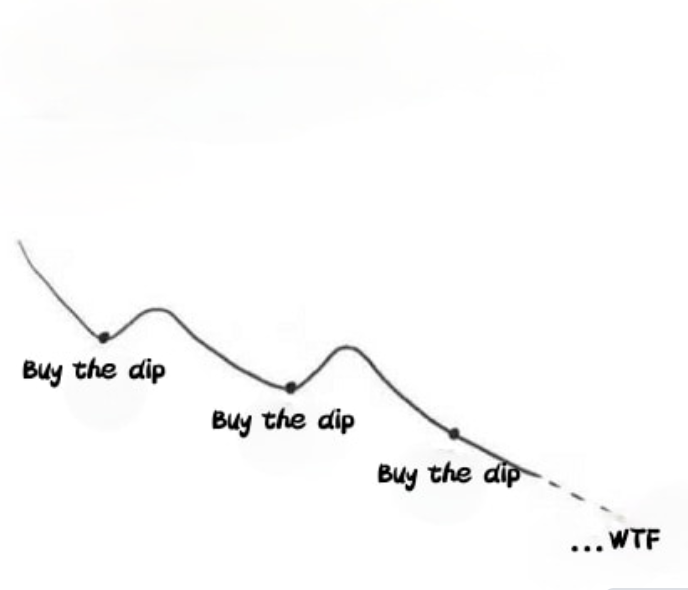
    What’s another ‘better’ time to buy? Dip time? Well, learn to buy the dip…I’m finding it too hard to learn that, lol. When cryptocurrency prices dip, the market is only allowing youto invest. Dip times allow you to buy more at lesser prices, sell pressure overpowers the buying pressure and the market comes crashing. After a 10% price drop, buying the dip looks tasty, depending on how exciting a project’s fundamentals are, investors swarm to get some cheap tokens from weak hands dumping their stakes. However, the 10% drop might just be the first of many to come. When this is the case, prices keep crashing and the dip continues, and yes, the dip continues…lol. When this happens, your “best” time appears to be just a ‘good’ time if at all the project completely recovers from the dip.

    Well, ‘buy the rumour, sell the news’. The crypto space is not only an innovative zone, it is also home to the biggest marketing hype and propaganda. When in obscurity about a pending announcement, influencers and holders tend to hype a pending announcement. A SpaceX collaboration? A merger with Tesla? Lol, you could see rumours like this fly around in suspense. But these could lead to huge price jerks running in multiples, the actual announcement most times is unable to impress the already elated investors who hope their investments become the project that flips Ethereum…or bitcoin. Investors take advantage of this to buy before the rumour spreads and sell just before the actual announcement. Sometimes the news is worth the hype and the price uptrend continues, but an investor should have less to complain about if the gains were good.

    The best time to invest is relative, largely personal and determined by your willingness to hold on for dear life or to sell at a loss, or profit. It doesn’t get any worse than a terrible price drop, but investors stand a chance of recovering if they can hold on till when the price recovers — if it ever does. It is hard to determine the best time to put your money on the road, but it is easier to develop patience for your investments regardless of when you invested or where the price is at the moment. Cryptocurrency investments are risky and good research only lessens your chances of hitting the rock with your investment, but a good HODLing attitude increases your chances of striking gold with your investments.