For every 10 tweets you come across on crypto Twitter, at least three try to tell you how you can position yourself to benefit from predicted airdrops from some new cryptocurrency projects. The list is inexhaustive; layer Zero, SUI network, zkSync. Alright, these tweets score quite high engagement, and cryptocurrency influencers on Twitter have found a new way to draw your attention. Just like the meme coin bubble, free drops are a booming topic in the crypto space today.
Well, if you clicked that link hoping to get a trick that qualifies you for all the airdrops at once, then I must apologize, this isn’t the article you were looking forward to and I admit that the title might have been quite misleading. I got carried away too.
The craving for the financial enrichment cryptocurrency deliver has crushed the hunger to build real decentralized solutions, ones that really work. New projects every day, each producing the same result. But I guess this has been a whole long talk since this article isn’t already telling you how to bridge to a new network, add liquidity, Perform swaps, mint an NFT, and wait for your freebies whenever the project is ready to grease the people’s palms.
Ok, here’s the ultimate guide, USE THE PRODUCT. But I guess that’s a hard thing to do, especially where there are no $500 – $10,000 worth airdrop in view. The space keeps changing and everything keeps going towards bubbles and quick money. A few years ago, the attraction point for any project is its features. The most promising projects get the attention. Ethereum, Tezos…you name them.
Contemporary projects are having it easier. Two steps, raise a couple of millions from super-rich VCs, tease a ‘community reward’ program. That’s it, you are well on your way to hitting a million users, even when your technology is nothing close to what was proposed on the WhitePaper.
If you read up till this point, then the higher chance is that you (somehow) agree with this opinion. It’s unlikely that anyone makes it to this point when this article is yet to show you proof that Polygon and Coinbase will be launching tokens for their layer-2 networks even when they already said they won’t be doing any of that. Well, you can’t trust these Web3 teams…
Even if crypto and blockchain don’t survive, there’s no doubt that they’ve enriched a few pockets and impoverished a few. If you’ve benefitted from the majority of these airdrops, you belong to the former.
Anyways, the target wordcount for this article is 500 and its almost close to that figure, but before the last full stop comes in, it is important to state that these airdrops are a good way to earn, and genuine interest in decentralized solutions is the surest way to benefit. Airdrop-hunting is good exercise. But every one of these is currently in a bubble, it’s hard to say how it will burst and it is important to tread carefully. Scam airdrops and malicious testnets are on the increase. It is important to protect yourself from these.
Well, you’d say this is just me following the same route as many other people. But at least, there are two differences; first, I cared to explain and even more importantly, I did it for a different reason…probably.
Ok, just in case you’re living under a rock and missed the news, here’s me telling you that arguably the biggest L-2 network in the crypto space just airdropped over 40% of its governance tokens to early adopters and DAOs on the network. Thing is, you wouldn’t be reading this if you are living under a rock, but that’s fine…
Alright, I planned to make this a short one so everyone can return to watching the charts. So, first of all, I was awarded a (whooping) 625 ARB token for basically interacting with the Sperax stablecoin project on the Arbitrum network. Second, I sold all tokens at 4$ each, and the funds have been sitting in stablecoins; USDT to be precise.
Why did I do this, now if I wanted quick cash, I’d already be at the closest stores throwing a few things into my cart. But this is not the case.
Before moving further, I’d like to express my dismay at how the whole DAO concept has been riddled in crypto. If there’s anything DAOs represent, decentralization isn’t one of them, at least not currently. I will desist from giving clear examples but a good number of DAO decisions have been trumped by some ‘rich folks’ with tons of governance tokens, enough to change the decisions of the rest of the community.
Tokenizing the DAO is a brilliant idea, but giving room for unlimited possession and unlimited selling of DAO tokens gives room for the one thing the whole crypto space tries to prevent. The blame is spread two ways. The DAO project and the community.
On the side of the community, the treatment given to DAO tokens is proof that 99% of participants in the crypto space are only here for quick bucks. Exchanges would rush to list these tokens to benefit from the huge volume that comes from the first two months of trading. This is fine, exchanges need money to run.
Holders of the DAO tokens, especially ones given out as airdrops are also quick to dump their ‘share of the governance’ on the exchanges and pay a little fee in trading fees. No loss, it was free anyways.
On the side of the project, it will be cool to experiment with issuing these free tokens as real governance tokens (Ve tokens). By this, beneficiaries will be unable to sell these tokens immediately. Tokens can be unlocked periodically or based on other factors like the number of proposals the receiver has voted on. This will enable DAOs to function. To prevent centralization, a smart contract that limits the vote amount for every individual wallet can be added to DAO smart contracts.
Pouring new governance out there hasn’t helped and these tokens just go worthless once the beneficiaries are done selling. Entities who manage to get hold of enough tokens at the lowest price proceeds to own the DAO.
Back to my decision to sell, you probably figure out why already. But the real reason is, I traded my tokens in expectation of the market going the usual way. Arbitrum, for me, is an interesting project, one I’d like to have a say in. So this is it, once the ARB market comes crashing, I will be putting the USDT back in. Had to shun USDC since the US banks are still sorting themselves.
Just FYI, this decision was made out of experience. Multiple times I’ve received DAO tokens, kept them, and watched them get worthless in price while the DAO becomes centralized by the ‘money bags’. This is not the usual article where I ask you what you did with your airdrop, maybe because I don’t care what you do with them anymore. But still, you can feel free to share how you managed your Arbitrum tokens.
Numerous articles tip bitcoin and cryptocurrencies over fiat currencies and a couple more insinuating the inferiority of traditional hard currencies and suggesting these currencies might become obsolete and deprecated in the near future. ‘The death of fiat is imminent’ they say, but is this really true? I don’t know what your answer might be, but I strongly doubt if the days of paper currencies are anywhere near an end, especially not with the current state of the crypto space.
Recent trends of countries employing blockchain technology in certain sectors including finance have fueled the trend of people envisioning a world without fiat and a world where currencies running on the blockchain are the generally accepted resource exchange means. But while this is a possibility, it is a very long-term vision and as a matter of fact, stands a very little chance of coming true.
While I am pro-bitcoin and cryptocurrency, the masterpiece of fiat currencies and the current shortcomings of bitcoin and cryptocurrencies are hard to ignore. And according to certain cryptographers, ‘Blockchain is a clever technology but cryptocurrencies are useless’. This is certainly not true to a large extent, but to an extent, it basically expresses dismay at cryptocurrencies. While the technology backing these flexible currencies holds many applications, cryptocurrencies have to a large extent depicted some shortcomings which are very hard to ignore.
Fact is, no system or technology is 100% efficient, but tipping a very young prospect that has displayed some huge level of inefficiency over a system which have served for centuries could be asking too much…and moving too fast.
A little assessment, how well do you think cryptocurrencies will perform as a global means of exchange? Critical thought will reveal numerous issues which may arise from this. While these issues are fixable, cryptocurrencies and blockchain technology are still some miles away from solving these issues.
Get used to bank notes, they will be here for much longer! Source
Cryptocurrencies are better off as utility tokens than global currencies used for mainstream exchange. However, if cryptocurrencies must be used for this purpose, then a little bit of centralization must come in, and this defeats the whole goal of decentralization and cutting off the middleman to add security and privacy to the fund transfer process.
Achieving high throughput in transactions is also a blockchain issue that limits the use of cryptocurrencies in everyday ‘spend’ activities. Optimization of the spend and receive algorithms set a blockchain project ‘a head above others’, while many contemporary blockchains can process the transfer and reception of assets, many users still face tangible constraints while using this feature, this stems from the complicated steps required before a transfer request is made and a slow speed of processing transactions. To serve the people better, an optimized means of spending funds is essential.
Talk about portability. Of course! Present banking financial technologies are focused on providing a portable medium of financial transactions, hence the recent surge of banking applications, bar-code spending systems, and other web-based banking services. This has simplified financial activities and created a sort of ‘digital fiat’ which runs without the blockchain and in a centralized system, but it of course presents a flexible spending system with some regulations which try to monitor the use and block irregular activities…to an extent.
Ok, blockchain claims to be transparent, and this is a fact relative to custodial banking systems, but transparency is just a tool that aids financial regulation, however using a transparent financial system with no means of actually curbing irregularities in the system makes it all futile. If you can see the unscrupulous acts going on but can’t stop or reduce them, then transparency is almost of no use. This is the case in a truly decentralized blockchain-powered financial system.
Currently, cryptocurrency’s universality is the only enticing feature it really has over the current fiat currencies, financial systems, and banks. With the current instability, manipulations, and technological shortcoming, it is as a matter of fact inferior to fiat currencies and the current banking system.
Seeing cryptocurrencies as utility tokens of blockchain projects which solves some real-world problems or presents a new and/or more efficient way of handling real-world issue is probably the healthiest way to look at it. Bringing some aspects of blockchain technology into fintech and revolutionizing the financial system to incorporate some virtues of blockchain technology into the mainstream financial system will surely create a more efficient financial system. The fiat system may never die, but if blockchain technology and cryptocurrencies take a healthier route and fix some of its biggest issues, then they stand a chance of penetrating the mainstream financial system…but not replacing fiat. Replacing fiat with cryptocurrencies is just a long-lasting illusion.
Snoop Dogg revealed that his NFT portfolio is worth millions of dollars. The most popular names you could think about are fast hopping on the NFT trend. Lil Yachty influenced the very popular Safemoon moonshot. A tough one to say, but SouljaBoy once turned into a proper cryptocurrency pump and dump specialist of the McAfee type.
Celebrities of the most elite echelon are fearlessly pushing cryptocurrency, decentralization, and financial technology-aided human freedom. Unarguably, your recent love and respect for a couple of them stem from the fact that they helped ‘pump’ some of your cryptocurrency holdings.
Hate or love him, Elon Musk has been the most influential figure in the crypto space in 2021. Yeah, it’s the rocket man, not even Michael Saylor and the thousands of Bitcoins he regularly buys via his investment startup — Microstrategy. NSFW projects have also attracted adult content producers into the crypto space.
As if this is the first time cryptocurrency made its way to mass awareness, the rave seems to have shot up from nowhere! Amazing, yet confusing…what could have caused this rush and how have this changed things for the larger cryptocurrency community?
Flashback to a couple of years ago; bitcoin was relatively stuck in obscurity, despite performing way better than every other asset you could think of over the past decade. Only the most curious and financially knowledgeable celebrities cared about making their opinions about the shady digital asset known. The dollar was the rave, amongst celebrities and other people alike…it probably still is.
A couple of them surely moved a chunk of their funds into bitcoin and cryptocurrencies but barely cared to talk about them as much as they do currently.
NBA teams are proposing to pay part of their players’ salaries in bitcoin, popular racing companies, and F1 racers have lucrative deals with cryptocurrency startups. The bitcoin car didn’t win that race, but still, it has served its purpose. It’s not so odd to see new people join a trend, but then they barely cared about it a while ago and suddenly get so involved, it looks weird…or amazing, rather.
Who’s your favorite celebrity in cryptocurrency? For me, it’s certainly not Soulja Boy. The ‘Crank dat’ emcee hasn’t been such a healthy figure in the crypto space and represents everything that makes cryptocurrency investment risky. His influence is very similar to that of many other celebrities who ventured into the space during the cryptocurrency bull run of the first quarter.
Anyone who really cared would wonder what these popular guys have contributed to the real growth of cryptocurrency and blockchain technology.
Pump and dump specialists? Remember when meme tokens nearly took over the Binance Smart Chain? The safe, moon, baby, Shiba, and Inu tokens. As funny as they sound and function, many of them were being advertised by elite celebrities; Snoop Dogg, The Game, members of the Faze Clan, to mention very few. Thanks to the large audience they gained via their music success, and otherwise, these tokens gained enormous popularity accompanied by face-melting price moves. Thanks to Automated Market Protocols, every buy or sale has a tangible influence on price.
Price easily went haywire, 10X gains were as common as ever, 100X gains and even higher could come within a week. The peak of these gains was usually followed by rug pulls and teams selling the majority of their holdings, leaving holders to nurse their irrecoverable losses as trading volumes shrink out while the project goes into obscurity. Unto the next one! “what’s the next 100X?” cryptocurrency’s reputation was left to bleed, volatility and betrayal were demonstrated in their worst manners. These influencers already cashed out before the storm, depending on whether they were paid upfront or in the tokens.
Money grabs? For most of these celebrities, cryptocurrency is simply an avenue to boost their net worth or get out of their bad financial situations. NFTs, Defi, memes, and passive reward coins; the boom of each of these presents an avenue for celebrities to jump in and make some dollars. Celebrities would mint NFTs and only sell them for Dollars and USDT.
Funny how the rest of the crypto space boarded their ship and paid ridiculous fees for these NFTs. Well, thousands bought meme coins simply because a celebrity said inaudible words and mentioned the coin at the end, lol. Well, the gains were good, for these popular guys, and they get to keep their reputation intact and gain more followers.
Politically influenced moves? Actually, I have been mentioning rap stars and pop stars, that’s partial! Elite politicians have also joined the movement, either against or in support. Most of these moves are politically motivated as some of these politicians, in fact, have no interest in cryptocurrency, while a good number of them actually hate it but put their weight behind it to earn voters’ attention and support.
Politicians with real interest in cryptocurrency have stayed outspoken way before the boom, most of them against it, however…but they are genuine, at least.
Well, as long as global awareness goes, these celebrities haven’t been such a bad influence in the space. To be fair, a good number have pushed cryptocurrency closer to global adoption…very few of them anyway. Regardless of how they did it, more people got to know about cryptocurrency via their popular shills and toxic support for certain projects.
In the real sense, long-term supporters have continued to have the most important contributions to the positive growth of cryptocurrency and blockchain technology, while the new ‘converts’ continue to find their way into the space.
DAO in crypto was short-lived, not just the concept. Sounds funny when some of them control almost a billion-dollar market capitalization. Your best knowledge of a DAO might be a famous airdrop where users claimed thousands of dollars for free. You might have benefitted from one of these if you’re fortunate enough.
One good thing about (some of) these airdrops is that they surely get the attention of the greater part of the cryptocurrency community who barely knew about these projects and even the world outside it. Exchanges are also quick to list the ‘DAO’ tokens and enable trading as soon as possible. The normal listing process can be forgotten. Who cares when there are surely some juicy trading fees to be made? Beneficiaries are also quick to hit the market and cash in on some free cash.
You probably don’t care about it but, Decentralized Autonomous Organizations (DAOs) are a systemic design structured to ensure general and undiluted participation of the members of the organization. In cryptocurrency communities, rights to this participation are tokenized and every token holder is considered a member of the DAO. Through voting portals, members of the DAO can vote on proposals and submit their improvement suggestions to be voted on by the rest of the holders.
The idea of DAO has long existed, many older projects have implemented this before it became so popular in the past few years. Many projects have launched tokens whose primary use is to vote on proposals. A brilliant move, in my opinion. Unfortunately, this hasn’t really worked so well.
Buzzwords and media hype apart, contemporary DAOs haven’t really made much progress and are pretty much replicas of the older examples. In contrast, these older DAOs worked better…and are worth way less.
DAOs are designed to promote general participation and optimize the efficiency of communal decisions. To achieve this, as many members as possible are required to partake in the voting process. Abstaining is also an option; this should be explained in case.
Tokenizing this participation simplifies the verification and collation process. Holders of these tokens are confirmed automatically by smart contracts. Manipulating smart contract tokens is impossible. the number of tokens in circulation can also be verified via the blockchain. These ensure that every vote is valid. The amount of tokens held by each member is a representation of their stake in the DAO and determines the extent to which they influence the community’s decision.
This works well…on paper. But, do these projects really achieve their goal of a Decentralized Autonomous Organization when their tokens are quickly traded on exchanges by the beneficiaries of their airdrop? The new owners couldn’t care less about how a DAO works and if there exists a DAO at all.
These tokens are no different from every other smart contract token filling up the whole space. Only one principal achievement; marketing. These ‘DAOs’ quickly gain thousands of followers as their airdrop beneficiaries scamper to find out who their new ‘Santa’ is. Influencers who seemingly claimed a ton of the drop picks up their devices to tweet the hell out of these benevolent projects.
Airdropping free tokens to old community members is the right thing to do. Older participants are regarded as the most loyal and have stayed with the project for most of its existence. If anyone should get a free stake in the government, it should be this set of people. Dumping these DAO tokens into the market is a failure on the part of the community and not the project founders.
Project founders aren’t exempted from the blames anyways. Albeit decentralizing the community, DAO project teams still execute important proposals without the consent of the community. Many argue that a complete DAO is ‘dumb’ and unsustainable. You’d agree too. It falls through at some point. The majority isn’t always right, this happens more often than not. In cases like this, project founders face the hard decision of going against the community or not consulting them properly.
When the hype dies, the ‘quick buyers’ can only count their losses as they wait for the DAO to go live. Nope, they wait for the price to go up…again. DAOs are currently hype, just like many other cryptocurrency concepts. The best uses might emerge when the hype dies or when solutions are developed to retain community interest and understand how best to handle negative decisions by the community.
It took ChatGPT for artificial intelligence cryptocurrencies to really see the light of day. Not sure we can keep a good count of every hype coin with an Artificial intelligence (AI) tag that zoomed off in green candles. A new way to launch a successful project in the crypto space now is to attach Artificial intelligence somewhere in your whitepaper…or just your Twitter bio. That’s all it takes to rake in a few million dollars. If you add “ChatGPT competitor”, you might as well create a multi-million dollar cryptocurrency project without even writing a good line of code.
No jabs at the reputable AI projects that have shown how decentralized Artificial intelligence solutions can be created. In past articles, we have featured Singularity (AGIX) and some projects from its ecosystem (Singularity DAO) and have also tipped the project to climb to the top 20 positions, alongside FetchAI. That prediction is still a bit far from coming to life, but there’s a wave and anything can happen.
Talking about ‘wave’, the crypto space has welcomed some ridiculously overwhelming waves. Meme coins, privacy coins, DeFi projects. We’d add ‘bitcoin alternatives’ but that will give way for an almost everlasting wave, ‘Ethereum killers’. Now hats off to every other wave, apart from meme coins…we are yet to unravel why they really became so important. Maybe this article can help though.
The AI concept is another tech-oriented wave and the big question is, has it really begun, or is it fading away already? A private opinion, but the answer to both questions is NO. A little controversial, it is inevitable that some over-hyped Artificial Intelligence projects will see a decline and complete fade-off whenever the crypto space sees a sell-off. But for the blue-chip AI projects, the wave is still setting in.
Privacy coins took a big hit due to the regulatory hinges that the crypto space will continue to suffer for all of its existence, meme coins will keep rolling the green candles as long as Elon Musk continues his pro-DogeCoin tweets and teasing his new Twitter CEO — Floki. DeFi coins, well, it all depends on the APR offered in the liquidity farms and staking pools.
A high-level info-bot was all it took to remind the whole world that artificial intelligence is the next level of technological evolution. Super software, humanoids, and learned protocols. These are the future, the present could be in doubt, but as stated earlier, the wave is just kicking in.
A valuation for a good Artificial intelligence solution? If a meme coin could hit a billion in valuation, then a good AI solution should get to multiple times more. It is hard to pick a project that makes it to this point, it’s probably not even launched yet but a few veteran Artificial intelligence projects have what it takes to make it to this level. Feel free to shill your favorite AI project in the comment section. Shilling is one of the most productive marketing plans anyways.
While many empty projects will surely emerge in the coming days with talks about AI and machine intelligence, the crypto space will surely house a handful of super successful AI projects and they will be there in the long term.
Andre Cronje in a tweet shared his ideas about Artificial Intelligence and blockchain technology. Even though he opines that blockchain technology and AI aren’t really a good match, there are numerous ways to bring both together, and a few projects are already exploring that…or exploiting, rather.
What’s your favorite AI project? Definitely, one that has made you a 10X return, but no worries, that’s the best feature any cryptocurrency project could have. Let us know about it anyway; someone might have a few dollars to spare, or a few FUD to spread.
Meanwhile, nothing said here is financial advice, always do your own research; and Follow us!
The internet has grown with other information technologies; arguably the most popular technology. With an infinite connection of people from different locations and backgrounds surfing the internet every day via the web, the internet presents a platform for information dissemination at a flash speed, relative to pre-existing means. Together with these pre-existing and emerging information technologies, the internet has made information spread at amazing speed.
Functioning as an application layer protocol running on the internet, the web is home to many ideas and many innovations, it has formed a huge part of the internet age. To many; the internet age is championed by the web. This is not far from the fact anyways.
Computer programming languages have enabled the creation of utilities on the web. It is hence not only a protocol on the internet, it has become quite home to everyone who has access to the internet, well-crafted gadgets have also been developed to enable more enhanced and efficient web functionalities.
‘The World Wide Web’ takes you to a world of infinite possibilities and opportunities.
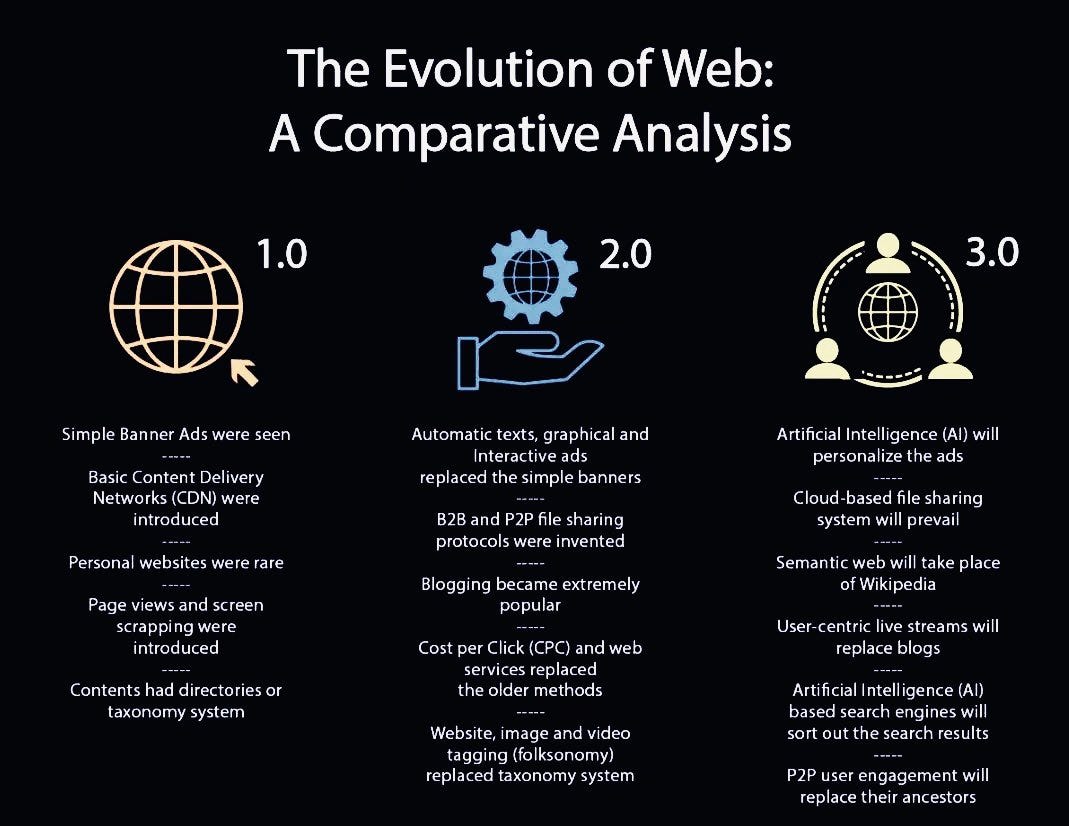
During its first generation, the web was mainly a hub of information and ‘documents’. Simply, a platform hosting information written in the hypertext markup language (HTML), with little or no user interaction with the website.
The emergence of more advanced programming languages including HTML and also the evolution of the computer and the internet enabled the creation of web platforms with more user interactivity. A web platform where users can interact with the website to a very large and also with other users visiting the website, thus the birth of Web 2.0
Coined by Darcy Dinucci in 1991 to imply a second generation of the web evolution; the term ‘web 2.0’ is a collaborative and participative web platform that allows its users to perform social activities on the web such as generating their own content and interacting with content generated by other users of the platform and also with the users who generated this content.
Several web 2.0 applications have had a major influence on our everyday life. From blogging platforms to video hosting and sharing platforms where users can interact with content, generate and share their own content. With the web 2.0 resources, commercial applications have been built on the Web, and information from a web 2.0 platform can be distributed to and used by other platforms via information distribution algorithms such as web APIs and RSS (RDF Site Summary)
Web 2.0 platforms are hosted on a server with one entity controlling activities on the platform. This control is unlimited and spans almost every aspect of the platform including content generation and information distribution on the platform, personal profile creation, and personal profile details.
Owners of these platforms hence possess total control of the platform. This serves some positive purposes as owners of the platform can easily control activities on the platform to ensure that it complies with the terms and conditions specifications. This ability to censor content generated on web 2.0 platforms leaves users with the role of ‘mere participants’ who hold almost zero control over how they are treated on the platform.
On the dark side, owners of web 2.0 have in many instances misused their access to every activity on their platforms including confidential information about the users of the platform. Information about topics of interest has also been censored or put down by the controllers of these platforms in cases where such information is against their interests or gives put vital information on some issues which expose certain parties related to the platform.
Having known the enormous influence information has on the audience, parties directly concerned with a subject and other interested parties tend to modify information reaching out to the audience as regards the subject. Putting away some aspects of the information going out, modifying it to suit their interests; and in most cases Suppressing others who have access to more knowledge about the subject from sharing this information. If there’s any specie in the information age that has been endangered by web 2.0, it is the freedom of speech.
While the centralized internet has arguably created a healthy internet, its dark side is big enough to override these imagined regulations. Cryptocurrency speakers and enthusiasts are currently having a rough time with video hosting platforms as well as blogging platforms. Articles and videos related to cryptocurrency are being censored and put down and in some cases, their profiles on these platforms are banned or restricted as the case may be.
This simply attacks a topic of interest that people needs to have the right information about, while topics like this do not pose any threat to human life or negatively disrupt existing information, many harmful activities and contents are left to float on these platforms.
Failure of web 2.0 in these aspects has once again left internet users scrambling for a healthier environment where they hold some or at least, total authority over how their generated contents and personal information are handled by the administrators of the platform — a decentralized platform where users are in charge of themselves and others have almost no direct control over their activities.
In a decentralized internet; each user is like a well-fenced building in an estate and each building is fenced individually with another common fence protecting the whole estate. This depicts an independent platform where the users are independent of the administrators and other users as each profile is hosted differently on the platform.
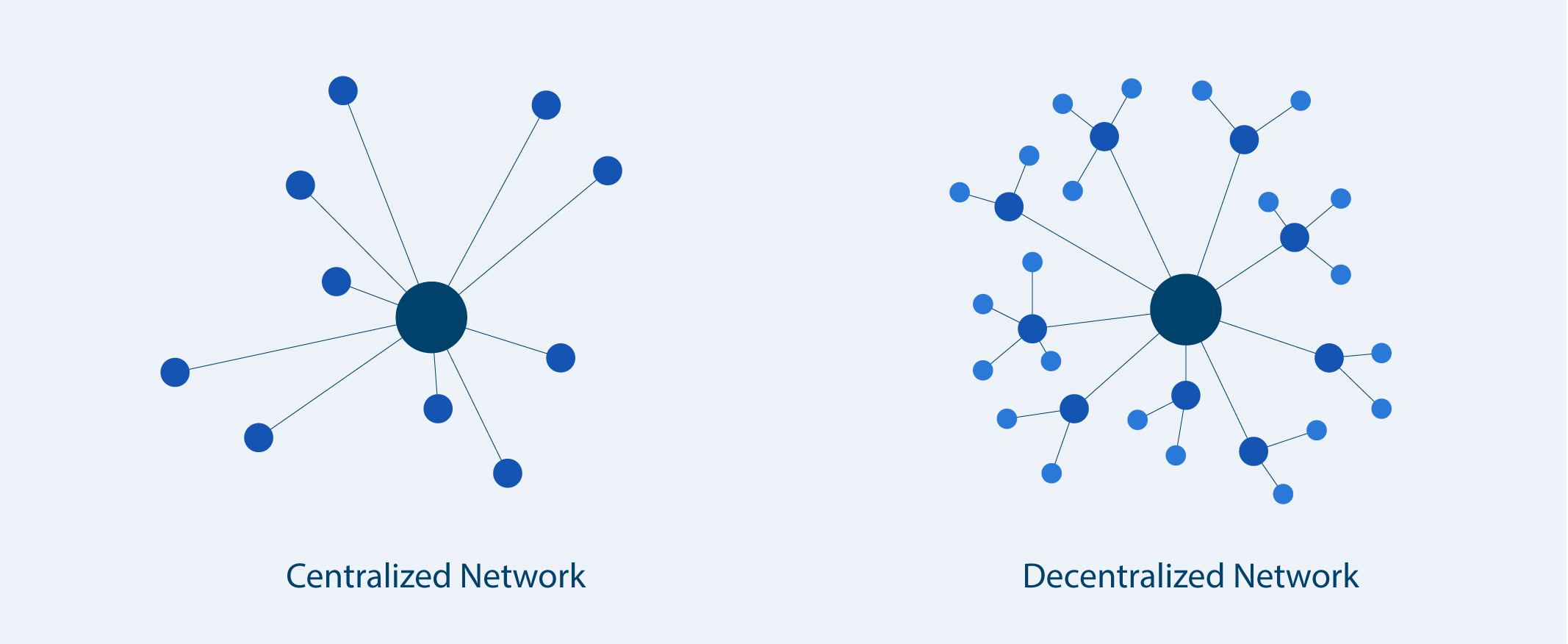
In contrast to centralized platforms, decentralized web platforms present a disseminated governance system where each member has tangible control of their activities. Decentralized web platforms are also known as WEB 3.0 platforms.
Web 3.0 technologies redefine the back end of the web. They distribute equal rights to each user while the web front end remains relatively the same and the front end works as usual. The back end of the internet is structured to serve equal rights to users.
The web 3.0 revolution is led/enabled by blockchain technology. The blockchain is a ‘chain of blocks’, Blocks are permanent stores of immutable data/information. These include information such as agreements between the parties in the transactions; the name of the sender, name of the recipient, and the amount transacted.
Web 3 platforms are powered by the blockchain technology Source
A block could store just any information, in cryptocurrency transactions which is the most popular context of blockchain applications, a block holds records of all recent transactions.
For new information to be stored, a new block must be created. The new block is referenced to the previous block, information cannot be added to the previous blocks and its information cannot be edited.
Each block contains a record of data and an identical hash (a cryptographic code) that identifies the block. To ensure more security and stability of the blockchain, the blockchain servers (node) are run by each user of the blockchain, every user running a node verifies each block before it is created.
Web platforms built on the blockchain copy this concept too. Each user who creates an account on the platform owns an account that runs on the blockchain. Activities by each user are verified by other users and are stored on the block. The block is immutable, hence these activities including contents generated by the user and the user profiles are stored permanently on the blockchain and cannot be censored or removed completely from the blockchain. This solves the problem created by the centralization of the web in web 2.0.
Web 2.0 platforms continue to wallow in centralization and censorship by administrators of these platforms as complaints from content creators on these platforms continue to rise. Emerging web3 platforms on the other hand have delighted their users with their immutability and decentralization. Content creators on these platforms are rest assured of the safety of the content they generate as well as the safety of their platforms which they have worked so hard to build.
Web3 platforms offer immutability and censorship resistance, one would wonder how it regulates unhealthy activities on the platform…
Web 3.0 technologies create multiple points of entry to platforms and as well, multiple control units. These units are in fact controlled by the whole users on the network. It employs specialized algorithms and technologies such as Artificial Intelligence (AI) protocols to ensure that the system works for the users just the way they (individually) want it.
Like a ‘plug and play’ system, connecting your wallet to a platform is all you need to experience a world of possibilities. Web3 platforms preserve user identity and data.
That being said, most web 3 platforms also offer a flexible means of remuneration — Cryptocurrency. Depending on the blockchain platform where a Web3 platform is hosted, participants in the network can be rewarded using native cryptocurrencies.
Cryptocurrencies are cryptographic tokens that run on a blockchain. They are flexible stores of value. Most blockchains, enable users to access certain features of the blockchain. These tokens can be easily transferred from one user to another. In contrast to certain web 2.0 platforms, this flexible means of remuneration relieves the users of the huge stress they go through to monetize the contents they create on web 3.0 platforms. Given the ability to monetize (most forms of) participation on web3 platforms, interactivity on the web is enhanced as every user is incentivized to participate in form of creating content or interacting with the platform itself.
The future is ‘decentralized’. Some Web 3.0 projects are developing decentralized versions of existing internet facilities including VPNs, SDKs, and Routers. This extra equipment in synergy with websites built on distributed networks will power the next generation of the web and internet.
A major barrier to web 3.0 adoption is the complexity of these platforms and the fact that most blockchains currently do not (or poorly) scale. The pronounced complexity makes it hard for average tech enthusiasts to use these platforms. Blockchain as a concept is still emerging and a majority are yet to grasp how it actually works.
Unable to scale, most blockchains are ‘heavy’ and get even heavier as more users adopt their technology. This decreases efficiency…a major turn-off. Nevertheless, there’s still a long way to go for a concept as young as Web 3.0
It’s safe to say that Elon Musk facilitated two very interesting trends; electric cars and meme coins. To the moon! But before that, how much have you earned by simply holding ‘baby’ tokens? Only very few ‘blue chip’ projects are yet to get a ‘baby’ token which yields their holders some dividends in parent tokens for holding the spinoff tokens.
The crypto space offers a free market opportunity where concepts sell according to market demands. Regardless of intrinsic values, a project’s valuation could steam from numerous factors; ‘luck’ included. DogeCoin’s transition from a ‘joke’ fork of the bitcoin blockchain to a top ten token in a Two-trillion-dollar sector with tons of other relatively ‘more useful’ projects, goes a long way to portray the randomness of the crypto space.
Well, that’s not the first time this space has looked ridiculous; and not the last time either. If you bought some Safemoon and sold it off at its all-time high, then you’d probably be in a realistic moon currently, same if you invested in a number of meme coins.
Meme coins hold one thing in essence, ‘communalism’. Interesting, to be fair; group marketing creates enormous hype and could drive a huge buy pressure on the concerned project. Meme and moon coins utilize this idea a lot and make tangible price and community success thanks to the correct use of this strategy.
Hype marketing has played out well for a good number of cryptocurrency projects. Well-planned shills by a group of people could create thrills and lure potential investors into investing in a project despite having no clear information about the project. These projects sometimes involve prominent cryptocurrency influencers and mainstream celebrities creating these shills.
If done well, hype marketing could override utility and push a project to tangible price levels regardless of the proper utility it presents. This growth despite being organic is actually built on ‘unverified beliefs’ and bloated utility.
Memes are cool, but are they worth over 40 billion dollars? Well, arguably. The doge army would present reasons why they think dogecoin should actually overthrow bitcoin at the apex, lol. Regardless of how convincing these reasons may be, meme coins owe a majority of their success to well-planned hype marketing…and Elon Musk.
Alright; you might not be a fan of jokes and memes, and communalism either, but passive income is an idea everybody fancies; well, most people. If that’s the case, then you’d fancy some of the ‘baby’ coins being filtered into the crypto space.
Baby tokens reward holders by selling contract taxes to buy parent tokens and distributing these tokens to holders according to the proportion of tokens they hold. Dividend tokens are usually allocated in a 1:1 ratio and enable automated distribution of the concerned parent token. These protocols are all embedded in the smart contract. Tweaks and ‘hacks’ are possible anyways. Well, I’d say ‘technological exploitations’
Actually, it doesn’t matter how the rest of the crypto space feels about these tokens, they skyrocket at launch. Only a few of them manage to maintain this speed for a while though, most others falter as the hype falls. Nevertheless, they make a bold statement about marketing in cryptocurrency and the world outside it.
A true businessman knows the value of marketing; however, the same cannot always be said about a nerd who prefers to push code bits to GitHub and deliver clever solutions. Disproportionality between marketing and technology has seen mediocre projects with good marketing climb the stairs in terms of market capitalization while plausible projects languish at the bottom and most times, die off.
You probably have your reservations about ‘marketing coins’ and hype marketing as a concept; but there is no denial about the fact that they shine a light on subject many projects ignore — marketing. Successful cryptocurrency projects are built by properly marketing good utility(ies). When done so well, one might offset the effect of the other.
Well-developed utility, successful hype marketing? A project might survive by having just one of these. The perfect strategy is a combination of the two, many projects with solid utility and tokenomics miss out on the latter.
A lesson to learn? I’m not sure if these other projects are willing to learn from memes and ‘baby’ tokens.
If you missed the news, the Nigerian government has announced the official launch of the tokenized and ‘cryptographic’ Nigerian Naira — the E-Naira. With the official wallet available in all application stores, Nigeria becomes the first African country to embrace blockchain technology on a nationwide scale.
China’s digital Yuan is yet to launch officially, Nigeria might as well be the first country to use a Central Bank Digital Currency.
Not bitcoin; actually, cryptocurrencies are still banned in Nigeria, but as far as the adoption goal is concerned, this is a huge breakthrough for blockchain technology. Nigeria’s over 200 million sparsely located citizens can now access some basic banking services without necessarily owning a bank account.
For a country struggling to cope with its growing population amidst pronounced corruption and spiking cost of living, the E-naira comes as a necessity. Regardless of the resources geared towards developing the E-naira technology and rolling it out, the Federal Republic of Nigeria has taken a bold step in the ‘right’ direction.
An excess of 206 million people dispersed over an area of over 900,000 square kilometers in an ‘oil-rich’ nation struggling to provide basic amenities for its citizen. The banking system in Nigeria is expectedly poor and easily accessible to only a few. Depending on presiding periodic conditions, this number is greatly reduced at times. For visitors, exposure to this difficulty might depend on the area being visited and of course, period of visitation.
Apart from its sparsely distributed population and limited resources, Nigeria faces an uphill battle with internal insecurity. Clouded by insurgency and separatist movements, the security situation in the most populated African country is not trustworthy. Financial management in a location like this is a herculean task.
Nigerians have since turned up against this development, citing banking applications as an efficient substitute for the E-naira. Well, this argument falls through in many instances.
Banking applications are developed and controlled by banking institutions to simplify intra and inter-bank operations by their customers. Using a banking application, customers can perform basic financial operations such as transfer and receipt of funds, bill payments, and a number of other operations. But this service is basically for citizens who are privileged enough to own a bank account.
For citizens leaving in very rural areas, financial management in an insecure region is a nightmare. Loss of funds due to misplacement and theft is a popular story in settings like this. But this is just one of the many unfortunate tales of the unbanked in the west African nation.
Carrying fiat papers around has never been a fun exercise. Due to the slow adoption of financial technologies in Nigeria, swift payment strategies are unavailable in most stores and traditional commercial setups. This is partly due to slow technological advancement and also due to the poor banking system. Using paper money is inevitable in cases like this.
Thanks to constraints involved in exchanging the Naira within and outside Nigeria, using the Naira isn’t so easy for foreigners visiting the nation. Sending and receiving Naira outside the country without having an account with a Nigerian banking institution is almost impossible too.
Nigeria’s CBDC solves these problems in a very classy way. Built on blockchain technology, managed by the government; the E-Naira will allow people within and outside Nigeria to perform basic financial transactions using the tokenized Naira. The E-Naira wallet allows citizens to bridge over their fiat to a more flexible platform and relatively more secure. Well, it’s impossible to say for certain if Nigeria’s ‘blockchain’ is truly decentralized.
E-Naira and its wallet share a number of principal blockchain and cryptocurrency features; generality and security respectively. In comparison with private-owned banks and banking applications, E-Naira being controlled by the Federal Government is arguably a more secure facility.
E-naira wallet is accessible to anyone who owns a smartphone anywhere in the world, holders will be able to send and receive Nigerian currency without even having an account with a Nigerian financial institution.
The Nigerian Naira is boundless, thanks to the E-naira innovation.
A step forward? I totally think so. But the Nigerian government hasn’t always been the best when it comes to management; the e-Naira is still a prospect filled with uncertainty. Important things to note is that using the E-Naira is currently not cheaper than using existing options and KYC levels determine the extent of use. However, this is only for people who enjoy accessible banking services. The unbanked and people transacting outside the country using the Naira may find this very cheaper than the hassles they go through currently. This development is basically for this set of people.
Ridiculous fees apart, using decentralized exchange services has been really fun! Using DeFi services on platforms where fees and efficiency issues are fixed brings a true feel of decentralization.
The comfort, the security, the speed…oh well, just many things! DeFi protocols are mavericks and make centralized exchanges look so ancient despite being just about a decade old, lol.
My frequency of using centralized exchanges has decreased over five times the initial. If we can get rid of fake volumes, centralized exchanges are obviously bowing down to decentralized exchanges; in terms of volume, user base, and application.
The fact is, centralized exchanges aren’t even real competition to contemporary decentralized exchanges the difference is clear. Mainstream trading system will probably get usurped by DeFi protocols.
In addition to decentralization, security, and efficiency; Automated Market Maker, the protocol powering trading on decentralized exchanges is the main technology poised to put centralized exchanges to rest. AMMs are built to ensure organic liquidity and create real-time trading effects. Unlike centralized exchanges, AMMs are all shades of good. In the real sense, it’s AMMs Vs CEXes!
Despite years of efforts and modifications, fake volumes have continued to bite down on the reputation of centralized exchanges. Aided by exchange officials or solitarily, cryptocurrency projects could easily fake buy and sell orders to lure investors who are attracted by high volumes as proof of demand and liquidity.
This fake liquidity and high demand would quickly dry up as soon as the manipulation ends. Well, if the manipulation was able to lure enough investors and traders, then the decline will be gradual. If the project is unable to drive real demand, the liquidity dries up once again. Investors are only left to mourn their losses in cases like this…the ripple effect continues.
Apart from projects luring investors with these volumes, exchanges as well adopt this strategy to boost their numbers and attract users. Exchanges or cryptocurrency projects…I can’t tell who did this first.
Trading and liquidity manipulations on centralized exchanges also tarnish the organic effects of buys and sell. High volumes of huge buys, yet the very little effect on prices. Unfortunately, these positive effects are wiped away by relatively lesser sell orders. Everything looks programmed! For unstable projects, this phenomenon is even clearer.
The inability to estimate the depth of the liquidity pool and the effects of buys and sells on the price makes trading harder and less fun. I’m no trading expert, but being unable to access the originality of the trading activities for a particular token makes trading unthinkably tough.
Centralized exchanges and their technology have served for the time they dominated the space. No doubt, they flourished due to the incredibly handy services they offered. In essence, these services were the best available.
In contrast, Automated Market Markers, despite not being without their own shortcomings are programmed to be highly organic and responsive. Like a real-time trading system, every bit of supply and demand creates a relative effect. Traders and investors are handed efficient tools for making decisions and projects are represented for what they truly are…at least for that point in time.
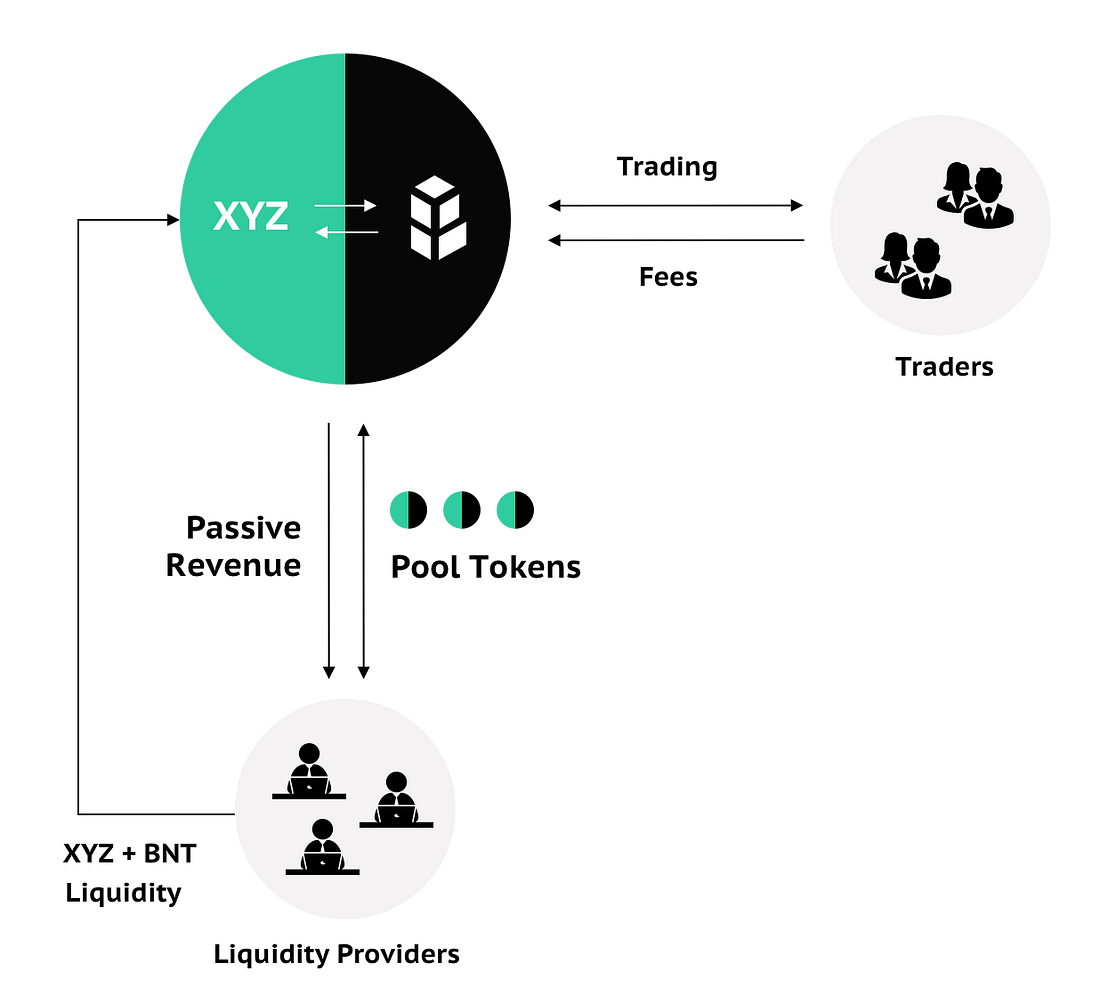
Thanks to liquidity pools, AMMs provide a basket of exchangeable assets to enable unrestricted trading for the period in which the liquidity providers wish to leave their assets on the pool. The transparency of the liquidity pool allows traders to make their decisions.
AMM protocol ensures that every buys and sells effect reflect relatively on the asset price. AMMs are not completely resistant to manipulations, this is evident in the rampant rug pulls. But on the brighter side, these actions are transparent; an important feature of blockchain technology.
Smart contract technology also creates an avenue for ‘liquidity locking’. This solves rug pulls to an extent. Liquidity locking ensures that provided liquidity cannot be removed for the period of time specified in the locking process.
It’s not just centralized exchanges; trading systems around the world will surely adopt AMM strategies sometime in the near future. In my opinion, it is the future of trading and exchange.