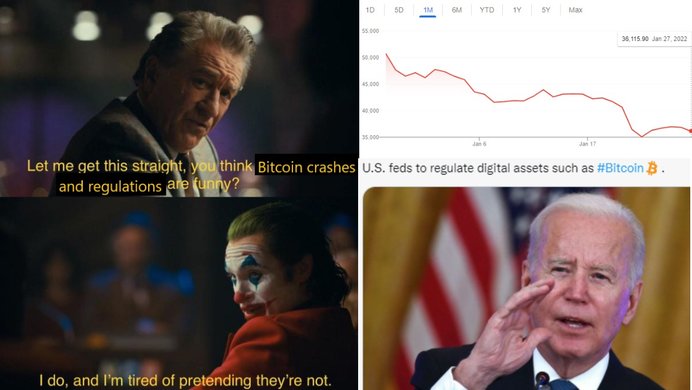
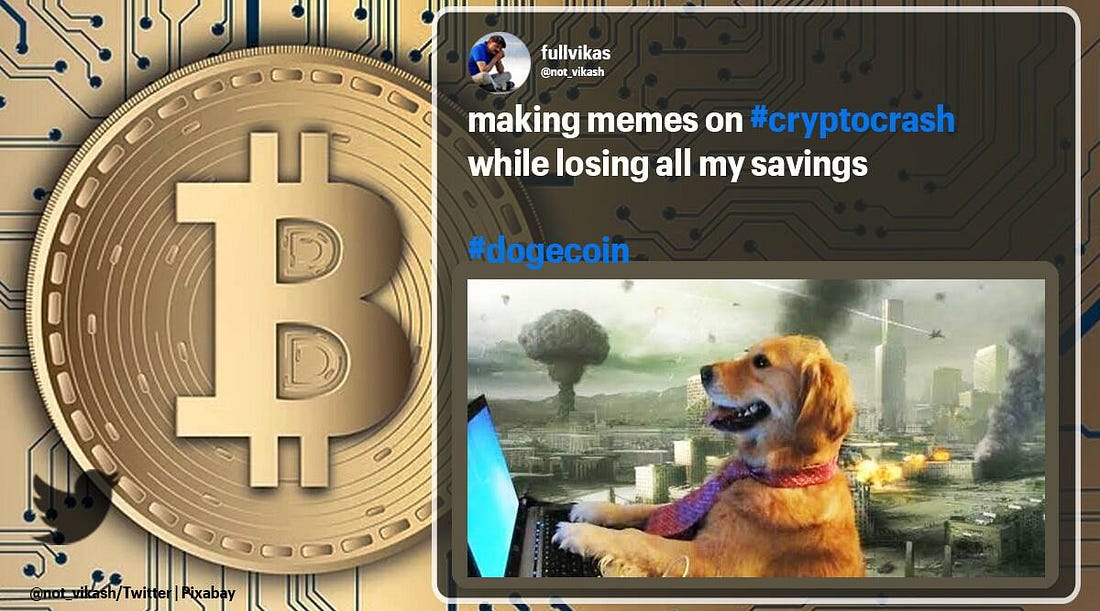
That title sounds a bit like a moonlight tale or a chapter from a kids’ storybook. But that’s fine, it’s a fairytale anyways. A fun one, but not too funny for the other half of the Twitter workforce stripped of their salary source by the beloved DogeFather.
When Billy Markus and Jackson Palmer were editing the bitcoin code to create Dogecoin, they certainly never believed that its destiny will lie in the hands of a nerdy billionaire. It is what it is though, the SlumDoge millionaire must be clearing up his garage for his new Tesla CyberTruck since Dogecoin has returned to the top gainers’ list and might finally land that Twitter deal.
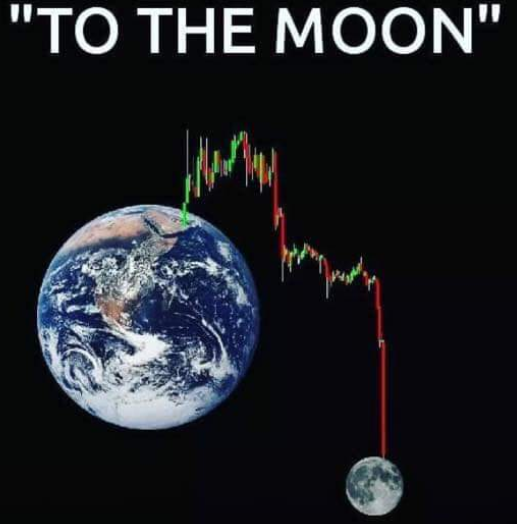
The Twitter-dogecoin Saga is like a toxic rich couple relationship. Frequent fallouts and even stronger comebacks, each one attracting huge financial involvement. When dogecoin hit $0.7, the rocket man was the big propeller. This time around, the story is the same, the only difference is that he isn’t somewhere on the bird app screaming “To the Moon”. Well, let’s just hope he doesn’t land another SNL interview.
Not sure if he will take any of those when he has a whole lot of grounds to clear in his new acquisition. A $44 billion purchase isn’t something to abandon for an interview…let that sink in.
Ok, word on the street is that Dogecoin will be the new token of the Twitter application. I’m not sure if Elon will be collecting that $8 monthly charge in Doge. As a matter of fact, he hasn’t really made his intentions about Doge clear. Notwithstanding, the ‘clever’ crypto investor just completed a dogecoin purchase from his Mid-end smartphone. When Twitter finally integrates Doge and his bag pumps, he will have just enough cash to get a better device. After all, someone made a few billion dollars from Shiba Inu and Doge is an even superior Dog.
Once I drop the last line of this article (which should be soon) I might consider getting a few dollars ‘bag’ of doge, just in case it finally gets to Twitter and the price goes through the roof. Now that’s a random moonboy statement and moonboys run this street. With the price dropping currently, I might just get a good discount or be rekt completely. The latter isn’t more likely, I don’t even know which.
Elon Musk has always been a huge fan of Dogecoin’s technology and economy. You’d expect him to buy up Dogecoin instead of Twitter, but the electric car man always has his own plans. $40 billion into dogecoin might have gotten it closer to flipping Ethereum; then bitcoin.
Elon will need to fight off competition from Jack Dorsey’s BlueSky, Kanye West’s Paler, and of course Donald Trump’s TruthSocial. The social media space is currently a big playground for billionaires. Just like I sip coffee and make Puns, Elon will try to raze a blunt and sack more staff or charge even more fees for the blue tick. Whichever happens more, I just hope he gave Parag that huge Ferrari money. And shout out to @mattwallace888 on Twitter for that new Twitter Logo.
Bitcoin topped $68,000 last year, and if you lived through that moment, you’d be left in awe of what the space has become since this time. Even more awesome is the state of things by the time you get to read this article. But that’s if you didn’t jump to the first paragraph to get to the point where I listed reasons why bitcoin will climb to $150,000 in the next 50 days.
Here’s a spoiler, that part doesn’t exist. You could still find a few hopium laying around the corners of crypto Twitter. The crypto space is adding to the relevance of Elon Musk’s new playground. At least, he could have some money to run the ship before the verified users start paying up their $8. Well, this is unrelated but the rocket man recently checked into a Twitter space just to say ‘Doge to the moon’!
Even if you don’t love Twitter, you’ll love Mr. Musk. An absolute gentleman! Don’t read that twice.
Away from Twitter and away from the charts, cryptocurrency has taken a bad hit this year, the worse it ever did. Trashed reputation, air-proofed strength. It once looked like a very strong space. If we’re considering percentage losses, it’s still doing better than the 2017 crash, but that’s not a story to tell to anyone who bought the top. Heard Nayib Bukele’s bitcoins were stored on FTX. That turned out to be a joke, but what a story it would have been.
Tesla did test bitcoin’s liquidity and couldn’t move the market with billions of dollars in bitcoin sold. That used to be impressive, guess not anymore, we could drop to zero if anyone tries something similar right now.
If there’s any advice that almost went completely wrong in crypto, it’s the one that encouraged you to invest in ‘blue chips’ turns out that are blue rugs. But that’s fine, at least we still have NFTs to keep us going. Brilliant FTX investors did demonstrate the best use case for NFT — money laundering. Probably the single-use case that has steered the values in the way we have seen.
Next in line for capitulation? I guess not, that Ronaldo and Binance NFT partnership finally happened. The greatest footballer that ever lived will be dishing out some rare art and footage with the popular exchange. With other exchanges falling apart and Binance standing strong for now, NFTs might just pick steam again, NFA.
But then, what else could go wrong? Bored Apes announces that their monkey pictures are truly valueless and floor prices crash to two decimal point ETH while bitcoin drops below $10, 000. That’s just one zero short of the $100,000 mark. That’s an awful take, even in the words of a crypto Rockstar.
But the drums are still sounding. Thanksgiving is almost here, but things are still looking scary. Halloween got extended. Time to give up on your dreams and face reality. If you bought bitcoin anywhere near the 2021 top, you’re certainly ending the year at a loss. But one bitcoin always equals one bitcoin. A faulty arithmetic, but still works for people who have developed a Micro strategy for cryptocurrency investment.
Anyways, it’s the last quarter of the year and crazy things happen. Shiba Inu at $1 is on the cards as well.
Aptos launched with a speed of less than 10 transactions per second. Well, that’s some distance from the promised 160,000 transactions per second. Every layer-1 blockchain is a ‘game changer’, at least until they start to get the heat.
Somehow Ethereum still manages to be one of the best layer-1 blockchains in a midst of countless ‘Ethereum killers’. I know that sounds different in the ears of a random airdrop hunter who just received 700 Aptos and sold them at $7 each. That’s, some loss anyways, a little wait would have added more bucks to that. But it’s free by the way. A good compensation for one of the harshest crypto winters I’ve witnessed.
Sui blockchain is on the way, Cristiano Ronaldo would be proud. Heard he’s got an NFT deal with Binance. Would be a good coincidence if he launches his own ‘Rare’ collections on the Sui blockchain.
Siuuu! You could hear that from every corner of the stadium or crypto Twitter.
Aptos somehow isn’t the game changer anymore, it only launched a few weeks ago! We are finally putting the “Ethereum Killer” phrase to rest. The space has moved on; from Solidity and Rust to ‘Move”
Two move blockchains with super-rich VCs launch in the same year. Even if these chains don’t amount to any good in the end, they surely stretched a few pockets. We can take that as a win.
The 2021 pumps favored cross-chains and their redesigned copies of UniSwap DEX. Even dead projects from 2017 could rebrand to the ‘Swap’ suffix, launch liquidity mining programs and score some 10Xs before going back to their previous position. All good anyways, crypto influencers had some nice play over there.
I might put in a few more paragraphs after this but before that; What’s your favorite layer-1 blockchain? Quick guess; the one with an airdrop in view. Airdrop hunting used to be about social media tasks, now it’s about testnets. An upgrade, really. Even the noob internet gamer could run some testnet node and make some quick bucks; sell off at launch and head out in search of the next game changer.
Tons of layer-1 blockchains, yet the space is still in search of the next big thing in smart contract blockchain. Gavin Wood came close with Polkadot. Sam and any other member of the Solana team did a plausible job with the Solana blockchain. Cool blockchain! You might want to check their timetable so you can have a feel before it’s switched off for the day. Ten days on, four days off, a balanced two weeks roster.
Pun intended… Not sure anyone would laugh at that anyways.
If we could get serious for a second, maybe we can have a flashback and check how innovative the new layer-1s created every day really are. A well-written whitepaper and some ‘gamey’ UI designs on the official website. Then, a couple of million raised in ICOs and IEOs. Like the dotcom boom, blockchain developers are the next lineage of billionaires…and meme coin influencers.
It only takes a few months before the ‘game changer’ gets riddled with meme coins and shady ‘otherworldly’ NFTs and of course; several exploitations and exit scams.
We’ll surely have a conversation about the VCs churning millions into these projects. But that’s when I get sober from the last Cup of coffee. Don’t expect a SEC investigation report anyway. I just need to know how my writing career can be funded. Maybe a DAO will do. Or a layer 1 writing platform. Perfect! While I draft my pitch and whitepaper, the heavily funded layer-1s struggle to remain in the Ethereum killer discussions.
It’s uncertain who comes out on top. We’ll get to know that in time, before then, I’d really like to say that it feels good to write on this platform again!
You’ve heard it several times; “the merge is coming”! A normal cryptocurrency investor couldn’t care less what this actually means anyways. As long as it sends the price “to the moon”, we’ll be fine. Well, same here…almost. But the merge means so much more for Ethereum and blockchain technology. A whole lot of developments are coming to the most used blockchain. Ethereum defeating its current problems holds a lot of importance for the whole space. The Merge is an important step in Ethereum’s journey towards scalability.
What is the Merge
Scalability and memory friendliness are both very appealing features and are vital for mainstream adoption. Currently, Ethereum gas price has risen very high and the cost of running transactions on the blockchain could get unbearable at some points.
Ethereum’s archival nodes currently sit at over five (5) terabytes (5Tb), the actual blockchain size is well over a hundred (110) Gigabytes and each block adds two (2) Megabytes to this already huge figure. Ethereum blockchain according to many ‘will never scale’ and in 2019, Bloomberg reported the Ethereum blockchain is ‘almost full’.
In computing and data storage, a truly scalable system is able to maintain a flexible size amidst ever-increasing data and is limitless in the amount of data it can carry. Blockchain start-ups face this problem commonly as the struggle to achieve a truly infinite scalable blockchain continues. While many blockchain projects boast of being scalable, they mostly fall short of their ‘claims’. Only a few can boast of reasonable scalability. These claims of Infinite scalability are mostly a marketing jibe used by many ‘Ethereum killers’
Regardless of how fast a blockchain grows, splitting the blockchain into smaller interconnected units presents pieces of lighter ‘blockchains’ that reduce the executable size considerably. This is the main idea behind Sharding. As part of the upgrade to Ethereum 2.0, Ethereum developers are planning to adopt this technology to split the Ethereum blockchain into lighter pieces. Zilliqa, Polkadot, and NEAR blockchains are already using sharding technology to make their blockchain lighter and their network faster.
The Sharding idea is to make a blockchain more efficient by partitioning it into lighter units. These ‘pieces’ of blockchains are known as ‘Shards’. Each shard stores different types of data independent of other shards. Sharding on Ethereum will split the blockchain into 64 shards. Consider these shards as interconnected units that constitute a blockchain.
Blockchain projects using the sharding technique are adopting different strategies to create competent communication between the shards. Zilliqa uses a sharding version known as Partitioned sharding, where shards don’t communicate with each other directly through. NEAR protocol and Polkadot use State sharding, where shards communicate with each other through a state, or central relay. Ethereum blockchain will also adopt the State sharding technology.
Ethereum developers plan to implement the sharding technology and switch to the proof of stake algorithm. The sharding technology will improve Ethereum’s scalability while the proof of stake consensus will do away with the bogus proof of work consensus to deliver an overall more efficient Ethereum blockchain
The beacon chain went live in the last quarter of 2020 marking the first step towards implementing Proof of stake consensus on the Ethereum blockchain. The Merge will piece the Proof of work mainnet together with the Proof of stake Beacon chain. Completing the switch to Proof of stake and preparing the Ethereum blockchain for Sharding implementation is a very important part of the Serenity upgrade. The efficiency of the Ethereum blockchain sequel to the sharding implementation will depend on how well the merge can unite the POW mainnet and the POS beacon chain and prepare the Ethereum blockchain for the Shard chain implementation.
The merge was initially proposed to happen in 2023, recent developments hint at an early release. According to Ethereum developer, Justin Drake, the merge chain could go live as early as august 2022.
What does this mean for the Ethereum blockchain?
When the Merge happens, Ethereum will be just one step away from finally completing one of the most important deliverables of the Serenity upgrade. The shard chain will be the third and final step in implementing the sharding technology as the Merge completes the Proof of stake consensus implementation.
This is expected to bring tangible efficiency and make the Ethereum blockchain truly scalable. But Sharding comes at a cost — Security. The factis, most scalability solutions sacrifice security and decentralization for speed and efficiency. Sharding is just another example. Splitting the blockchain into shards creates units of independent blockchains with relatively less security. These shards could be attacked individually in an attempt to compromise the blockchain. A successful attack on any of the shards affects the rest of the network.
The merge confirms the switch to the Proof of stake consensus algorithm lined up as part of the proposed upgrade. This algorithm, just like Sharding is known to improve efficiency and reduce block size…and security as well. Several Ethereum competitors are found lacking in security and decentralization, but relative to Ethereum Blockchain, they are incredibly fast, efficient and cheap. The Merge could be a step closer to a faster, cheaper, and more efficient Ethereum blockchain; unfortunately, it could also be a step closer to a centralized and less secure Ethereum blockchain.
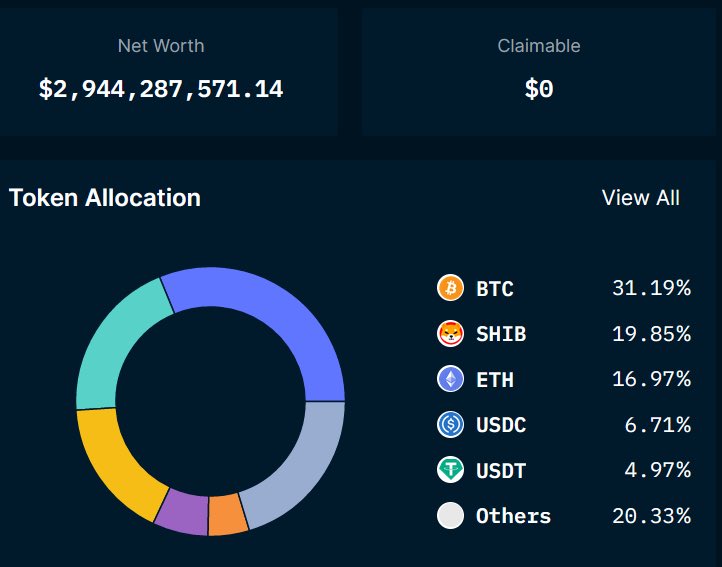
Unlike FTX, crypto.com have a reserve that protects your deposits. At least, when they finally file for Bankruptcy sometime in the future, you will get something back for the funds you left on their trading platform. Well, you’ll probably get a couple of million of Shiba Inu, but that’s fine, at least you got something.
It’s been a wild week and just when you think it can’t get worse, you find out that your whole deposit could be sent to the wrong address by the same institution that promises you your funds’ safety. Maybe the banks weren’t as bad as we have painted them over the years. And who cares whether the bank is always open or not? At least they play a better gamble than trading platforms valued in billions of United States dollars.
That’s by the way, I guess the coffee got somewhere between my emotions and my sense of taste. With every exchange showing an undue lack of integrity and bitcoin threatening to go back to 2018 levels, it’s time to deal with some addictions.
A pitiable state, the whole crypto space. But never mind, the remaining exchanges are proving to you that your crypto deposits are backed by a strong reserve, they are reserved in the most popular meme coins and a little bit of stablecoin and bitcoins as well. Can’t say much about the Ethereum coin in reserves since they can be easily sent to another exchange ‘mistakenly’. One suggestion is to use naming services like ENS and Unstoppable Domains…not sure if billion-dollar companies take advice from a common writer.
I could do a few conspiracy theories, my favorite theory is that all these events are meant to pump Shiba Inu to 1$. Since exchanges have billions of Shiba in reserves, Shiba at $1 will rescue these exchanges from bankruptcy and users can have their funds back while bitcoin races to $200,000 and crypto becomes the global standard of payment and Michael Saylor becomes one of the richest people on earth and the Bankman returns to his Forbes “30 under 30” ranks. I’m very bad at this.
It unfolds like a joke tweet, similar to the one from the Popular Binance CEO, followed by a “Steady Lads” tweet and some storm-calming claims before the -80% drop and bitcoin comes tumbling. It’s sad that the orange coin has to suffer from all these when it has done nothing but stay in the wallets of high-power miners and Central-American nations. Bitcoin is closer to $100 than $100,000; one year ago, it was just a few bucks to $70,000. Funny how everything could change in a year. My favorite coffee brand cost two times more too.
We could go ahead with more puns and sarcasm about how the space has gone from “revolutionary” to a “wild west” it has always been the latter; we were just lost in a wave of “institutional adoption”. I guess we all learned the hard way; apart from the hackers who managed to make a few cash-outs while the market was booming and the projects that successfully rugged their investors. Not to forget the Twitter influencers that earned six figures from simple tweets. I hope they get to pay Mr. Musk his $8 and if they trusted Mr. Fried with any of those funds, then…
For the last paragraph, I will quickly end this so I can move my remaining ERC tokens to my wallet. I will have to pay more in withdrawal fees than the value of the assets, but that’s better than losing it to ‘researchers’ who don’t like using Stop Losses.
I think we should take back every word we uttered when we accused mainstream financial institutions of trying to stop “the crypto revolution”. Revolutions always come with a storm, but when they threaten the globe with depression, they should be checked. Now by ‘depression’, I mean mental and economic.
It’s been a while since I stumbled upon crypto philanthropy projects, only similar ones I’m aware of are comedians trying to make fun of Bankman’s effective altruism; sorry, Excessive altruism. I know he’s made a couple of good records; multiple Forbes mentions and appearance and surely one of the few very good men that gave other people’s money away. Anyhow you see it; I think he’s made a name for himself. His friends at the national media houses and his million Twitter followers can attest to that.
Enough of Sam though, but this whole ‘blurb’ is about him and how effective regulations would have saved millions of crypto gamblers (or investors) from a $10 billion incident. Just in case you are already taking back your words as we discussed earlier, I’d suggest you put a pause on it. Yeah, put a pause because the regulation attempts have never really been about investor protection.
If the United States government ever dipped its feet into crypto, it’d surely have some money stuck in FTX. Well, FTX US wasn’t part of the massacre and the funds should be safe. Even if Nayib left his nation’s bitcoins on FTX as the jokes told, he’d be glad to put an end to the losses he’s been counting since he put his nation’s money into bitcoin at ATH. I’m sure he is secretly DCAing or trimming his losses.
Regulations would have saved the collapse if there was ever an attempt at that. Unfortunately, that was never the case, and every word about stopping a revolution was factual. Even the United States officials were only bothered about the “super shadowy coders” whose only job was to deploy codes and use the blockchain… for fun. The real threats make donations to election campaigns and take front rows in political discussions.
At least the People’s Republic of China banned cryptocurrency mining and every crypto-related activity in the country, but I’m sure Jinping was more bothered about the portion of the nation’s power supply consumed by the miners in the country than the safety of the people’s fund in the firms that attempts to replace fiat.
About replacing fiat, I think we are devising a better way to go about it. Here’s my personal theory; exchanges and other custodial institutions are carting away investors’ and users’ funds and giving them (worthless) tokens as a replacement. That way everyone will have enough cryptocurrencies and less fiat. Revolution, yeah!
I guess most nations didn’t care about protecting their citizens since they’ve been already told that cryptocurrency isn’t a nationally recognized business. Every man to himself, the government is staying away from this one…until the next bullrun! About the investor, we wait on Sir. Bitboy for answers. You can save your statements about his paid shills, at least he didn’t give anyone’s funds away…literally. I suggest he takes a look at Sam’s new body build as portrayed by the New York Times (not sure I got that right).
I’d have loved to make a few statements about the new relief fund program by Binance’s tactician, but this blurb is limited to 600 words. I love to call it a blurb since it literally doesn’t even make much sense. But anyways, if this was cool to read, consider following us!
Keep the ‘technology’ talks by the side; only a few really care about it anyways. $190 million in a day is the perfect definition of ‘quick bucks.’ While the random cryptocurrency investor spends most of his sleep time dreaming of 1/10th of that figure, a Blackhat investor is living his dream, ten times. The biggest part of the story, but not the only one. Would love to introduce you to the first (and probably last) part of our Keeping up with the Solanas series. I get it; there’s no way you will enjoy that if your wallet was drained overnight.
You might be counting your losses due to the bear market, but hackers and ‘exploiters’ are carting away with life-changing figures in their successful plays. Old Optimism users smiled home with a few thousand OP tokens as their airdrop rewards, a certain exploiter has an even bigger reason to smile. Over 20 million OP tokens gained, no thanks. Depending on when you read this article, this could be worth some pretty figures.
Through seasons and cycles, millions of dollars worth of cryptocurrencies are lost to scammers and hackers in numerous ways. Phishing attacks, giveaway scams, exchange hacks, protocol exploitations…you name it. As technology advances and space grows, the security of assets dwindles as well. Tricks to strip holders of their investments are evolving every day, and these sets of people are seeing more success than everyone else, regardless of the season.
I’d have taken coding more seriously if anyone told me there are millions of dollars in it for me. Quick ones and grossly easier. Well, the easy part is arguable. These exploitations are carried out by taking advantage of some loopholes in underlying codes through complex processes. These events are always traced down to a vague figure while the affected team finds a fix. The majority of DeFi protocols have suffered similar ‘exploitation,’ and each time, this is not traced back to the project teams. But exit scams have dropped in frequency…well, I don’t like coincidence!
The time you spend bridging your tokens across different networks will be more yielding if you invest it in hacking classes and hacking the bridging platform itself. That advice is worth $190 million, depending on how you take it. More decent advice, stick to the normal process. But the race to those good easy bucks isn’t as easy as predicted. The profits and losses are part of the thrill. The money comes fast, three-digit percentage gains in 24hrs, no other investment sector offers that currently…none that I know of. Successful cryptocurrency investments can be life-changing, otherwise… The reality is, money is lost as fast as it is gained.
Apart from trading, the crypto space is home to a long list of earning opportunities. Developers earn life-sustaining salaries by working on personal projects or getting hired by blockchain start-ups. Popular artists and even less popular ones have made seven-figure returns from selling their digital multimedia on NFT marketplaces. The bull season saw traders and Holders make jaw-dropping gains from their old and new investments. Cryptocurrency has created an incredible number of millionaires.
Advising you on wallet safety tips might be ironic at this point. A point where even keeping your investments in your personal wallets and saving your private keys can’t even keep you from getting hurt. The ghost is busted, but it’s not just phantom, it’s the whole crypto space. The fading reputation isn’t even as concerning as the declining safety levels. The banks should be laughing along with the hackers laughing to them. Maybe if you take your hacking classes seriously, you will be laughing with them too…Not Financial Advice.
A successful trade is simply one that takes proper advantage of presiding market conditions. Cryptocurrencies, like any other tradable commodity, are prone to fluctuation in value.
But unlike these assets, cryptocurrencies are susceptible to rapid changes in values and are grossly unpredictable. Making the most out of this volatile market would require strategies and tools that keep you in charge at all times while limiting your losses and maximizing your gains. A stop-limit order is one of those tools.
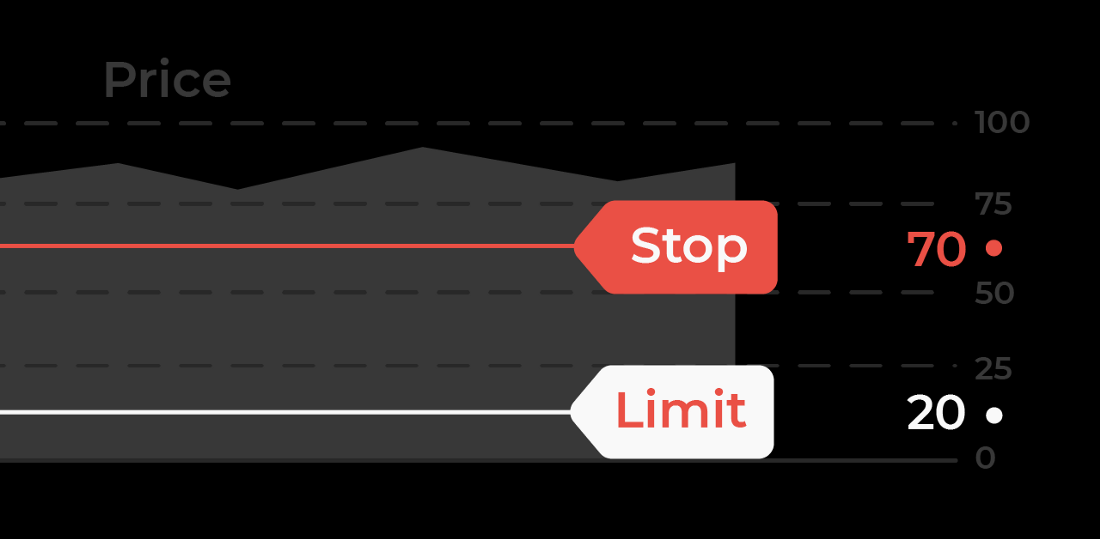
Stop-limit order gives leverage to traders. It allows traders to set the conditions for their trades and automates the execution of the set conditions. Simply put, a Stop-limit order combines a trigger and an execution command. The trigger is the Stop-loss order while the final execution command is the limit order. For better understanding, let’s differentiate these terms;
Stop Loss order
Stop-loss orders are more popularly used by derivatives traders. Stop-loss orders enable traders to limit their losses by setting up a price level at which they automatically sell their assets. If the asset fails to go below this price, the sell order won’t be executed. Limit order
Using Limit orders, traders can directly set a price at which they wish to sell their assets or buy an asset. Say you wish to buy GateTokens at $3 instead of the current market price, you can simply create a Limit order set to $3. If GateToken trades at $3 or below, your order will be filled.
Understanding the Stop-limit order
To trade cryptocurrency on an exchange, you create an order by setting a price at which you wish to sell your cryptocurrency or buy the desired asset. This order is added to the order book (a collection of others by traders of the same asset pair). When your set conditions are met, your order will be filled if there are enough sell or buy actions to satisfy the magnitude of your order and other orders placed at the same price.
This is known as a Limit order and is usually used in regular spot trading. If your order is set to current market prices (this is known as a Market order), the trade is executed instantly. Only one parameter is set; a buy price or a selling price.
For dedicated traders looking to get the most out of the market, Limit orders are just not enough. The main caveat of limit orders is that they are not designed to take cognizance of market conditions. A stop-limit order is a fix for this shortcoming.
Stop-limit order features a ‘Stop-loss’ algorithm and a Limit-order command. The Stop-loss algorithm works in a similar way as seen in derivatives trading. The Stop-loss algorithm lets you set a condition for your trade. When these conditions are met, the limit order command will be executed.
To better appreciate subsequent parts of this article, a basic understanding of “Resistance”, “Support” and “Trigger price” price is essential.
Resistance: The resistance level is an asset’s price point where the selling interest is highest. The asset’s uptrend is expected to be delayed at this level.
Support: The support level for an asset is the price point at which the asset is thought to have a high buying interest. The asset’s value is expected to remain relatively stable around this level and not go further below
Trigger price: A set price in a stop-limit order above or below which the limit order is added to the order book.
Trading using Stop-limit order
Using the Stop-limit order, traders can set a trigger price, and the direction of their trader when the asset’s price goes below or above the trigger price. When the trigger is activated, their limit order is placed. When the Stop-limit order is set, the trade will be executed automatically if the conditions are met, even if the trader is offline. An instance for a buy order; a trader who wishes to buy 1000 GateTokens using the Stop-limit order sets a price.
At the trigger price, his limit order is placed. Suppose the trader, through personal analysis, speculates that GateToken will move appreciably after breaking the resistance at $4. In that case, they can set this price as their Trigger order and subsequently place their limit order at a price equal to or greater than $4.
Their trade is thus conditioned to GateToken breaching the $4 barrier. If it fails to break this barrier, the limit order will not be executed. Gate.io also adds a feature that allows you to set the validity of the stop-limit order. The trade is canceled if the trigger condition isn’t met before the validity period.
For a sell order; assuming that a trader bought 1000 GateTokens at $4.2 each and wishes to safeguard themselves from grave losses if GateToken suddenly starts dropping, they can set the trigger price at a determined support price (say $3.9) and also sets a limit order at a price equal or below this price (say $3.6). when the $3.9 support is breached; the limit order is placed at $3.6. If there are enough buy orders at this price, the GateTokens are sold automatically.
Points to consider before using the Stop-limit order. Stop-limit order was designed to keep you in charge of the market. In perfect conditions, it works excellently. However, this is not always the case and there are certain important considerations to make before using the Stop-limit feature while trading. These points include:
The practicability of set trigger prices
The trigger price feature is meant to allow you to incorporate your analysis of the market into your trade. You can set your trading conditions according to how you understand the market and which direction you think the market will go next. For the stop-limit order to function, these prices must be met. It is important that you consider the probability of your speculations becoming a reality.
Size of your trade and available liquidity
If there are not enough buy or sell orders to fill your limit order, your assets will not get completely sold or bought even when the trigger conditions are met. Do consider the size of your sell or buy order(s) relative to the density of buyers and sellers in the market.
The volatility of the asset
Depending on how fast the asset you are trading swings across price levels, your limit order might not get filled after the trigger conditions are met. This could be due to a wide gap between the trigger price and the limit order. For instance, if your trigger price for GateToken is $4 and the limit order is placed at $4.5, the limit order will not be filled if the price swings between $4 and $4.4.
Conclusion
Stop-limit order gives you an edge, a handy tool for traders. It allows you to stay ahead of situations and retain your control of a market amidst stern volatility. The automated execution of orders serves a double purpose; it gives traders the ability to prepare for speculated conditions and take charge even while they are actively trading. In addition, trading activities are simplified as trades can be executed with less effort; saving time and human resources.
Apart from stop-limit orders failing to execute in certain conditions as stated above, this tool gives traders an undue advantage. It is thus very important to properly study and modify your stop-limit orders to harness the benefits it brings.