
Category: Educational contents

  • Newbie to “crypto rich”: 4 tips for your journey.

    Newbie to “crypto rich”: 4 tips for your journey.

    crypto rich

    You know those ‘zero to crypto rich’ stories? Yeah, they are very common in the crypto space. A couple of them are obviously bloated and there’s more to the story. Growing your portfolio is not rocket science anyways and through clever strategies, one can go from zero to ‘crypto rich’. How fast this happens is, however, dependent on a number of factors without one point of control.

    Whether you’re here for the technology or for the ‘riches’; one thing for sure is; you’ll surely be gladdened by an improved position in the few projects you’re invested in. Regardless of how much you wish to diversify your portfolio, missing out on tons of brilliant projects is inevitable. Well, you only need to get it right with your few investments. Over-diversification hasn’t really worked anyways.

    First, a start, then improvements and growth. The first step is to make your move into the crypto space. You’ll be amazed by the number of enticing projects that greets you. Depending on factors personal to you, you can only invest in just a few of them.

    And do you really need capital to start? If you consider time as an important resource, then yes. Else, time and dedication are all it takes to make a head start.

    Financially buoyant investors can simply go ahead to seed cash on any crypto that impresses them enough; otherwise, here are four tips to grow your cryptocurrency portfolio with little or no capital.

    Invest your skill and knowledge.

    Unlike more other investment spheres, the crypto space is home to unimaginable opportunities. Like a world of its own, there’s room for almost anything and anyone. One way to hasten your growth is to get involved. Putting your skills to work can avail you of opportunities to earn even more cryptocurrencies. From crypto-earning blogging platforms like hive, steem, and publish0x to freelancing and full-time opportunities. It’s a whole new zone, you should explore and improve your positions at the same time.

    Airdrops can be life-changing.
    Apart from the infamous lucrative DAO airdrops, cryptocurrency airdrops might seem uninteresting to most. $20 worth of tokens as a reward for performing a basket of social activities. Before airdrops became ‘free’ and instantly life-changing, this was the state of things. But this kind of airdrop can still be worthwhile regardless. The majority of them fail to make it out, but in some cases, they grow to very profitable heights. Participating in ‘promising’ airdrops is something you should consider giving a try.

    Embrace passive income opportunities.

    Leaving your tokens in your wallet is a safe practice, but for someone looking to grow their stakes, this, in fact, defeats the goal. Most cryptocurrency projects give holders a chance to benefit from the emissions and grow their stash regardless of the price. Staking programs and liquidity mining are popular passive income opportunities in cryptocurrency and DeFi. At least one of these is worth a try. Decide which passive income opportunity is best suited for you and put your investments to work. Cryptocurrency lending platforms are also good passive income opportunities.

    Preserve your capital.

    Risk management is also an essential skill. Cryptocurrency prices are prone to rapid fluctuations, accidents are common too. Ensuring that you don’t run into grave losses is important. As a micro investor with a ‘small bag’, your risk threshold is very little and any tangible loss is a huge setback. Try and preserve your profit and be slow to take uncalculated risks.

    Your route to cryptocurrency wealth will be well simplified by following these pretty easy tips. Human behavior is somewhat erratic and cryptocurrency itself is hardly predictable, varying conditions might make it hard to adhere to some of these. Most importantly, always do your research.


  • Admit it; you’re doing crypto the wrong way!

    Admit it; you’re doing crypto the wrong way!

    crypto investing

    Like a merchant, you’ve repeatedly bought and sold a number of cryptocurrencies. It’s fascinating, digital assets have created a space of equal access to objects of financial improvement. Regardless of your social caste and financial hierarchy, there is only a little barrier between you and your next cryptocurrency purchase…or sale. Millions have trooped in and in only a decade, the number of cryptocurrency investors has grown as fast as bitcoin’s price. In the right sense, it’s a bit faster.

    Buzzwords apart, cryptocurrency and blockchain are both impressive stuff. The solutions and how everything is structured are welcoming. Well, crypto Twitter can be toxic but isn’t it the same with social media as a whole?

    You’ve been fortunate enough and your net cryptocurrency investment has been greatly profitable for you. Congratulations, if there’s anything the past month has thought us, it’s that making profits in crypto isn’t as easy as it seems.

    As long as you make profits, the conviction is that you’re doing it right. That’s exactly how it looks. If it’s the other way around; you feel you’re not getting it right, in short term. Investors who have mastered the art of ‘flipping’ can relate to swinging profits for profits…sometimes.
    But if you can relate to any of these, then you are doing crypto wrongly. Regardless if you’re in profits or not.

    Doing any of these is in fact the wrong way:

    Fear of missing out [FOMO]

    So, you just heard that this project is about to announce a ‘huge’ partnership; maybe they already did. Price is going haywire and the Twitter thread is going in the same direction. You’re scared, scared to miss out on the next 1000x. you’re not alone, we are all in this together.

    The most ridiculous cryptocurrency price rages are fueled by investors jumping in with little or no resistance. The DYOR rule is quickly forgotten and the dumb money keeps flowing in. sometimes this works. Other times, the dumb money becomes exit liquidity for earlier investors, and bag holders are made. Well; someone needs to take the shot, “scared money makes no money” anyways.

    Buy high, sell low.

    Alright, you just aped in. the Fear of missing out won. Now you’re sitting on a bag of a token whose price keeps dropping. Sometimes the price is only stagnant and it’s easy to get impatient when those long green candles aren’t coming. What’s the move? Time to move on? I guess so; unto the next ‘gem’. This move is common and sometimes could save your investment, other times…well, the bloodbath continues.

    Cryptocurrency investments require well-thought patience and deliberation. Good research should also influence your decision to move on and test different water.

    Fear of getting stuck [FOGS]

    Pretty much like the above; you simply don’t want to be the last holder of this token. The charts aren’t looking great and most importantly, the community isn’t looking impressed anymore. The most anticipated move is more dumps. Price is already down, you’re probably in loss or reduced profits. Without due research, holding on to your bags doesn’t feel like the right thing to do. Cryptocurrency is ‘cruel’ and getting stuck is a very possible situation. Oh well, if your fears win, you take the dump otherwise, bagholding will continue. Whichever one, you’re probably not wrong.

    Living on delusions

    For some memecoins, a $50 purchase gets you millions or even billions of tokens. For some investors, this is a sure bet to the millions. If the token ever hits a dollar, you’ll be on the same list as Jeff Greene. Delusional, a popular hopium. For a project with over a trillion tokens, reaching one-tenth of a cent is a face-melting move. As face melting as that of dogecoin and Shiba Inu. Well, many Shiba Inu holders are waiting on the dollar mark to cash in on their millions.

    It’s risky to use the word ‘impossible’ in crypto but some outrageous expectations are simply not thoughtful and wrong. Who doesn’t wish to turn 50 into a million? If $8,000 could grow into over $5 billion, then anything can happen. But accepting reality is more relaxing than living in delusions.

    Admit it, you can relate to at least one of the above. Fortunately, investing in cryptocurrency doesn’t have any known formulae. The only thing that exists are tactics that work most of the time. In the real sense, even the cleverest strategies could fail and the dumbest ones could end in mind-blowing success.

  • Bear market: A real test.

    Bear market: A real test.

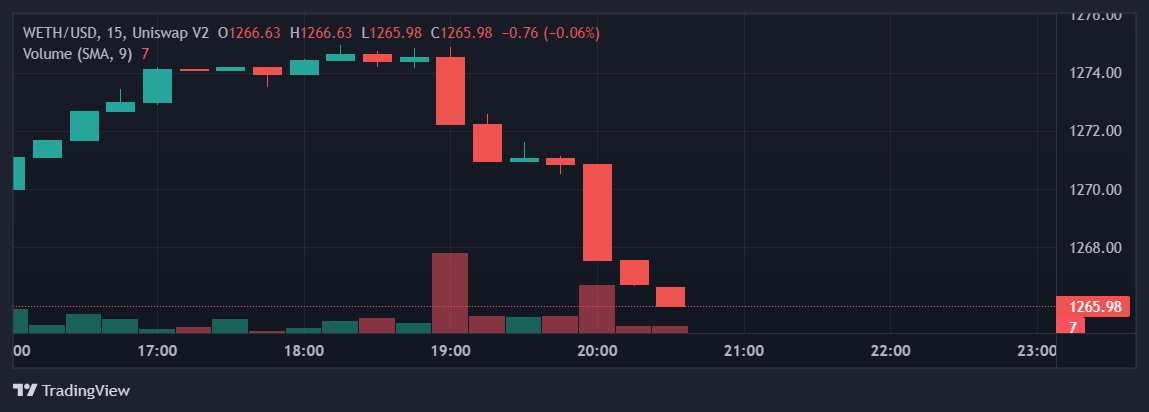
    You saw those red candles, right? It’s the bear market and they could get ugly, very ugly and this is the actual time they get too bad. 2021 was the proof that investing in cryptocurrency can be life-changing, 2022 is otherwise. Anyways it isn’t actually proof that investing in cryptocurrency could be life spoiling… well I don’t know how correct it is to say that, but the obvious fact is that this is a trying time for everybody dipping their feet into cryptocurrency and digital asset investment. From an all-time high of over 60,000 dollars, bitcoin has slipped and has lost its support at 30,000 dollars. It is on a free fall, not just Bitcoin but even your favorite cryptocurrency… and my favorite cryptocurrency.

    Ethereum has a whole lot of things in the pipeline, many upcoming upgrades, and enhancements, but even these are not able to hold the price from falling. It hit a notable high of over $4000 but thanks to a widespread fall, it has fallen massively to a current price of just below 2000 dollars. Other cryptocurrency projects have seen double-digit falls; each of them records a percentage price loss of over 90% of their value at an all-time high. Unfortunately, this scenario seems to be just the beginning of an even bigger event. It is the bear market there’s no need to hide it anymore, it’s crashing, everything. remember the Lambo boys and the moon boys as well? well, they just submitted an application at McDonald’s, you might meet them on your daily shopping… pun intended.

    The bull market is a very interesting time, even the worst digital assets record mind-blowing gains. You probably thought you already mastered the art of trading cryptocurrencies and making huge gains in a very short space of time; well I used to think so too. I thought I was a legendary cryptocurrency Trader who could easily spin money and make gains… once again I was wrong about myself and probably this applies to you as well, it’s very unfortunate I didn’t get to buy that Lambo anymore. Maybe next year, maybe in the next bull run; I am optimistic.

    While cryptocurrency prices are prone to variations from time to time; it is no doubt that these variations are what actually make digital asset investment interesting. The fact that you could be rich today and poor tomorrow is mind-blowing and makes you want to come back and try again next time. You could make a fortune here and you can also lose a fortune here. The interesting thing is that there is no specified time to make these gains and losses. But unarguably, times like this are tougher. It could be heartbreaking watching your portfolio lose value; most times you have no control over these things and you can’t even stop your own assets from being valueless. Bear market warnings should sound louder, many traders are still unable to fathom the fact that prices can vary and they can go in any direction at any time… sorry, you used to be rich, but that’s not the case anymore.

    bear market

    But it is no story that even the biggest winners are made in a time like this. Prices of even the most reputable cryptocurrency assets are in the dust currently. Considering an all-time high of over 60,000 dollars you can currently buy bitcoin for less than half this price and double the amount of Bitcoin with the same cash. The discount across every asset makes for a very good purchase period and a time for investors to make even more gains if the market ever recovers. But that’s the issue; is the market even going to recover? Well, I wish I had a definite answer to that question but even your favorite Twitter analyst has called the return of the bull run a number of times but here we are dabbling in the red candles and losing cash as fast as possible, I wish there was a fix for this. But this is the test, the real test. Paper-hands and leaving the market as fast as possible but even if the diamond hands are getting bombed it might take just a while before they become loose and sell-off.

    Consider this period a real test of your belief in the ability of cryptocurrencies to hold up against widespread sell-off and an army of investors looking to offload their investments and leave the space. There are discounts everywhere, every crypto asset is down badly and you can buy some of them for a penny… they used to sell for over $100. It’s test time, feel free to make use of this low price, but this is not financial advice.

  • What are SoulBound tokens?

    What are SoulBound tokens?

    Source

    You probably haven’t heard about it, could be a popular hype word for the next set of Bullrun pump and dumps; we are all here for it anyways. In an almost 40 pages whitepaper, Vitalik Buterin alongside other authors shared the mechanics of SoulBound tokens. The Canadian developer shed light on what he described as the ‘future’. NFTs are pretty special kinds of stuff; currently popularized by digital content owners creating signatures to their media, NFTs are currently important in the crypto space majorly for financial reasons. NFT collectors couldn’t care less about the technology. Billions of dollars worth of art and photography NFTs have been traded on NFT marketplaces since the concept gained fame in the last quarter of 2020.

    This article reflects on other less popular but more important applications of NFTs.

    Soulbound tokens (SBT) are NFTs; a unique form of NFTs. Like the common NFTs that create unique and immutable signatories for assets, SoulBound tokens are designed to certify certain personal attributes, qualifications, and identities. Soulbound Tokens depict holders’ innate abilities, qualifications that they have earned, and any other characteristics that are peculiar to them. Like a badge, they display these qualifications and features and present easy means to verify them. According to the whitepaper co-author, Glen Weyl, Soulbound tokens will be due for release in the last quarter of this year.

    Normal NFTs create verifiable ownership of assets (most popularly, digital assets); Soulbound tokens create a verifiable proof of personal attributes. Soulbound Tokens (SBT) are pretty much like Non-Fungible Tokens (NFT), a big difference being the fact that they are non-transferable and are to be issued by the entity awarding the concerning qualification. Like your degree certificates, a Soulbound token confirming your qualifications can be issued by your academic institution. These tokens are unique to the holder and the issuer.

    Soulbound token authentication will create a new and better way of creating and verifying credentials. Falsifying Soulbound tokens is impossible and so are the credentials they attribute to the holder. The use cases are boundless. certifications, proof of originality, proof of participation, proof of membership…

    The inabilityto transfer Soulbound tokens makes them less lucrative as they cannot be traded like every other NFT, however, they weren’t meant to be traded.

    Can you lose your Soulbound token? Well, the answer might be a bit complicated but; Yes, and also NO. No, because Soulbound tokens are issued to your Ethereum address and can not be moved from the address. This means that as long as you retain ownership of your address, your Soulbound token remains yours and cannot be moved. However, in case of a wallet hack or loss of wallet keys, accessing your Soulbound tokens will be impossible. This technically means that you’ve lost them, along with your address.

    soulbound tokens
    Source

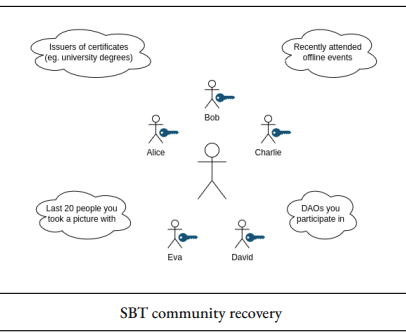
    In the whitepaper released, the authors shared insights on a community recovery method. This explains an approach designed to recover keys to a Soulbound token through a DAO of delegated participants. The ‘community recovery’ method presents a means through which lost Soulbound token keys can be retrieved through appointed institutions or individuals who have the ability to access and change the private keys to a wallet should it get compromised. These guardians must be members of a qualified majority of a (random subset of) Soul’s communities.

    When Soulbound tokens are finally rolled out, they will help fight identity theft, scams and fake certifications in crypto and mainstream systems.

  • Pay in crypto: Popular platforms where cryptocurrency payment is accepted.

    Pay in crypto: Popular platforms where cryptocurrency payment is accepted.

    With the recent wave of adoption, you’ll soon be able to make purchases at your favorite kiosk and pay in crypto. Don’t forget to leave a good tip. You might be impressing the next store. Well, I guess I’m a little bit backward; many small-scale stores already accept cryptocurrency payments. Without government approval, clever merchants are devising ways to include a two trillion-dollar sector in their payment option.

    Even if you don’t fancy cryptocurrencies, you face a dilemma, one of which is missing out on the future of money and technology. And if you don’t fancy cryptocurrency, then you simply don’t understand it. Making payments with cryptocurrencies is a fun exercise, except when you are paying transaction and withdrawal fees…arguably.

    While you wait for your closest store to add a cryptocurrency payment option, here are some popular platforms where you can spend your cryptocurrency in exchange for desired services.

    Travala

    Cryptocurrency enthusiasts are naturally adventurous, you surely wish to explore the world. Aviation firms offer a comfortable means to travel around the world, but you’ll have to pay a fee; a fare actually. Mostly in fiat. You have crypto and you wish to travel the world too. Yes, you can! Travala.com offers cryptocurrency payment options for flights with over 500 airlines. Here, you can also book your stay in thousands of hotels worldwide. Travala offers cryptocurrency payment options for recreational activities in some of these locations. Bitcoin, Ethereum, BNB, and a couple of other cryptocurrencies are accepted on Travala.

    Hostinger

    So, do you have an idea you wish to bring to life? The internet is one of the best media to flaunt your ideas and create an audience. Getting a website is one way forward. Hostinger is one of the most popular web hosting platforms and offers incredible rates for different web hosting plans. On Hostinger you can pay for and renew your web hosting plans using cryptocurrencies. Don’t worry, it is incredibly swift and you’ll hate paying with fiat when you experience it!

    Shopify

    Shopify is a powerful tool for merchants, it offers merchants an efficient avenue to host their businesses on the internet and perform swift exchanges without worrying about the complicated aspects of e-commerce. Shopify is currently used by millions of merchants to amplify sales and promote their businesses. You can do the same as well, Shopify simplifies e-commerce. And yes, you can pay for these services with your cryptocurrencies. Shopify accepts payment in cryptocurrency for merchants as well as consumers.

    Pornhub

    The adult video business is a booming one, it has always been. With millions of people streaming adult videos every minute, it is in fact a hot shot. Pornhub is the leading platform in adult video retail. Following a fallout with mainstream payment facilities — Mastercard and Visa, Pornhub has added cryptocurrency payment options for premium content on their platform. You can easily subscribe for the most satisfying content using your cryptocurrencies. Bitcoin, Ethereum, Tether, and BNB are currently accepted.

    PayPal

    The payment giant is used by over twenty million merchants around the world for swift payments. PayPal offers users a way to send and receive money as individuals or merchants. The swift payment platform is available to people in most parts of the world, a majority making fiat payments. In addition to fiat payment options, PayPal also allows you to make and receive cryptocurrency payments. Bitcoin and Ethereum are currently accepted. Pay your pal…in crypto.

    Twitch

    Live video streaming is fun, for the streamer and the spectators as well. With Twitch, gamers and other content creators find a medium to share their activities with their audience and also expand their followership. Twitch is one of the most popular live streaming platforms. Payments on Twitch can be made using cryptocurrencies.

    Axa Insurance

    Bitcoin is your best insurance option, but that’s simply hard for most people to understand. Mainstream insurance firms are pretty much functional anyways. It is however, very possible to combine both. If you’re already insured in crypto and wish to diversify your insurance, mainstream insurance companies offer financial protection against future unfortunate events. As a cryptocurrency holder, Axa insurance offers you an option to pay for your insurance plans in cryptocurrency!

    Tesla

    Self-driving and electric cars are the future. Through his electric car manufacturing company, Elon Musk gives us a look into the future. Electric cars are evolving and in constant development. Teslas are cool; I mean who doesn’t want one? And when you can easily swap your bitcoin for a Tesla, it’s even more fun. Bitcoin payment option is available for coiners who wish to purchase a Tesla. Tesla Model 3 looks cool, you might want to check the model X too. I wouldn’t swap a whole bitcoin for a Tesla though, but that’s a personal decision.

    Off-White

    Fashion is a vital part of lifestyle; you certainly have to embrace it. Off-white, the popular designer brand has delivered tongue-wagging clothing designs over the years. Off-white sneakers and clothing are cool, but what’s even cooler is that you can now pay with bitcoin on the checkout page. Happy shopping!

    Wikipedia

    The internet is home to unlimited resources. Information is littered throughout the web. Wikipedia is almost a web on its own. Thanks to thousands of contributors, Wikipedia has created an online encyclopedia with detailed information about almost everything. Millions of internet users have found this platform resourceful. If you’re one of them, consider donating to the world’s biggest encyclopedia. Cryptocurrency donations are accepted.

    Cryptocurrency and blockchain technology has lasted for over a decade, yet the past three years are the most significant in terms of legal involvement. Bans, regulations, acceptance; we have seen a lot of these in the past few years. It gets intense and more positive each new year. This looks like the year cryptocurrency finally penetrates the central government. Before that happens, consider booking your next flight with cryptocurrency. Safe flight!

  • Don’t ‘over-diversify’ your portfolio!

    Don’t ‘over-diversify’ your portfolio!

    You just bought your first cryptocurrency; it feels great, I know. Makes you want to buy even more, sometimes the same token; other times a different one. That’s probably not you, you might have bought your first crypto many years ago. Regardless, the feeling is basically the same. Being in a space of over twenty-five thousand cryptocurrencies, promising ones; it is hard to just stay glued to one cryptocurrency. Maximalists think the opposite, but that’s fine anyways.

    Love happens many times, naturally. Whatever makes you like a cryptocurrency project can happen all over again, as many times as possible and in different ways. You’d end up investing in a couple of projects. one term for this — Diversification.

    The majority of cryptocurrency investors prefer to split their funds across a number of crypto assets. Personally, I do this too. For several reasons, a diversified portfolio is a common practice in the cryptocurrency space. Why pick one when you can actually get as many as possible? You know who has a different answer…

    A number of reasons would make an investor diversify. A gamer and a believer in Artificial intelligence will probably put his money on two projects related to this, maybe some Axie Infinity and SingularityNet tokens. If you fancy crypto as a portable payment medium, you’d probably add some ripple and stellar to your portfolio. This may go on as long as your cravings and sentiments.

    Apart from personal interests and minimizing risks, certain ethics held up by a project is enough to attract an investor’s attention to the extent of investing in them. Projects with a certain level of decentralization and encouragement for community involvement tend to attract a good number of investors. In contrast; centralized projects are also attractive to some. Whatever serves your taste the most. Investors love to put their money where their mouth is. But this could happen more than once and diversification may come in as a result. Diversification isn’t all shade of good anyways.

    Thousands of cryptocurrency projects, each one with plans of ‘taking over the world’; even baseless meme tokens plan to be the new world currency; even though they don’t even run on their own blockchain. Every cryptocurrency project is painted with buzzwords and sounds all cool. It’s hard not to fall in love too many times. But resist the urge to go with these feelings.

    Most times they result in you splitting your funds to satisfy your ragging love for several projects. An over-diversified portfolio might sound like a hedge against the volatile cryptocurrency space. But it’s not. In a space as wild as this, spreading your investment could turn out to be just another way of increasing your risk level; especially when this diversification is (almost) based on hypes and external suggestions.

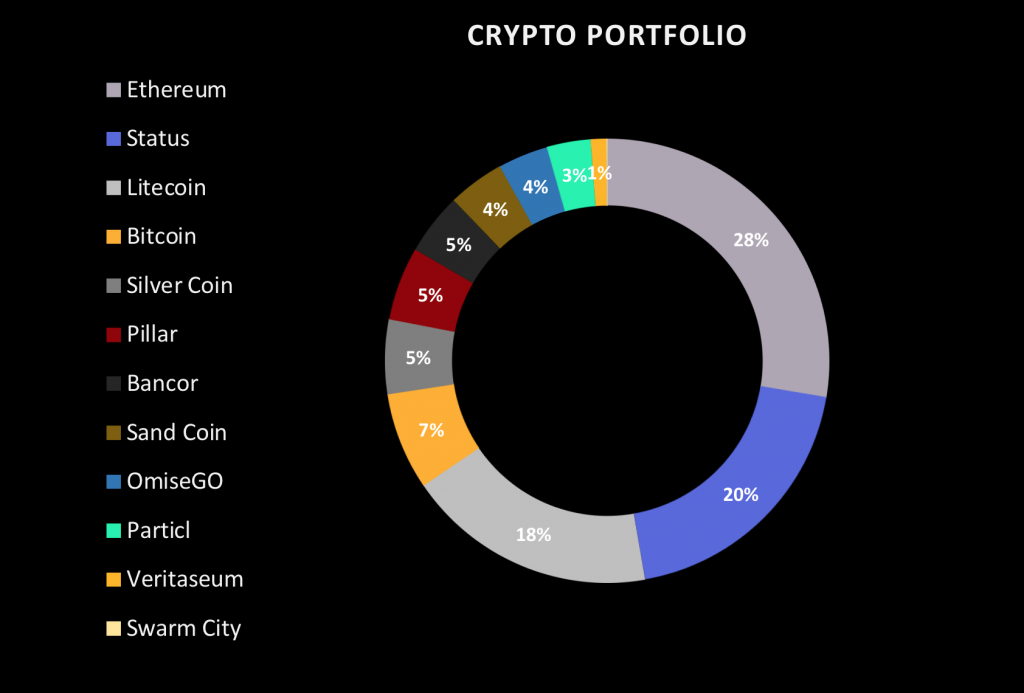
    Capitalizing on a few credible investments has proven to be profitable; in fact, maximalists hardly get it wrong. The strong conviction that keeps one glued to just one project is most times a result of extensive research and belief, this works better than sporadic investments driven by little knowledge. Your investment in over fifty cryptocurrency projects still stands more chance of failure than an investment in ten well-studied projects or even less.

    It’s a nice approach to have your eggs spread through a number of baskets. Diversification might simply be a representation of your convictions and personal interests. However, spreading your investments irregularly stands more chances of backfiring than not. Every cryptocurrency project is shiny and ‘full of potential’; most times this turns out differently. Diversification, just like any other strategy works when done well. But here’s a suggestion, “don’t overdo it”

  • DeFi for Noobs.

    DeFi for Noobs.

    decentralized finance
    Source

    If you live in the crypto space for a day, the acronym ‘DeFi’ comes your way almost twice per hour. No doubt, my statistics are right…or very close to it. The crypto space is a very dynamic environment and everything moves so fast, but you must be living under a rock if you’ve only got to hear about DeFi a few times. You’re unlikely to discover this article if you live under a rock anyways. So, the most probable case is that you’re yet to fully grasp the concept of DeFi.

    Swaps, farms, pools, and ‘connect wallet’ lol. Like a ‘plug and play’ system, connecting your wallet to a website is all you need to experience a whole world of fun …and risk. Yeah, accidents on DeFi platforms could get very popular and your first encounter might be through an exploitation report. But DeFi is way more positive than this.

    DeFi is an acronym for Decentralized Finance. Decentralized financial systems comprise applications built on top of blockchains that facilitate ‘permissionless’ financial services and provide seamless options for running financial activities. DeFi hopes to introduce the core virtues of blockchain technology to the financial system. Bitcoin introduced the concept of ‘decentralized means of payment’ which runs on a distributed ledger system, the blockchain.

    DeFi is a blockchain notion. It encompasses every attempt by blockchain and cryptocurrency projects to create a decentralized replacement or alternative to real-life financial activities.

    From Bitcoin blockchain itself and its lightning network to decentralized exchanges and financial institutions built on the blockchain; blockchain technology has dived deep into the economic sector and is making attempts to create a new and better way of handling financial activities.

    Contemporary and emerging DeFi projects are, expanding the scope of decentralized financial systems. They are shifting the paradigm from ‘portable means’ of payments to smart contract applications running independently on a parent blockchain and offering advanced financial services such as insurance, lending, wealth management, and an array of other financial management using blockchain resources and exhibiting desired blockchain features such immutability, security, privacy, speed and interoperability.

    Smart contract blockchains are hence home to DeFi projects, Ethereum particularly is housing the majority of DeFi projects. Augur, one of the earliest smart contract projects on the Ethereum blockchain and a popular DeFi project offers a decentralized alternative to advanced financial instruments such as index trackers and futures. Aave (LEND) runs on Ethereum Blockchain and provides decentralized lending and borrowing service. Binance Smart Chain (BSC) and TRON blockchain smart contract layers also facilitate DeFi and provide resources that allow DeFi projects to thrive.

    Amongst the numerous enticing features of decentralized finance projects, ‘liquidity farming’ has gained its place as the most exciting exercise in decentralized financial systems. The idea of leveraging DeFi protocols to generate annualized interest returns of up to 30% of your initial investment and a couple of other benefits will surely impress any investor. Due to this, DeFi presents enticing opportunities for cryptocurrency investors to dive into the crypto space — a major cause of the recent boom in DeFi projects.

    DeFi has benefited highly from incentivization. Flexible staking opportunities, high-interest loans on lending platforms, and high APR liquidity farm rewards…you might want to give up your agriculture career and join crypto. Well, you can do both.

    DeFi isn’t without some shortcomings anyways. DeFi space marks a huge resemblance to early crypto space. The emergence of new projects which are mostly a copy of already existing projects with just very little differences; bogus promises, pump and dumps, naive and gullible investors, shady project teams, and ‘get rich quick’ schemes. It has become a hotspot for ‘decentralized accidents’.

    Nevertheless, it is still a brilliant invention and is developed to fix these major issues. Mainstream firms are also impressed by the potential of decentralized financial systems.

  • Staking rewards and Liquidity Farming: Is DeFi ‘free money’?

    Staking rewards and Liquidity Farming: Is DeFi ‘free money’?

    Just like most other hyped blockchain concepts, DeFi has become a goldmine for many believers. Unfortunately, a tangible more has a relatively different story to tell; but that’s a topic for another day. Diving in early into deFi and exploring the vast opportunities it offers has earned this class of people, life-changing opportunities. Luckily, it is benevolent enough to benefit even newer participants as well.

    DeFi is powered by lots of brilliant algorithms, protocols, and project teams, but as usual; it is the ‘money-minting’ potential that attracts most participants. A Normal phenomenon in this space. Well, I wouldn’t blame an investor for levitating towards a platform that promises a 10x annual return on investment, hassle-free. Not just the rewards, the projects’ tokens go parabolic too.

    It takes a special conviction to ignore the high APRs on DeFi staking pools and liquidity farms. Like the early days of cryptocurrency mining scams, these rewards seem too good to be true. Actually, they are true; at least they work as stated. But these DeFi incentives aren’t really ‘free money’

    Most airdrops aren’t even free money in the right sense. Airdrops are known for the ‘free money’ tag and have maintained this reputation over the years. But the tasks associated with certain airdrops are in fact more worthwhile than the airdrop rewards. Staking and liquidity farming is, however, different in many ways.

    One is a tokenomics and marketing strategy; the other is a proper reward for a (vital) service; staking and liquidity farming have become the most accessible and arguably lucrative DeFi opportunities.

    Staking is a low-risk reward program that incentivizes token holders for locking their assets in the staking pool. Staking rewards are flexible and Annual rewards may vary depending on the platform and circumstances. Most DeFi staking programs are flexible too and stakers can unstake their assets from the pool at any point in time. Others might require locking your assets for a specified time during which these assets cannot be unlocked or can be unlocked with penalties. The DeFi staking process is simplified and is a popular choice for micro and medium investors. Most investors prefer staking over liquidity farming for some reasons…

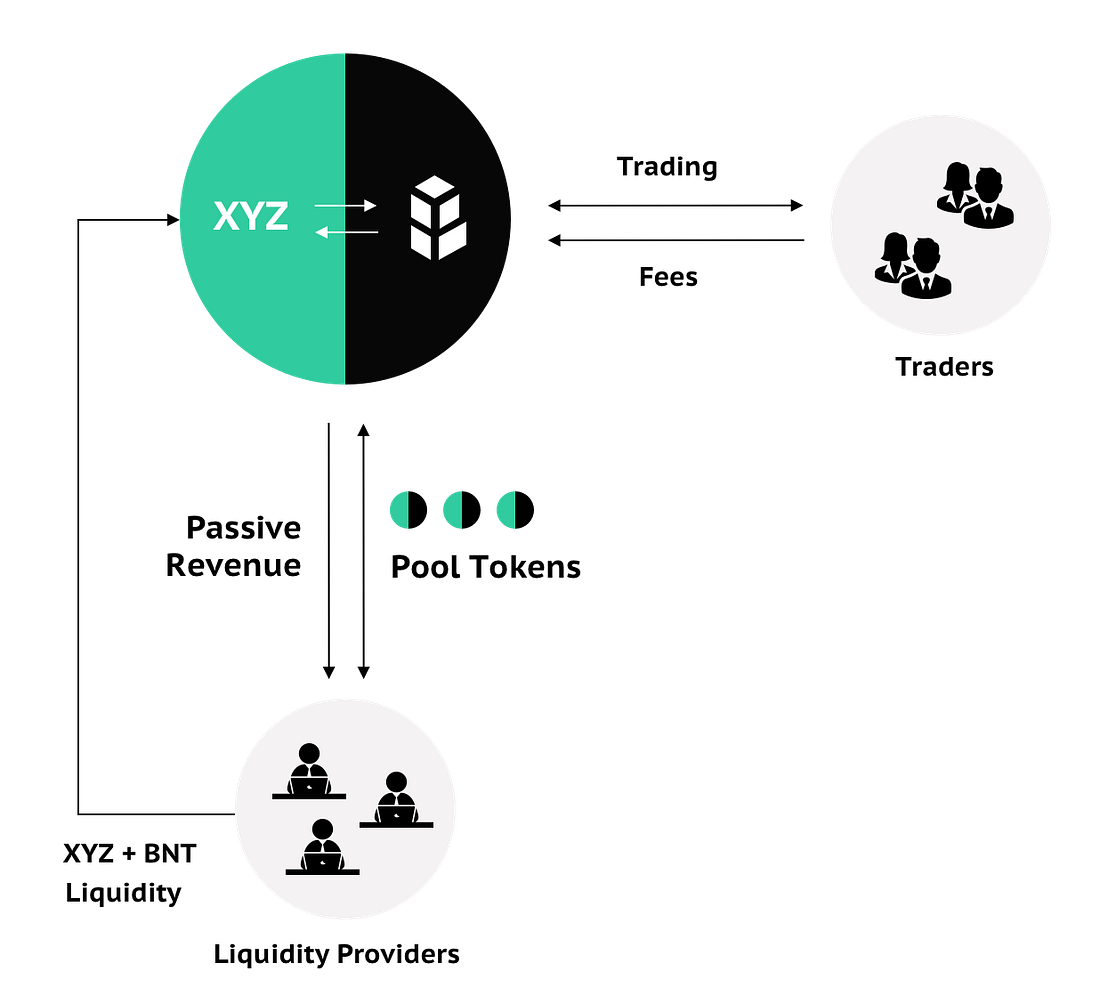
    Liquidity farming on the other hand provides investors an opportunity to earn more tokens by locking their assets in the liquidity pool. Assets locked in the pool enable seamless swapping of the locked tokens. A liquidity provider locks an equal value of a pair of tokens/coins. Other holders can swap any of the pairs in a simplified swap transaction. This is powered by Automated Market Makers.

    Liquidity providers are in fact one of the most important parties in decentralized exchanges. The role they play is irreplaceable. The reward for this role is the liquidity provider fees. Some projects go ahead to set up an extra incentivization scheme — Liquidity farming. Liquidity farm APRs are usually higher than single-side staking.

    ‘Free money’ might have different definitions by different people, but amongst these two, Single-side staking would fit into most of the definitions. Liquidity farm rewards are more of compensation for a very important service. Liquidity providers risk losing a tangible percentage of their investments to impermanent rewards depending on the volatility of the market and the assets they supplied to the liquidity pool.

    Want some free money? Well, you are better off staking your assets in a suitable single-side staking pool. Sometimes, liquidity farm rewards aren’t enough to pay for the impermanent losses incurred by variations in asset value. In contrast, staking rewards are closer to being ‘free’.

  • Stay safe; use a Dex.

    Stay safe; use a Dex.

    No pun intended; I’m not poking fun at the popular COVID-19 prevention slogan. But if that’s what will make you refrain from centralized exchanges for a while, then I’ll happily do so. My frequency of using centralized exchanges has decreased over twice times the initial. If we can get rid of fake volumes, centralized exchanges are probably rubbing shoulders with decentralized exchanges; in terms of volume, user base, and application.

    Despite years of efforts and modifications, fake volumes have continued to bite down on the reputation of centralized exchanges. Aided by exchange officials or solitarily, cryptocurrency projects could easily fake buy and sell orders to lure investors who are attracted by high volumes as proof of demand and liquidity. This could happen anywhere though, but it is more prevalent in centralized exchanges. Centralized exchanges and their technology have served for the time they dominated the space. No doubt, they flourished due to the incredibly handy services they offered. In essence, these services were the best available.

    Hacking centralized exchanges is unarguably the most profitable for cryptocurrency scammers. The incidence of exchange hacks lead to the loss of huge amounts of funds. Mt. Gox, Bitfinex, Binance, Kucoin…the list is actually inexhaustive. Getting access to hot wallets of custodial exchanges is a jackpot for hackers who are in a constant attempt to break their way through.

    Funds on centralized exchanges are in fact not owned by the ‘owners’. ‘Not your keys, not your coins’. Regardless of how ‘SAFU’ the exchange promises you about the safety of your assets, your cold wallet which you (and only you) hold its private key is the safest place to store your cryptocurrencies. Blockchain technology assures fund security, but this is only when they are truly in your custody, and this is as long as you’re the (only) one with the knowledge of your wallet’s passcodes and private keys.

    So, here’s a simple fix; decentralized exchanges…

    Unlike the rampant centralized exchanges, decentralized exchanges do not have buy walls and sell walls, yet the exchange of assets is unrestricted. Even a cryptocurrency veteran would wonder how this works exactly. Well, decentralized exchanges are powered by a number of protocols that allow users to swap assets seamlessly without third-party holding custody of their assets before, during, and after the swap.

    Decentralized exchanges are powered by Automated Market Maker (AMM) protocols which leverage liquidity pools to ensure a seamless exchange of assets while retaining blockchain-level security.

    Source

    Automated Market Markers are programmed to be highly organic and responsive. Like a real-time trading system, every bit of supply and demand creates a relative effect. Traders and investors are handed efficient tools for making decisions and projects are represented for what they truly are…at least for that point in time.

    Thanks to liquidity pools, AMMs provide a basket of exchangeable assets to enable unrestricted trading for the period in which the liquidity providers wish to leave their assets on the pool. The transparency of the liquidity pool allows traders to make their decisions.

    AMM protocol ensures that every buy and sell effect reflects relatively on the asset price. AMMs are not completely resistant to manipulations, this is evident in the rampant rug pulls. But on the brighter side, these actions are transparent; an important feature of blockchain technology.

    Albeit certain shortcomings too; here’s how decentralized exchanges keep you safe(r).

    Custody of assets

    Decentralized exchanges provide ‘blockchain-level’ security by allowing users to exchange their assets without having to give up their private keys. Private keys give everyone complete control over their individual cold wallets. The security of assets in these wallets is only compromised when the wallet owner gives away their private keys. The recipient of this private key assumes ownership of the concerned wallet and assets therein. In centralized exchanges, asset owners are not in possession of their wallets’ private keys; these keys are rather held by the exchange and are in complete control of the assets in their possession.

    In cases of exchange scams, or accidental demise of the holder(s) of this key, assets held in these exchanges are completely lost and there are little or no chances of the holders reclaiming their lost funds. This won’t be the case in a proper decentralized exchange as wallets and asset ownership are not compromised in any way, holders retain private keys to their individual wallets and simply connects to the exchange and enable their assets for trading.

    Programmed and time-based permissions

    Decentralized exchanges require certain permissions to interact with your wallet sufficiently to allow asset swaps, but these permissions are essentially approved by you and last as long as the particular swap is executed. Once a swap is completed, the permission is retrieved. The protocol will need to make another request before regaining this access to execute another transaction. This ensures that you retain control of your assets at any time you’re not interacting with the platform.

    In-wallet assets’ resistance to exchange exploitation

    Decentralized exchanges run into hazards too. Countless technical exploitation has been reported on certain decentralized exchanges and defi platforms. This is more rampant with DEXes offering other specialized services powered by novel protocols. Flash loan services have been subjects of exploitation and a large number of assets have been lost in the process. However, this doesn’t affect assets in wallets even if the wallets have interacted with the platform. Fraudulent smart contract codes can avail hackers of a sustained connection to personal wallets, but this is a special case. Assets safely stored on wallets are safe, even if the DEX runs into hazards.

    In addition to preserving your identity and allowing you to swap assets from the comfort of your (personal) wallets, decentralized exchanges are evolving to keep your assets as safe as possible while you perform core exchange activities. Stay safe; use a DEX

  • What the merge means for Ethereum blockchain.

    What the merge means for Ethereum blockchain.

    You’ve heard it several times; “the merge is coming”! A normal cryptocurrency investor couldn’t care less what this actually means anyways. As long as it sends the price “to the moon”, we’ll be fine. Well, same here…almost. But the merge means so much more for Ethereum and blockchain technology. A whole lot of developments are coming to the most used blockchain. Ethereum defeating its current problems holds a lot of importance for the whole space. The Merge is an important step in Ethereum’s journey towards scalability.

    What is the Merge

    Scalability and memory friendliness are both very appealing features and are vital for mainstream adoption. Currently, Ethereum gas price has risen very high and the cost of running transactions on the blockchain could get unbearable at some points.

    Ethereum’s archival nodes currently sit at over five (5) terabytes (5Tb), the actual blockchain size is well over a hundred (110) Gigabytes and each block adds two (2) Megabytes to this already huge figure. Ethereum blockchain according to many ‘will never scale’ and in 2019, Bloomberg reported the Ethereum blockchain is ‘almost full’.

    In computing and data storage, a truly scalable system is able to maintain a flexible size amidst ever-increasing data and is limitless in the amount of data it can carry. Blockchain start-ups face this problem commonly as the struggle to achieve a truly infinite scalable blockchain continues. While many blockchain projects boast of being scalable, they mostly fall short of their ‘claims’. Only a few can boast of reasonable scalability. These claims of Infinite scalability are mostly a marketing jibe used by many ‘Ethereum killers’

    Source

    Regardless of how fast a blockchain grows, splitting the blockchain into smaller interconnected units presents pieces of lighter ‘blockchains’ that reduce the executable size considerably. This is the main idea behind Sharding. As part of the upgrade to Ethereum 2.0, Ethereum developers are planning to adopt this technology to split the Ethereum blockchain into lighter pieces. Zilliqa, Polkadot, and NEAR blockchains are already using sharding technology to make their blockchain lighter and their network faster.

    The Sharding idea is to make a blockchain more efficient by partitioning it into lighter units. These ‘pieces’ of blockchains are known as ‘Shards’. Each shard stores different types of data independent of other shards. Sharding on Ethereum will split the blockchain into 64 shards. Consider these shards as interconnected units that constitute a blockchain.

    Blockchain projects using the sharding technique are adopting different strategies to create competent communication between the shards. Zilliqa uses a sharding version known as Partitioned sharding, where shards don’t communicate with each other directly through. NEAR protocol and Polkadot use State sharding, where shards communicate with each other through a state, or central relay. Ethereum blockchain will also adopt the State sharding technology.

    Ethereum developers plan to implement the sharding technology and switch to the proof of stake algorithm. The sharding technology will improve Ethereum’s scalability while the proof of stake consensus will do away with the bogus proof of work consensus to deliver an overall more efficient Ethereum blockchain

    The beacon chain went live in the last quarter of 2020 marking the first step towards implementing Proof of stake consensus on the Ethereum blockchain. The Merge will piece the Proof of work mainnet together with the Proof of stake Beacon chain. Completing the switch to Proof of stake and preparing the Ethereum blockchain for Sharding implementation is a very important part of the Serenity upgrade. The efficiency of the Ethereum blockchain sequel to the sharding implementation will depend on how well the merge can unite the POW mainnet and the POS beacon chain and prepare the Ethereum blockchain for the Shard chain implementation.

    The merge was initially proposed to happen in 2023, recent developments hint at an early release. According to Ethereum developer, Justin Drake, the merge chain could go live as early as august 2022.

    What does this mean for the Ethereum blockchain?

    When the Merge happens, Ethereum will be just one step away from finally completing one of the most important deliverables of the Serenity upgrade. The shard chain will be the third and final step in implementing the sharding technology as the Merge completes the Proof of stake consensus implementation.

    This is expected to bring tangible efficiency and make the Ethereum blockchain truly scalable. But Sharding comes at a cost — Security. The factis, most scalability solutions sacrifice security and decentralization for speed and efficiency. Sharding is just another example. Splitting the blockchain into shards creates units of independent blockchains with relatively less security. These shards could be attacked individually in an attempt to compromise the blockchain. A successful attack on any of the shards affects the rest of the network.

    The merge confirms the switch to the Proof of stake consensus algorithm lined up as part of the proposed upgrade. This algorithm, just like Sharding is known to improve efficiency and reduce block size…and security as well. Several Ethereum competitors are found lacking in security and decentralization, but relative to Ethereum Blockchain, they are incredibly fast, efficient and cheap. The Merge could be a step closer to a faster, cheaper, and more efficient Ethereum blockchain; unfortunately, it could also be a step closer to a centralized and less secure Ethereum blockchain.