Author: cryptocurrency scripts

  • Algorithmic stablecoins; the future of stablecoins?

    Algorithmic stablecoins; the future of stablecoins?

    algorithmic stablecoins

    Following the recent tragic developments in this space; ‘algorithmic stablecoins’ must be a huge caveat for you. Maybe there are exceptions such as when they have a 60% APY attached. I’ll always say it; cryptocurrency’s biggest achievement is, capturing human greed. When the yield is great, anything goes. In absence of tangible returns like this, most investors will pass up on anything involving stablecoins backed by algorithms and computerized economic policies.

    Commodity-backed stablecoin projects are having a good time currently. The big argument used to be how Tether is backed ‘by air’ and should be cracked down. Taking a look at it again, it’s amazing how it managed to retain its dollar peg to date. We might have to re-calculate the strength of ‘air’.

    I’m still not a fan of Tether or other shady stablecoins backed by unverified commodities and fiat though.

    Terra blockchain’s Luna was on course for some incredible growth — price-wise, the ecosystem itself was booming. The foundation had billions in its reserves and the project founder was beaming with some serious ego. I’d recommend his interview on the fate of cryptocurrency projects as a reminder that nothing is too big to fail. That aged very badly and too fast, in my opinion.

    It was going great until Terra’s stablecoin lost its dollar peg and caused a ghastly downward spiral for the Terra ecosystem. The whole crypto space was caught in the crossfire as bitcoin briefly traded below $26,000. Recovery hasn’t been easy and Terra’s LUNA and UST have since lost hope of a comeback.

    In contrast to commodity-backed stablecoins; algorithmic stablecoins are programmed to respond to presiding supply and demand forces in order to maintain a pre-defined peg; most popularly, the US dollar. Stablecoins’ algorithms might have tangible differences in their core functionalities but a major similarity is that they are backed by ‘mathematics’ and logic rather than real assets. As long as the logic controlling the functionality of the coins works, the supply and demand continue to vary and the price stays relatively stable and around the value of the pegged figure.

    The failure of Terra’s UST casts a shade on the growth of algorithmic stablecoins; but prior to this event, this concept was growing and was on track to pose a huge challenge for stablecoins backed by air and an efficient printer…pun intended.

    But despite the unfortunate events, algorithmic stablecoins still have a place in the crypto space and still have good chances of being the preferred medium of value preservation in the crypto space. If not for any reason, the fact that they are backed by the same concept that powers the whole space — logic, makes them more traditional.

    Tether, the most used stablecoin remains one of the blurriest operators in this space. Regulatory attempts have been channeled towards it but this hasn’t really resulted in a tangible breakthrough in at least making it a more transparent system. Popularly termed ‘cryptocurrency’s doomsday’, Tether’s stablecoins have reached a market capitalization of over $70 billion. Thanks to incessant and unexplained emission, billions of tokens pegged to the value of the United States dollar has filled the space. During this time, the value of cryptocurrencies has seen incredible growth as well. Yet, it will be hard for the most experienced crypto enthusiast to explain how exactly this stablecoin works and if it is fully backed.

    Commodity-backed stablecoins have become prominent figures in the crypto space. In addition to vague backing and conformation to legal specifications, they are controlled by one entity and are grossly centralized. The issuing organization controls the supply and distribution. Consider these issuing institutions the new Central Banks. They have since minted billions of dollars and are trading on the most reputable exchanges.

    Algorithmic stablecoins present a more transparent and decentralized alternative to these institutionalized and centralized stablecoins. With emission and distribution controlled by the community; and the peg maintained by a well-explained algorithm, they present a competent system for the preservation and transfer of stable value.

    When the heat settles and algorithmic stablecoin projects develop a sustainable stablecoin system, decentralized stablecoins will take their rightful place in the crypto space. There are no perfect systems and just like every new concept, algorithmic stablecoins are prone to early days inconsistencies; we have seen one of the most terrible instances in UST’s failure. If we are being realistic, there might be even more coming, but this does not mean that algorithmic stablecoins are dumb…at all.


  • In crypto, the impatient wins.

    In crypto, the impatient wins.

    crypto trading

    “Patient dog eats the fattest bone”… sounds like an African proverb. I’m not sure of the origin anyways, I’m not sure about its validity either. It was probably more correct a couple of years ago. Regardless, patience is a virtue; not always…, especially in crypto.

    Bagholders are a special set of people in this space, the most valuable set of investors. Everyone bagholds, at least once in a while. Holding on to a ‘poorly’ performing asset is a struggle between patience and hope…‘hopium’. Or a struggle between patience and greed when the asset is performing considerably well. Whenever you hold back from hitting that ‘buy’ or ‘sell’ button, any one of these wins. Well, patience is the base word.

    That works, in a few cases; some other times, it just doesn’t. A fast-moving space like the one we have in crypto is one of those few instances where holding on turns out to be the wrong move most times. Gains or losses, it could come at any time; unfortunately, these two can happen in (very) quick succession. Anyways, if you are here for the technology, profit or loss might matter a little to you. Making a few quick bucks doesn’t sound bad either.

    The popular preaching is to ‘hold on for dear life’. Let’s face the fact, most times this doesn’t really work. The path to bagholding is an easy one. Waiting for the millions and settling for a few thousand or hundreds is a quick turn of events here. The greed index is volatile, which in turn results in price volatility. Normal price movements are in response to human behavior. Apart from this, a space as unregulated as crypto might require you to “take what you can, when you can”. There’s hardly an assurance. The extent to which this happens depends largely on the nature of the project.

    Highly speculative projects are prone to sharp price movements. They are prone to ‘accidents’ as well. Most times, these accidents are deliberate and investors are left to mourn grave to mild losses. Well, ‘patient’ investors. Impatient ones probably took all or part of their profits already; in this case, they win. This case is becoming more prevalent. The lack of regulation in the space gives way to the speculative short-lived project. Huge pumps, ridiculous dumps. Investors are easily taken unaware by the quick turn of events. Patience fails them here, unfortunately.

    A rather clever move is putting patience to a halt and taking your capital out when a speculative project moves tangibly. The remainder can run along. If the dump strikes, your capital is preserved and a little profit if you’re impatient enough to take profits.

    This is not financial advice anyways, just a piece from individual experiences. Holding on to relevant projects for the long term could be very rewarding. Finding these projects from grass root could be a very tedious task though.

  • Ethereum will flip Bitcoin. But when?

    Ethereum will flip Bitcoin. But when?

    Ethereum bitcoin

    Every cryptocurrency investor shares the random thought of bitcoin getting ousted. The oldest cryptocurrency and blockchain has spent its whole years of existence on top of the charts. Dominating a fast-growing space and pioneering tremendous developments; the ‘future of money’ controls over 30% of the total crypto market valuation. The top list is ever-changing, a number of projects have occupied positions in the elite league. Only a few have kept this position for a reasonable duration. The competition at the top is stern, but for bitcoin; it is lonely at the top.

    Apart from the alpha cryptocurrency, only one project has spent a ‘long’ time in the elite position — Ethereum. Vitalik Buterin developed a technology that has won the heart of many. Since its debut in 2015, Ethereum has become a household name in the space. The most used and emulated project, that’s a simple description for Ethereum’s reputation amongst developers and enthusiasts. The most actively developed too.

    Thanks to brilliant technology and widespread adoption, Ethereum has claimed a position just below bitcoin. Unlike other projects that once occupied this position, it has retained it for a relatively long time and had been dubbed bitcoin’s successor. Well, dare to dream. If any current cryptocurrency project stands a chance of taking over bitcoin at the top, it’s Vitalik’s brainchild.

    Does Ethereum have what it takes to move to the absolute top? I’d say YES; technically. But then these need to happen before that…

    Ethereum’s ascension will need a little bit of bitcoin’s share of attention. Not just bitcoin maximalists, the whole space is much dependent on bitcoin and what happens around it. The old ‘reserve currency’ is currently the sole dictator of the direction of other assets in this space. It will be tough for Ethereum to climb to the top while bitcoin retains this undisputed rulership figure. The bitcoin hype needs to die, at least a little. This won’t be easy, bitcoin moving over to second place will be a bizarre sight too.

    Anyways, bitcoin’s hype isn’t the only impedance on Ethereum’s ascension. Ethereum has its own problems too. Fees, speed…you name it. Despite being the most developed blockchain to date, the smart contract chain is still unusable to many. If any cryptocurrency is going to trump bitcoin, it has to be special. Ethereum is special, no doubt; it still needs a whole new level of efficiency to move over to the number one position. A lot of developments are rumored to be coming to the chain, maybe this will be a revolution…who knows.

    Unlike bitcoin, Ethereum is built for several purposes. There’s a long list of unique things that can be built on the chain. The quality of projects built on Ethereum has a big impact on its growth. The tons of projects currently running on Ethereum are the principal reason for the price growth over the years. This growth will continue for as long as reputable projects launch on Ethereum and existing ones continue to make great progress. However, if Ethereum will ever grow past bitcoin, mainstream institutions will have to build alternatives or replacements for normal products or services on Ethereum.

    Visa recently shared plans to build a payment solution on Ethereum. This and even more are possible on Ethereum. Mainstream firms and brands can launch incredible services on Ethereum. This will boost the price greatly and ease Ethereum’s journey to the ultimate top.

    Just like Visa’s payment solutions, Central Bank Digital Currencies (CBDCs) can be launched on the Ethereum blockchain. Most cryptocurrency enthusiast frown at CBDCs, but the reality is; they are here to stay. Not just here to stay, they stand more chances of survival than most normal payment solution crypto projects. Most governments are building their own blockchains to launch CBDCs. While this is for obvious reasons, the Ethereum blockchain can easily host as many CBDCs as possible. Nations should consider taking this route, which is relatively cheaper and easier. Ethereum as a hub for CBDCs will be a huge boost for adoption and value as well.

    You surely have your preferences and you hope to see them at the top. If anyone is ever going to come too close to overthrowing bitcoin, Ethereum is first on my list. This space is unpredictable and the most reasonable scenario is bitcoin retaining its position. But anything is possible and Ethereum could go all the way. Or XRP? Well, feel free to dream!

  • Pay in crypto: Popular platforms where cryptocurrency payment is accepted.

    Pay in crypto: Popular platforms where cryptocurrency payment is accepted.

    With the recent wave of adoption, you’ll soon be able to make purchases at your favorite kiosk and pay in crypto. Don’t forget to leave a good tip. You might be impressing the next store. Well, I guess I’m a little bit backward; many small-scale stores already accept cryptocurrency payments. Without government approval, clever merchants are devising ways to include a two trillion-dollar sector in their payment option.

    Even if you don’t fancy cryptocurrencies, you face a dilemma, one of which is missing out on the future of money and technology. And if you don’t fancy cryptocurrency, then you simply don’t understand it. Making payments with cryptocurrencies is a fun exercise, except when you are paying transaction and withdrawal fees…arguably.

    While you wait for your closest store to add a cryptocurrency payment option, here are some popular platforms where you can spend your cryptocurrency in exchange for desired services.

    Travala

    Cryptocurrency enthusiasts are naturally adventurous, you surely wish to explore the world. Aviation firms offer a comfortable means to travel around the world, but you’ll have to pay a fee; a fare actually. Mostly in fiat. You have crypto and you wish to travel the world too. Yes, you can! Travala.com offers cryptocurrency payment options for flights with over 500 airlines. Here, you can also book your stay in thousands of hotels worldwide. Travala offers cryptocurrency payment options for recreational activities in some of these locations. Bitcoin, Ethereum, BNB, and a couple of other cryptocurrencies are accepted on Travala.

    Hostinger

    So, do you have an idea you wish to bring to life? The internet is one of the best media to flaunt your ideas and create an audience. Getting a website is one way forward. Hostinger is one of the most popular web hosting platforms and offers incredible rates for different web hosting plans. On Hostinger you can pay for and renew your web hosting plans using cryptocurrencies. Don’t worry, it is incredibly swift and you’ll hate paying with fiat when you experience it!

    Shopify

    Shopify is a powerful tool for merchants, it offers merchants an efficient avenue to host their businesses on the internet and perform swift exchanges without worrying about the complicated aspects of e-commerce. Shopify is currently used by millions of merchants to amplify sales and promote their businesses. You can do the same as well, Shopify simplifies e-commerce. And yes, you can pay for these services with your cryptocurrencies. Shopify accepts payment in cryptocurrency for merchants as well as consumers.

    Pornhub

    The adult video business is a booming one, it has always been. With millions of people streaming adult videos every minute, it is in fact a hot shot. Pornhub is the leading platform in adult video retail. Following a fallout with mainstream payment facilities — Mastercard and Visa, Pornhub has added cryptocurrency payment options for premium content on their platform. You can easily subscribe for the most satisfying content using your cryptocurrencies. Bitcoin, Ethereum, Tether, and BNB are currently accepted.

    PayPal

    The payment giant is used by over twenty million merchants around the world for swift payments. PayPal offers users a way to send and receive money as individuals or merchants. The swift payment platform is available to people in most parts of the world, a majority making fiat payments. In addition to fiat payment options, PayPal also allows you to make and receive cryptocurrency payments. Bitcoin and Ethereum are currently accepted. Pay your pal…in crypto.

    Twitch

    Live video streaming is fun, for the streamer and the spectators as well. With Twitch, gamers and other content creators find a medium to share their activities with their audience and also expand their followership. Twitch is one of the most popular live streaming platforms. Payments on Twitch can be made using cryptocurrencies.

    Axa Insurance

    Bitcoin is your best insurance option, but that’s simply hard for most people to understand. Mainstream insurance firms are pretty much functional anyways. It is however, very possible to combine both. If you’re already insured in crypto and wish to diversify your insurance, mainstream insurance companies offer financial protection against future unfortunate events. As a cryptocurrency holder, Axa insurance offers you an option to pay for your insurance plans in cryptocurrency!

    Tesla

    Self-driving and electric cars are the future. Through his electric car manufacturing company, Elon Musk gives us a look into the future. Electric cars are evolving and in constant development. Teslas are cool; I mean who doesn’t want one? And when you can easily swap your bitcoin for a Tesla, it’s even more fun. Bitcoin payment option is available for coiners who wish to purchase a Tesla. Tesla Model 3 looks cool, you might want to check the model X too. I wouldn’t swap a whole bitcoin for a Tesla though, but that’s a personal decision.

    Off-White

    Fashion is a vital part of lifestyle; you certainly have to embrace it. Off-white, the popular designer brand has delivered tongue-wagging clothing designs over the years. Off-white sneakers and clothing are cool, but what’s even cooler is that you can now pay with bitcoin on the checkout page. Happy shopping!

    Wikipedia

    The internet is home to unlimited resources. Information is littered throughout the web. Wikipedia is almost a web on its own. Thanks to thousands of contributors, Wikipedia has created an online encyclopedia with detailed information about almost everything. Millions of internet users have found this platform resourceful. If you’re one of them, consider donating to the world’s biggest encyclopedia. Cryptocurrency donations are accepted.

    Cryptocurrency and blockchain technology has lasted for over a decade, yet the past three years are the most significant in terms of legal involvement. Bans, regulations, acceptance; we have seen a lot of these in the past few years. It gets intense and more positive each new year. This looks like the year cryptocurrency finally penetrates the central government. Before that happens, consider booking your next flight with cryptocurrency. Safe flight!

  • Non-Fungible Tokens might replace Netflix Subscriptions!

    Non-Fungible Tokens might replace Netflix Subscriptions!

    Obviously not the best series on Non-fungible Tokens yet, but if you’ve been following this series; one thing for sure is, you realize that NFT isn’t just about creating art and selling them or buying art on NFT marketplaces. Check out the previous part, hopefully, you’ll be able to get your flight tickets as NFTs in the very near future. NFTs are here to stay, the question is how far they will go in penetrating the most important aspects of human life, especially where it concerns flexible ownership structure and ownership verifications.

    We’ve discussed a few of these possible applications and again, we take a look at a few others.

    Consider following us on Twitter

    Media ownership

    Unarguably the most popular application of NFTs. You probably own a number of digital art NFTs. The weirdest images are hitting NFT marketplaces and getting sold for some tangible price. Artists are jumping in to at least make a living through their craft. Musicians and video content creators are also exploring the chances of distributing ownership rights of their media via NFTs. Non-fungible tokens have proven to be competent in this aspect, obviously.

    non-fungible tokens

    It’s no news that “NFT arts are overhyped”, arguments about ownership of these sold arts continue to heat up too. Regardless, NFT arts continue to grow even stronger.

    Paid online subscription

    Netflix and chill? Even if you’re not a fan of movies, you still have to subscribe to a couple of online services. The only tangible change in online subscriptions since they became a thing is the cost of a subscription. The technology and the user interface…basically the same thing. Not really so progressive, in my opinion, especially when there are available alternatives that work even better. Paid Subscriptions, in contrast to the aforementioned application, are rather time-based and not a one-time redemption process.

    NFTs still come into play, regardless. Developing NFTs to represent and validate subscriptions will improve the accuracy of financial estimations. Not just that; NFTs are immutable, and subscriptions cannot be maneuvered if they are issued as NFTs.

    Meal tickets and food stamps

    We’ve mentioned ‘tickets’ in almost every part of this series, and you’d at least agree that the current tradition of carrying physical tickets is getting boring. It’s arguable if anyone ever found them aesthetically appealing. NFTs are the best bet if we’re ever going to go paperless in ticket vending. Meal tickets, food stamps…presenting these at the counters is so 1980s.

    NFT tickets are a perfect replacement. In addition to adding the very much-needed flair to the ticket vending system, NFT tickets are easier to disburse, handle and redeem. Redeeming NFT tickets at the counter is as easy as buying coffee with the bitcoin lightning network and easier than surfing through your wallet to find a frail-looking paper ticket.

    The list is actually inexhaustible; it only takes a little more exposure to realize a couple of other ways digital signatures could replace a number of existing options in some concerning areas. You surely have a few suggestions, share them!

  • Love bitcoin? Buy Bitcoin cash.

    Love bitcoin? Buy Bitcoin cash.

    bitcoin cash

    A follower once referred to Bitcoin cash as bitcoin’s ‘Dumb’ brother. That sounds funny anyways, but it’s a perfect representation of the friction between bitcoin and bitcoin cash communities. One cut out from the other, these two don’t really share a very ‘lovey’ history. According to many, “Roger Ver was a bitcoin legend until he decided to fork it”. This article itself could get some stern backlashes and it is easy to understand why.

    Bitcoin maximalists are hardly (rarely) impressed with anything outside Satoshi’s brainchild, but the spite for bitcoin cash is on another level. Pretty weird stuff considering the fact that bitcoin and bitcoin cash could serve two different purposes…competently.

    As a newbie in the crypto space and before you grasped the concept of blockchain technology, you probably already regard bitcoin as the ‘digital gold’. Making cryptocurrencies tradable and integrating them on exchange platforms similar to that of digitized gold sparked off the long-lasting comparison between gold, bitcoin, and cryptocurrencies at large. Bitcoin is at the helm of this comparison.

    Bitcoin’s initial purpose was a flexible payment technology; its current orientation designates it as a store of value… principally. The perpetual comparison with gold, firms adding bitcoin to their reserves, values reaching thousands of dollars; bitcoin is simply a better replacement for gold… even the transaction speed suggests.

    Bitcoin Blockchain is adapted to perform about seven transactions per second. Working at this speed, transactions could take over ten minutes to be executed and verified on the blockchain. With the Bitcoin lightning network, you can transact faster. Well, the bitcoin lightning network basically applies clever tweaks to parse your transactions, and via ‘verified trust’ transactions are confirmed ‘offline’.

    Borne out of an infamous turmoil and living through a series of ‘dramas; bitcoin cash, a more flexible fork of the original bitcoin presents a more sustainable payment solution. Built for merchants; the ‘cash’ suffix says everything you need to know about it. Albeit criticism from bitcoin maxis, bitcoin cash is ultimately faster than the original bitcoin and works better for the purpose bitcoin was initially created.

    Say “bitcoin for investors; bitcoin cash for merchants”. Bitcoin should rather spar with gold and lustrous metals, but adopting bitcoin (in its purest form) for day-to-day financial activities is simply not sustainable. Bitcoin is not scalable and flaunts a rather archaic technology. Bitcoin cash is more developed in these areas and more adapted to suit merchants.

    If any ‘bitcoin’ must be used in commerce, it should be cash. You’d have to wait for minutes before the barista confirms your payment and serves you coffee. Relative to most other cases, this is actually a manageable scenario. Bitcoin causes this, bitcoin cash fixes it. Well; the lightning network does too, you’d argue.

    Love bitcoin? Buy bitcoin cash as well. Or at least, acknowledge its technological advantages. In Contrast to the current situation, bitcoin and bitcoin cash complement each other and should grow along. Instead, we are witnessing a case where one is pushed to serve both purposes.

    Don’t get it wrong; any store of value can serve as a medium of exchange, including gold. But bitcoin cash actually fits better into the idea of a ‘cash’. A number of other blockchain solutions boast faster and more flexible transaction speed; however, bitcoin cash is built on the original bitcoin framework.

  • Bored Apes didn’t really need a DAO.

    Bored Apes didn’t really need a DAO.

    bored ape

    If you minted a bored ape NFT at 0.08Eth; watched it climb to $380,000 and got airdropped tangible thousands of dollars in Ape Coins; this title and the whole discussion may sound a bit ‘off’ to you. That’s easy to understand, I’d probably feel the same way. Bore Ape Yacht Club is arguably the most popular NFT art in the world. After that airdrop, it’s probably the undisputed star brand in NFTs and crypto. Hats off to the brilliant team that worked to get it to this height…and of course, the celebrities and influencers who did a great job too. I personally love Eminem’s Ape and I’m not afraid to say that; pun intended.

    BAYC’s success rings a bell in the NFT and crypto space, feel free to regret not minting and holding, most people who missed out feel the same way.

    In a move to create a more decentralized and accommodating consensus mechanism, Yugalabs introduced the APE coin. APE Coin was designed to be the Bored Ape community’s governance token. In addition to being used for political purposes, APE Coin was also designed to be the reward token for Play-to-earn GameFi projects developed by the team.

    Anyways, does a project like this need a governance token? The idea of DAO has long existed, many older projects have implemented this before it became so popular in the past few years. Many projects have launched tokens whose primary use is to vote on proposals. A brilliant move, in my opinion. Unfortunately, this hasn’t really worked so well. Not just APE coins, most DAOs are just another money-doubling scheme.

    Looking over the fact that APE coin has added some free money to your portfolio and the fact that it has had more marketing and financial impact on the project, the real purpose for introducing this token could as well be ignored. A governance token for decentralized digital art? Well, you surely have your arguments but Bored Apes has done so well without a DAO.

    Yugalabs is a brilliant team and has the best ideas to push its project forward. Demanding approval from a community of people who are less informed on issues like this is more likely to defeat the whole purpose. This is the exact issue with most DAOs, the community is more likely to get it wrong than a team of specialists. Communities consist of tons of people with different (personal) goals which might not necessarily be beneficial to the greater public. Their personal needs are what their individual votes reflect and not the community’s well-being.

    To date, about five proposals have been voted on APE coin’s voting portal. Three of these have been voted in favor while the rest couldn’t make the cut. There are certainly more in-depth reasons why that staking proposal didn’t make the cut. Proposals like this easily pass the voting stage. However, these proposals have been centered around developing the voting process and incentivizing token holders. When more vital proposals are made, the complicated nature of DAOs will be put into play.

    Project teams are shying away from leaving vital decisions to the community, a major reason why DAOs are becoming grossly uninteresting. Albeit decentralizing the community, DAO project teams still execute important proposals without the consent of the community. Many argue that a complete DAO is ‘dumb’ and unsustainable. You’d agree too. It falls through at some point. The majority isn’t always right, this happens more often than not. In cases like this, project founders face the hard decision of going against the community or not consulting them properly.

    The community will happily vote in favor of token burns but not a proposal to lower the floor prices by minting more NFTs at cheaper prices. While token burns have shown to be good for the numbers, a lower floor price will invite new members. But the community will prefer to see numbers go up…I will too.

  • Don’t ‘over-diversify’ your portfolio!

    Don’t ‘over-diversify’ your portfolio!

    You just bought your first cryptocurrency; it feels great, I know. Makes you want to buy even more, sometimes the same token; other times a different one. That’s probably not you, you might have bought your first crypto many years ago. Regardless, the feeling is basically the same. Being in a space of over twenty-five thousand cryptocurrencies, promising ones; it is hard to just stay glued to one cryptocurrency. Maximalists think the opposite, but that’s fine anyways.

    Love happens many times, naturally. Whatever makes you like a cryptocurrency project can happen all over again, as many times as possible and in different ways. You’d end up investing in a couple of projects. one term for this — Diversification.

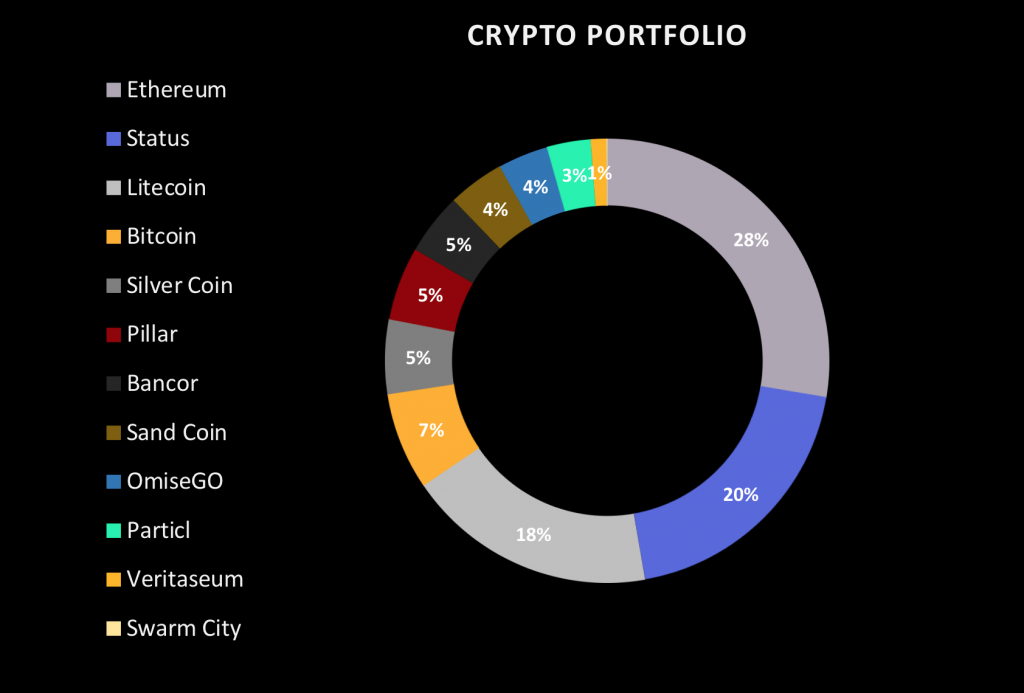
    The majority of cryptocurrency investors prefer to split their funds across a number of crypto assets. Personally, I do this too. For several reasons, a diversified portfolio is a common practice in the cryptocurrency space. Why pick one when you can actually get as many as possible? You know who has a different answer…

    A number of reasons would make an investor diversify. A gamer and a believer in Artificial intelligence will probably put his money on two projects related to this, maybe some Axie Infinity and SingularityNet tokens. If you fancy crypto as a portable payment medium, you’d probably add some ripple and stellar to your portfolio. This may go on as long as your cravings and sentiments.

    Apart from personal interests and minimizing risks, certain ethics held up by a project is enough to attract an investor’s attention to the extent of investing in them. Projects with a certain level of decentralization and encouragement for community involvement tend to attract a good number of investors. In contrast; centralized projects are also attractive to some. Whatever serves your taste the most. Investors love to put their money where their mouth is. But this could happen more than once and diversification may come in as a result. Diversification isn’t all shade of good anyways.

    Thousands of cryptocurrency projects, each one with plans of ‘taking over the world’; even baseless meme tokens plan to be the new world currency; even though they don’t even run on their own blockchain. Every cryptocurrency project is painted with buzzwords and sounds all cool. It’s hard not to fall in love too many times. But resist the urge to go with these feelings.

    Most times they result in you splitting your funds to satisfy your ragging love for several projects. An over-diversified portfolio might sound like a hedge against the volatile cryptocurrency space. But it’s not. In a space as wild as this, spreading your investment could turn out to be just another way of increasing your risk level; especially when this diversification is (almost) based on hypes and external suggestions.

    Capitalizing on a few credible investments has proven to be profitable; in fact, maximalists hardly get it wrong. The strong conviction that keeps one glued to just one project is most times a result of extensive research and belief, this works better than sporadic investments driven by little knowledge. Your investment in over fifty cryptocurrency projects still stands more chance of failure than an investment in ten well-studied projects or even less.

    It’s a nice approach to have your eggs spread through a number of baskets. Diversification might simply be a representation of your convictions and personal interests. However, spreading your investments irregularly stands more chances of backfiring than not. Every cryptocurrency project is shiny and ‘full of potential’; most times this turns out differently. Diversification, just like any other strategy works when done well. But here’s a suggestion, “don’t overdo it”

  • Post-war Ukraine will be a catalyst for digital assets’ growth.

    Post-war Ukraine will be a catalyst for digital assets’ growth.

    Ukraine Russia war

    Ukrainians face an uphill battle to retain their country as the conflict with Putin-led Russia continues. Peace talks between the Waring nations haven’t really yielded tangible results; the Russian military is showing no signs of backing off while Ukrainians are keen to fight off their invaders. The harsh effects of the sanctions on Russia’s economy and citizens haven’t been enough to convince her leader to call off the attempts. Russia’s invasion has grounded the central European country’s economy and has displaced millions of its citizens.

    While the rest of the world continues to condemn Russia’s actions and assist Ukraine, the conflict could linger on for a while. Support for Ukraine comes from all parts of the world in different forms. As usual, cryptocurrency communities are getting involved. Drumming their support for the eastern Europe nation, over $100 million in cryptocurrencies have since been donated to Ukraine to assist them in their plight.

    Being handed millions of dollars in cryptocurrencies via donations, Ukraine nets more than just one advantage. In addition to the financial reinforcement this could bring, cryptocurrencies offer a more efficient financial system relative to the traditional system. For a government thrown into war, an ‘unblockable’ means to exchange value comes in handy. Cryptocurrencies’ underlying technology makes for the most flexible exchange. Devoid of third parties and powering universally acceptable stores of value, it is actually meant for turbulence.

    Seeing the role cryptocurrencies have played in his struggle, the Ukrainian president moved to make bitcoin a legal tender in the region. This a reasonable thing to do when you have a tangible amount of cryptocurrency in your custody. We currently have no clue how exactly Ukraine is using the cryptocurrencies donated to them, but at least we can guess. The move to legalize bitcoin hints at positive results from using cryptocurrencies; especially at a time like this. And if more nations will consider adopting positive policies for bitcoin and other cryptocurrencies is a question of if they are actually watching the role cryptocurrencies are playing currently.

    In conflict, Ukraine is demonstrating just how useful cryptocurrencies could be in turbulent times. A point of consideration for other nations. It is already playing an important role in digital assets. And even after the war, Ukraine is poised to be a catalyst for digital assets in Europe and the rest of the world…obviously.

    The nation of Ukraine is currently in ruins. Thanks to shellings from Russia’s artillery, important structures in Ukrainian cities are in rumbles. Once the conflict ends, Ukraine will be looking to rebuild its nation again. That stash from donations will once again play a role. And as long the nation stays, open to cryptocurrency donations, the benevolent cryptocurrency community will continue to support their recovery. As a legal tender, donations in bitcoin and other cryptocurrencies will be circulated through the nation’s government. Probably as payment to the different bodies assisting in development plans.

    With bitcoin etched in the legal books of a country whose development has been badly affected by war, the need to adopt futuristic solutions to fast-track its recovery and competitive ability is a matter of importance. An optimized medium of payment and a superior store of value are good options, bitcoin fits perfectly into this. Just like El Salvador, Ukraine could be the next country to utilize digital assets for national growth.

    bitcoin Ukraine Russia war

    Unlike Salvadorians, Ukrainians have learned the benefits of using swift payment solutions like cryptocurrencies in a rather unfortunate way. The banking experience during this conflict period is already enough to make them appreciate the distinctions between bitcoin and other cryptocurrencies over their custodial financial systems. Many already hold a majority of their funds in cryptocurrencies, this will continue even after the war.

    Ukraine will double as a case study for cryptocurrencies’ relevance in turbulence and recovery. As a nationally accepted medium of exchange, it will play a role in the normal lives of people living in this region. As the rest of the world watches; every event in Ukraine as it concerns cryptocurrencies is a major demonstration of utility. For a concept met with so many restrictions, cryptocurrency and blockchain are proving the rest of the world wrong. Playing vital roles in contrasting times is proof of versatility.

  • DeFi for Noobs.

    DeFi for Noobs.

    decentralized finance
    Source

    If you live in the crypto space for a day, the acronym ‘DeFi’ comes your way almost twice per hour. No doubt, my statistics are right…or very close to it. The crypto space is a very dynamic environment and everything moves so fast, but you must be living under a rock if you’ve only got to hear about DeFi a few times. You’re unlikely to discover this article if you live under a rock anyways. So, the most probable case is that you’re yet to fully grasp the concept of DeFi.

    Swaps, farms, pools, and ‘connect wallet’ lol. Like a ‘plug and play’ system, connecting your wallet to a website is all you need to experience a whole world of fun …and risk. Yeah, accidents on DeFi platforms could get very popular and your first encounter might be through an exploitation report. But DeFi is way more positive than this.

    DeFi is an acronym for Decentralized Finance. Decentralized financial systems comprise applications built on top of blockchains that facilitate ‘permissionless’ financial services and provide seamless options for running financial activities. DeFi hopes to introduce the core virtues of blockchain technology to the financial system. Bitcoin introduced the concept of ‘decentralized means of payment’ which runs on a distributed ledger system, the blockchain.

    DeFi is a blockchain notion. It encompasses every attempt by blockchain and cryptocurrency projects to create a decentralized replacement or alternative to real-life financial activities.

    From Bitcoin blockchain itself and its lightning network to decentralized exchanges and financial institutions built on the blockchain; blockchain technology has dived deep into the economic sector and is making attempts to create a new and better way of handling financial activities.

    Contemporary and emerging DeFi projects are, expanding the scope of decentralized financial systems. They are shifting the paradigm from ‘portable means’ of payments to smart contract applications running independently on a parent blockchain and offering advanced financial services such as insurance, lending, wealth management, and an array of other financial management using blockchain resources and exhibiting desired blockchain features such immutability, security, privacy, speed and interoperability.

    Smart contract blockchains are hence home to DeFi projects, Ethereum particularly is housing the majority of DeFi projects. Augur, one of the earliest smart contract projects on the Ethereum blockchain and a popular DeFi project offers a decentralized alternative to advanced financial instruments such as index trackers and futures. Aave (LEND) runs on Ethereum Blockchain and provides decentralized lending and borrowing service. Binance Smart Chain (BSC) and TRON blockchain smart contract layers also facilitate DeFi and provide resources that allow DeFi projects to thrive.

    Amongst the numerous enticing features of decentralized finance projects, ‘liquidity farming’ has gained its place as the most exciting exercise in decentralized financial systems. The idea of leveraging DeFi protocols to generate annualized interest returns of up to 30% of your initial investment and a couple of other benefits will surely impress any investor. Due to this, DeFi presents enticing opportunities for cryptocurrency investors to dive into the crypto space — a major cause of the recent boom in DeFi projects.

    DeFi has benefited highly from incentivization. Flexible staking opportunities, high-interest loans on lending platforms, and high APR liquidity farm rewards…you might want to give up your agriculture career and join crypto. Well, you can do both.

    DeFi isn’t without some shortcomings anyways. DeFi space marks a huge resemblance to early crypto space. The emergence of new projects which are mostly a copy of already existing projects with just very little differences; bogus promises, pump and dumps, naive and gullible investors, shady project teams, and ‘get rich quick’ schemes. It has become a hotspot for ‘decentralized accidents’.

    Nevertheless, it is still a brilliant invention and is developed to fix these major issues. Mainstream firms are also impressed by the potential of decentralized financial systems.