Tag: bitcoin

  • ‘Tokenomics’ in cryptocurrency: A crash course

    ‘Tokenomics’ in cryptocurrency: A crash course

    Tokenomics

    Prior to the hard currency era, the barter trade system attaches value to real goods. Even in that era, real goods become a token of exchange. The valuation of an item depends on its availability and the demand for it. Tokenization is as early as ‘exchange’ itself.

    A Token is a store of value attached to a concept, an event, or a project. Tokens attached to a project tend to embody the value of the project itself. A token hence is a representation of the value of the concept it is attached to. In simpler terms, a token derives its value from the concept or project it is attached to.

    Tokenomics in plain terms is Token economics. Broadening this definition, tokenomics, it’s the science of token valuation, it encompasses every financial aspect of a token attached to a project and every effort of the project which affects the value of the token.

    With the pitfalls of the barter system over-shadowing its advantages, concerned governments sort better ways to exchange and ease the burden associated with the barter system. This gave birth to our present-day idea of Tokenization. Introducing many solid materials as a store of value, and finally issuing Currencies as a store of value, these governments not only tokenized the market and the commodities traded, they tokenized the country/community as a whole.

    Tokenomics in cryptocurrency
    cryptocurrency tokens

    Blockchain technology has gained numerous applications. As a versatile technology, it supports several use cases depending on how it is been developed and the applications built upon it. For some of these applications, it is used plainly as a blockchain.

    However, for most blockchain projects, cryptographically generated tokens are created to allow their users to perform some activities on the blockchain. Such blockchain projects are said to be Tokenized. cryptographic tokens assume the role of a token in its real sense.

    Cryptographic Tokens attached to blockchains are generally known as cryptocurrencies. Apart from enabling users of the blockchain to perform activities on the blockchain, it incentivizes the users and represents both the financial and technological strength of the project. Cryptocurrencies reflect the value of the blockchain project which is attached.

    What’s in the economy?
    bitcoin

    Token generation and distribution

    Scarcity breeds value, this is a prominent idea in tokenomics. Cryptocurrencies are not indifferent to this. The rate of generation of blockchain tokens and the distribution scheme affects its reputation and subsequently value. Cryptocurrencies are generated via mining or staking as the case may be. Smart contracts blockchains also allow the creation of separate tokens for applications running on them.

    For Proof-of-work blockchains whose tokens are generated by mining, miners are rewarded with tokens for solving puzzles and mining blocks. The number of tokens rewarded per block determines the rate at which the tokens are generated and this also affects the distribution. Blockchain developers introduced the concept of ‘halving’ to reduce the mining rewards over time hence reducing the rate of generation and distribution in order to build value. Projects with pre-mined tokens are often discriminated against as this is already a poor tokenomics practice.

    Proof of stake blockchains rewards their users for locking up a certain number of tokens in their wallets or in a staking pool. This is a passive way of generating tokens. The number of tokens rewarded to each staked depends on the number of tokens they have locked up in their wallets or in the pool. Proof of stake blockchains also meets some discrimination as a passively earned token hardly earns enough reputation. Users are more eager to sell off passively earned tokens.

    For the above reason, proof of work blockchain tokens usually get valued more than proof of stake blockchain tokens. There may be exceptions to this due to reasons mentioned below.

    The functionality of the blockchain and utility of the token

    Regardless of the generation and distribution scheme of any cryptocurrency project, the functionality, and utility of the blockchain is paramount. This simply explains why ripple sits third on the market capitalization ranking with over forty (40) billion tokens in circulation. How does the blockchain work? and what use is the blockchain? A good cryptocurrency investor must first ensure that the project answers these questions satisfactorily.

    For national currencies, the GDP and financial stability of the nation play major roles in its valuation; for cryptocurrencies, it is the functionality of the blockchain and its use cases. The problems a blockchain solves and the population which adopts it (or will adopt it) is enough to drive the value to the moon or to the mud, regardless of how it is been generated, the amount in circulation, or how it is been distributed.

    Developing a good use case for a blockchain project and working towards building a flexible blockchain that achieves this is the master key to a valuable blockchain token. A good generation and distribution scheme adds even more taste to this. A good example is bitcoin which sits first in the capitalization rankings with just over eighteen (18) million tokens in circulation.

    Viability and the overall reputation of the project

    How active a project is and the reputation of the project, the community or team behind it, affects the value of its tokens notably. The XRP army or the bitcoin maximalists? these are two very popular communities in the crypto space. The role they played/are playing in driving the value of their associated cryptocurrencies rings a bell across the crypto space.

    A community standing behind a project and propelling its success has proved to be of value over the years. A good tokenomics practice may include building a great community around a project. However, this cannot be achieved without at least a promise of a potential good utility for the token.

    This promise backed up with visible proof of hardwork from the team towards achieving this goal and also sincerity and transparency from the team is the first step towards attracting a good user base. The user base builds the community, and continued dedication and good practices by the team grow this support and solidifies the stance of the community on the project.

    Considering a project’s tokenomics as an investor/enthusiast

    .

    cryptocurrency trading

    The crypto space has a very dynamic atmosphere, with new projects springing up frequently and existing ones striving to gain ground in this very competitive industry. Each project comes in with a new concept and a proposal that aims to solve an issue. Written carefully in their whitepapers are plans and road maps towards achieving this stated goal. Each paragraph comes with a promise and a vision.

    Despite these promises and carefully crafted proposals, a higher percentage of new projects fail. Most existing projects are merely struggling to retain their investors, stay in the game and make progress. This is always below the expectations of the investors who are compelled to invest in these projects because of the visions…and promises.

    Each project which fails to live up to its promises incurs grave losses on the investors and drums home the importance of careful investigation prior to investment. Taking a deep look at the tokenomics of a cryptocurrency project cannot be over-emphasized.

    A project which fails to present a feasible use case and a flexible functionality is a huge gamble. Having a good branding, token generation and distribution scheme may appeal to the shallow view of investors. For a clever investor, a shallow view appeal should be a mere attraction. A closer look at the feasibility of the proposals and the abilities of the project team is paramount to building trust and making careful investments.
  • Cryptocurrency mass adoption: One big lie?

    Cryptocurrency mass adoption: One big lie?

    cryptocurrency mass adoption

    Three big cryptocurrency exchanges pumped literal millions into the super bowl to have their commercials aired during the prestigious event’s commercial breaks. Not so big when you consider the fact that two of these exchanges are buying up the naming rights for prestigious American sports centers. Tezos have partnered with the famous English premier league club — Manchester united; at least we are finally seeing that big ICO money come to life.

    With arguably the greatest soccer player ever wearing those training kits with ‘Tezos’ written boldly on them and Lebron James getting buckets at the crypto.com arena, one thing comes to mind; “crypto is taking over the world”. From a small group of nerds working on ‘the future of money’ to millions of people holding cryptocurrencies…for mainly an odd reason, cryptocurrency and blockchain have walked a long path in just twelve (12) years.

    Twelve years of struggle for relevance; like a stubborn attention seeker, cryptocurrency has snuck its head in every nuke and cranny. From social media to billboards and television commercials; cryptocurrency marketing strategies are almost as brilliant as the technology itself.

    But there is one big lie along the line…

    Cryptocurrencies’ are presented as a portable and more convenient means of exchanging value. The biggest perks over traditional alternatives are decentralization and privacy. Speed and transaction cost used to be on the list; not sure if they can be boldly enumerated anymore. It costs over $4 to move Ethereum and about three times more to move smart contract tokens, bitcoin transactions would require similar fees too…

    Despite these issues, cryptocurrency’s popularity has been on the climb and isn’t slowing down anytime soon. Bitcoin particularly has seen huge political breakthroughs and has become one of the hottest economic and political topics in the past five years. This relevance isn’t really due to some technological advantages it possesses but mainly due to its tokenomics and mode of operation.

    Bitcoin’s distinction over fiat as a store of value is its limited supply. Governments are however reluctant to acknowledge it as a legal tender due to presumed support for illegal financial activities, supply algorithms…and carbon footprint. These reasons are valid, the back and forth on legalization and ban continues. You could anger the Chinese president by simply screaming ‘bitcoin!’.

    Bitcoin fits best as a store of value and a payment solution, even though it is currently not very efficient in the latter. Other cryptocurrencies and blockchain projects attempt to solve numerous other problems. Artificial intelligence, oracle solutions, decentralized internet, comedy (yes, comedy!); a number of altcoin projects fit into these categories and more as they attempt to solve more real-world problems and possibly replace existing options. Each of them has earned themselves tons of believers and investors…but again for an odd reason.

    When news? “Huge or not”? Investors couldn’t care less about the relevance of any of these projects. Major updates, and (huge) partnerships; regardless of the relevance of these to the actual development of the project, investors fly in with different emotions. Buy the rumor, sell the news; you’ve surely heard that too many times in this space.

    If you’re truly here “for the technology”, then you are actually one out of a very scarce few. For a space filled with thousands of very volatile assets and clever marketing strategies, speculators are sure to flock in and tap from the fast-flowing streams.

    Getting rich quick is actually the most appealing ability of cryptocurrency.

    These adoptions are rarely for the technological advantage cryptocurrencies have over fiat. Even El Salvador has competent plans to redeem their crypto profits in fiat and channel these profits to national development. It’s safe to say that the central American nation didn’t adopt bitcoin because it is a better option to fiat but because in contrast, it is in constant growth in value. This is the same with other institutions adopting blockchain products.

    Mainstream celebrities jumping into the NFT trend rarely understand how the technology works and what NFTs really are. Simple process; mint the arts, sell to speculators, and take the loot…in stable coins or actual dollars, lol. How the blockchain actually works and why it is a better option? You can save those long lessons for anyone who cares!

    Cryptocurrency adoption comes down to a need for inclusion and the need to be a part of an enriching ecosystem. Very different from the reason presented in our thoughts.

    The big lie is, cryptocurrencies are not adopted for technological advantages, and neither is blockchain technology. NFTs are shiny and popular brands are seeing them as a major avenue to improve their financial conditions. Celebrities dishing out NFTs and chasing out in stablecoins and dollars is the most crypto thing you’d ever see.

    Companies too are finding ways to include a two trillion dollar opportunity into their purchasing option. The inclusion of crypto payment options into commercial platforms comes as a result of this. Firms looking to expand their purchasing power include the crypto payment as a good marketing strategy. It will be interesting to see the percentage of these merchants that keep a majority of the cryptocurrency they realize in their reserves.

    Cryptocurrency is reaching out to people, and speculators. Investors are more dedicated participants. A majority of people putting their money on cryptocurrencies are speculators who envision short-term gains and are keen to leverage the enrichment possibilities of the most volatile assets ever.

    Shill me the next altcoin to go 10X! worry less about what they are actually building. It is the normal sequence. Institutional and individual adopters are mainly speculators who consider the technological superiority of cryptocurrency and blockchain. The big lie? It continues.

  • The bitcoin revolution starts with you.

    The bitcoin revolution starts with you.

    Bitcoin revolution

    Got some bitcoin? Congratulations! You’re a bitcoiner; oh wait…

    I got my first few satoshis sometime in early 2017; to be honest, I vaguely knew what it means to own even the tiniest amount of bitcoin. If you wonder how I got them — a faucet. Funny, but those were actually a thing then, and they were real. A whole lot of people got their first ‘tiny’ pieces of bitcoin this way. Unlike the rampant fake faucets littered around all corners of the internet currently, bitcoin faucets were real and did pay those who were curious enough to try them out.

    My attempt to transfer my first set of earnings from the faucet to my wallet was the real trigger for my curiosity. A wallet, a key phrase, a private key…these were foreign to a total noob. What bitcoin meant; I hardly knew. The process wasn’t a plain one, but yeah, I’m a fast learner. After successfully paying out my first earnings to my wallet, my interest in blockchain technology grew.

    The transfer process was swift, but that was the last good thing about bitcoin. Reading through resources on the internet, bitcoin was more than just a means to move vague numbers around…I learned. The mystery, technology, audacity, and future were all caked into one concept — Bitcoin. Well, blockchain technology and cryptocurrency as a whole.

    Alright, feel free to call me ‘dumb,’ but I lost those satoshis I earned from the faucet. I might find the passphrase one day. Don’t worry, it’s just a small amount and won’t make the news. The sats were gone but the interest in the ‘future of money’ continued to grow stronger. I got involved in a number of other cryptocurrency and blockchain projects and bought more bitcoin after the 2018 crash. Again, I lost them in a bitcoin mining scam.

    Dummy of the year! Or rather, bitcoiner of the year! That’s a more appropriate term.

    Holding some bitcoin only makes you an investor. Waiting patiently for when the price gets to your target and selling off to enrich your pool of fiat. That’s a clever investor right there, not a bitcoiner at best.

    Cryptocurrencies are unarguably the best-performing assets over the last decade. The financial advantage they give their holders is unspeakable. A successful cryptocurrency investment could be life-changing. Only a few stocks can boast of similar financial performance.

    Behind these financial super stories is an attempt to influence society positively (and otherwise) through a number of interesting concepts and techniques. Financial technology, politics, the internet, distribution of communal power and authority; led by bitcoin and supported by other reputable projects, blockchain technology, and cryptocurrency are finding their way into these important topics.

    Investing in bitcoin and other cryptocurrencies only wouldn’t make them relevant outside the investment sphere. The deep interest and extra involvement propel this concept beyond the idea of making money and getting ‘rich’. While owning bitcoin(s) is quite a good start, it is, in fact, a ‘start’.

    In a space with many voluntary spaces to fill, what is/are your extra involvement(s)? Well, advising your uncles to dip in a few dollars is nice, but not when you lured them to buy the top though. Regardless, you’re more of a bitcoiner than the investor who locked up a few hundred bitcoins in his wallet.

  • Making the most out of your cryptocurrency investment.

    Making the most out of your cryptocurrency investment.

    cryptocurrency investment

    Two contrasting messages; “cryptocurrencies are the best-performing assets in the past decade” and “cryptocurrency investments are Risky!”. Same topic, different assertions, both of them correct. While many have made life-changing wealth through cryptocurrency investments, a lot more have a very different story to tell. While I’m not an advocate of cryptocurrency investment as just a ‘money-making’ scheme, losing out on any investment isn’t pleasant regardless.

    Came for the technology, stayed for the money…and vice versa. The majority of participants in this space are clearly interested in cryptocurrency investments’ ability to generate mind-blowing returns in a very short period of time. Those 500% gains in 48hrs aren’t something you see anywhere else; in crypto, it happened very frequently. I mean, who wouldn’t want to turn $8,000 into 5 billion dollars in just a few months?

    But more frequently than not, investors suffer huge losses on their cryptocurrency investments. This is partly due to the volatility of cryptocurrency prices; investors have a share of the blame anyways. Stepping into a space like this, the first thing to note is the fact that everything is time-bound. Price rises for a while, it also falls for a while…even your influencers’ shill tweets don’t last forever; it takes a dump to get them deleted.

    Well, that’s by the way. It’s exciting to be in a space where constant fluctuation is a norm, it’s the volatility that makes the money, and drains it too. Playing safe is a virtue. Going all in could work; but most times, the story is different. Even when you have invested ‘what you can lose’, it’s still unpleasant to see it crash. In this space, crashes are usual…and harsh.

    Informed investing could save you a lot.

    One popular mistake is ‘chasing pumps’. It’s human nature to chase trends and the fear of missing out is a huge drive. Investors rush to these hot shots with hopes of reaping from the next possible gains.

    This works, sometimes. It’s an uncertain market anyways and anything is possible, but being a successful investor hardly comes from jumping on trends. 50% gains, the rush kicks in. Speculators take the space and the project in question gets mentioned everywhere. The trend goes on, enthusiasts buy in with only a little idea of what the project is really about.

    TA analyses, hypes from influencers, gains on trading pairs…these things are enough to sweep anyone off their feet. But regardless of how hot the hype blows, clever investors will certainly do their own research before buying in.

    In profits, you should take some

    Cryptocurrency’s volatility means an investor could make crazy gains in a very short while. 5X, 10X…these are huge returns; in crypto, they are in fact meager returns and happen very often. Well, they could also go either way at the same pace.

    Filled with expectations of even crazier gains in the near future, an investor who already made tangible gains is caught in a dilemma. Cryptocurrency markets are fast-moving, double-digit price drops could happen in a blink of an eye, but selling after some ‘little’ gains might be too early. Despite having hit the initial target, things still look promising.

    “This could be a life-changing opportunity”…investors usually have these words running through their mind as the project they invested in continue to look healthier and promising, even after making some crazy gains already. Greed sets in — normal human behavior.

    To take profits or to continue holding? Any investor would find it hard to decide, especially when you are just a few steps away from hitting your target.

    Take a time to consider some conditions that are personal to you. What was your initial target? Over everything, why did you make this investment in the first place? To pay off your rent or to fix some debts? Probably a very different reason, but the level of importance is best known to you.

    Imagine waking up to a 30% drop? Jaw-dropping! It could be the other way around. But either way, what are the chances that you will take this event with your head held high? In a situation where you already hit your target but decided to hold on for a little while but things quickly go south. The regrets are huge, but are relative and could vary depending on the investor and the condition.

    Nevertheless, it still hurts to see the project you were invested in making crazy gains after you have sold off your investment. The sideways movement constitutes this dilemma.

    With this in mind, selling off your bags at once is a bad idea. Selling them in parts at different targets is probably a better approach. Thing is, selling in parts at different targets might mean you get out of the market with less; but if the price continued to go up, you’ll leave the market with more than you would have if you sold at your first target. If the price drops after you sold a part at your first target; you’ll leave with lesser, but the loss is tamed.

    Dealing with the ‘Winter’

    Every cryptocurrency investor wants the chart to stay green and never red; at least, until they get to their target and sell-off. Only a few realize that the path to their target is filled with trials and tribulations. Now I said that the religious way, lol. If you’re wondering; I’m one of those investors who want the greens to prevail at all times. I mean, who doesn’t? well, only the guy waiting to ‘buy at a discount

    Nevertheless; dips are inevitable, regardless. The chart goes red whenever a holder decides to exit the market, partially or completely. The extent of the dip depends on how many people exit the market and how much control they have over the distribution. This is the main reason why whale movements are studied and dreaded. A whale exiting the market could shake it badly, and the market could ‘tank’ depending on the whale’s holdings.

    Dips are not only ridiculous, but they are also (very) poisonous. Cryptocurrency dips are sinister; not only are they sudden, but sometimes they are wild. 20% loss within 20 minutes. It happens faster than that most times, everything a cryptocurrency investor dreads. Well, you were warned. This space is more volatile than chemistry lessons. Poor comparison if you ask me.

    For intending investors, the dip time is usually the best time to buy. Maybe the coin is just pulling the strings and you know…as the saying goes, ‘it always shines after the dark’. So, if it’s dip time, then it’s buy time…but that’s not always the case.

    The normal idea is always to buy the dip and hopes it doesn’t dip further from your purchase price. Moves like this have come out good sometimes, however many times, the current dip point is just the tip of the iceberg as more dip comes after the initial dip and leaves those who bought the initial dip at loss. Ready to buy the dip? Maybe you should give it a little thought and invest some time in making a little research.

    It is very important to study the events which resulted in this sudden slash in price. Getting greedy when others are fearful is unarguably a good move, but sometimes this could also backfire, in reality, this move is always risky. Taking time to make certain considerations before ‘getting greedy’ increases your chances of averting some disasters. Price may dip badly in cases of irregular acts by the team behind the project you are invested in, this always drives the price nuts and could possibly dip to its last point, I mean, the team is gone!

    Investing in what you can lose doesn’t mean you should actually lose them; it means you should try and make the most out of them. Making the most out of your cryptocurrency investment takes a level of carefulness and bold moves too. Playing safe should be considered at (all) times.

  • Satoshi’s Vision: how far have we really gone?

    Satoshi’s Vision: how far have we really gone?

    Satoshi's vision

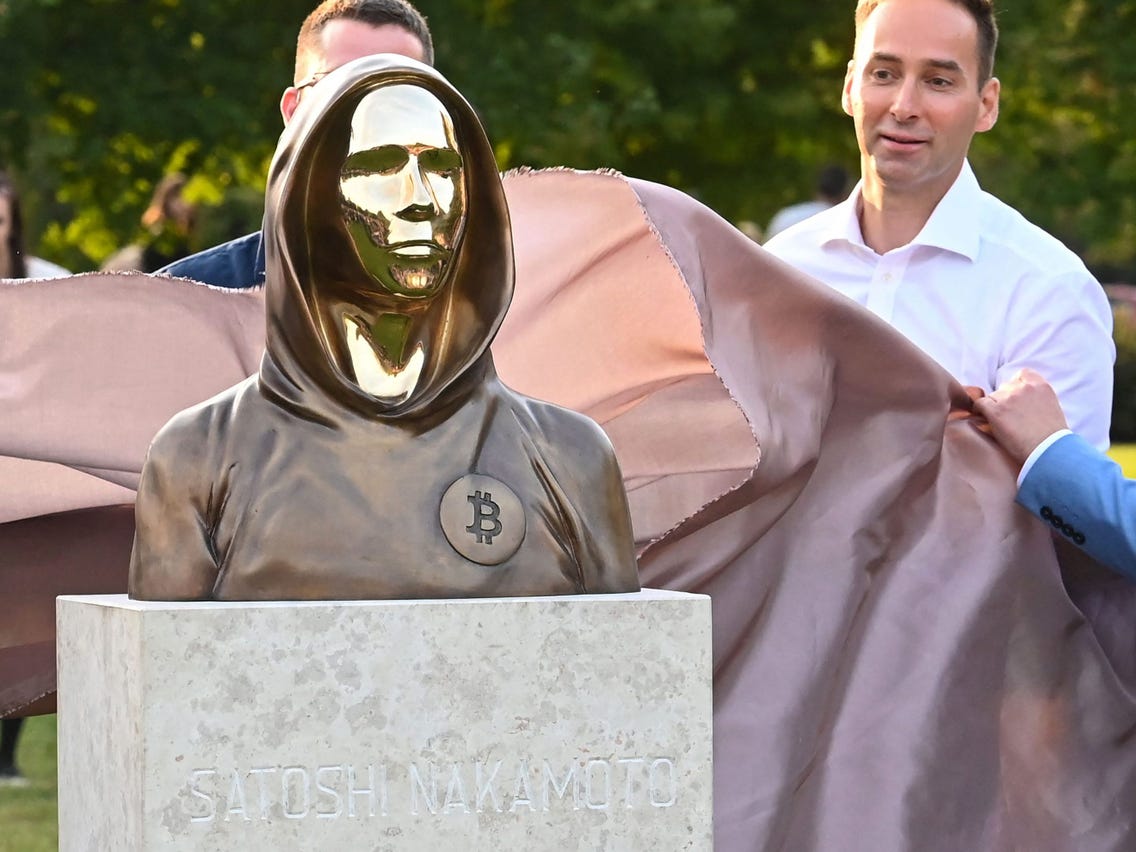
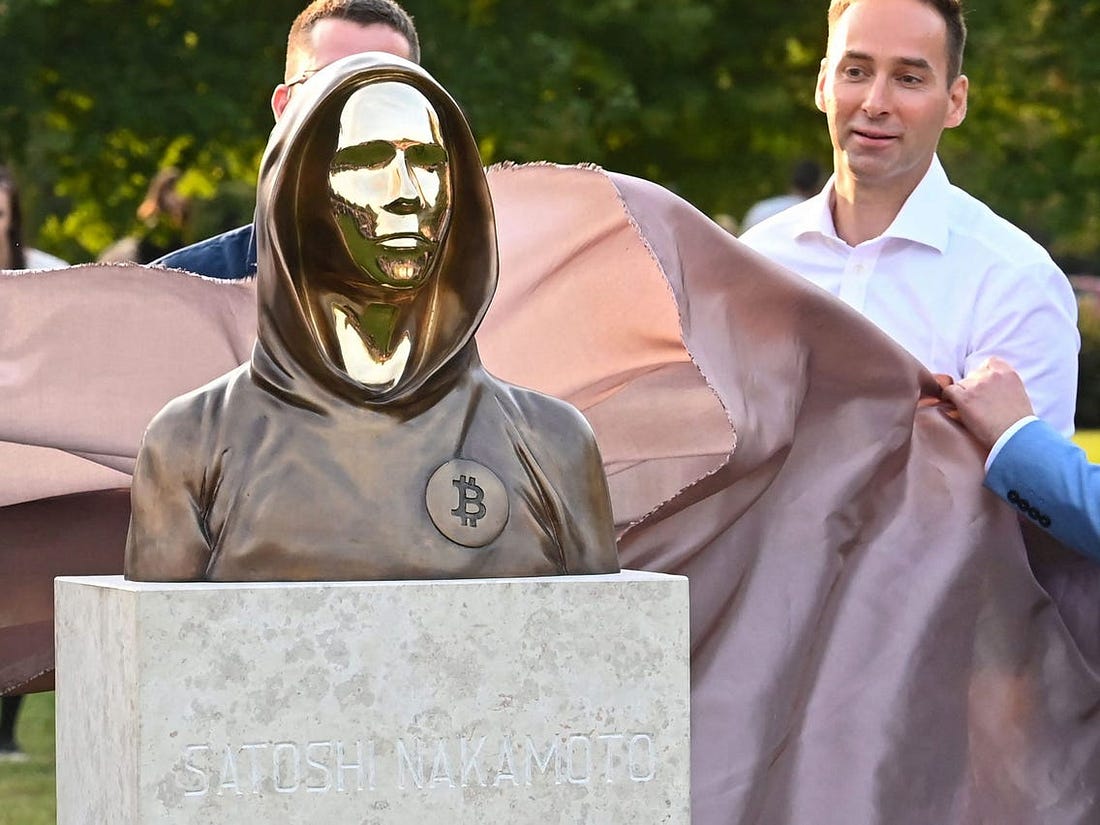
    When Satoshi Nakamoto presented the bitcoin whitepaper, (he) envisioned “A purely peer-to-peer version of electronic cash which would allow online payments to be sent directly from one party to another without going through a financial institution.” With his complicated cryptographic breakthrough, he hoped to revolutionize the economy or at least, the financial system.

    A simplified payment system controlled by the people and protected by its users; Satoshi’s new cash sounded like an idea from a world outside ours. He kept his identity clandestine, but at this time, only a few really bothered about who really is. He had a vision, but just like his identity; only a few really understood what exactly this goal was.

    Like wildfire, bitcoin would grow in popularity and garner interest from developers and finance enthusiasts. Apart from a brilliant peer-to-peer exchange technology, bitcoin’s economy was also argued to score above the current global economy.

    “There will ever be twenty-one million bitcoins”

    Over a trillion dollars later, bitcoin’s finite supply would emerge as its most marketable quality. Overshadowing censorship resistance and technological efficiency, bitcoin’s original vision ranks below its other features. Basking in bitcoin’s success, the concept which was influenced by Satoshi’s piece of code would grow into an over two trillion dollars worth sector and a space better known with the ability to make investors rich in the shortest period of time.
    No matter how much you try to flaunt fundamentals over ‘pumpamentals’; a majority of cryptocurrency enthusiasts are simply here to discover the next 100X and improve their financial status…in fiat. Well, only a few really care about bitcoin anymore. But how impactful has this foregoing been on Satoshis’s vision?

    Satoshi’s vision? You might have to repeat those lines from the whitepaper a number of times before any cryptocurrency investor understands it. And when they do, expect them to quickly shove it under the bus. Thing is, it matters very little now.

    Sovereignty from the government in almost every monetary activity…the original vision was a currency controlled by the people. The generation, distribution, value system, and expenditure were supposed to be championed by the people. Satoshi, however, couldn’t state the exact role he wanted the government to play here…he probably didn’t care about them; that was the goal, the vision.

    How far have we gone? To be fair, Satoshi was slightly over-ambitious. The centralized government has not only grown too strong over the thousands of years the system has existed without tangible challenges. Money on the other hand is their biggest tool of domination and control. With an infinite amount of money at their disposal and an ability to control the value of fiat to an extent, they hold almost total control over the people. A factor Satoshi might have considered before hiding his identity.

    A picture of bitcoin representing an electronic cash

    The growth of bitcoin has been met with the major involvement of the government. You’d expect them to care a little since the original goal have been abandoned long ago. But yeah, bitcoin and similar technologies are still challenges they have to face and curb to retain their supremacy.

    Adopters of this technology have also been overpowered by the tasty option of getting rich by holding volatile digital assets. A very tough temptation. With a lot of ‘new money’ flowing into this space, bitcoin trading over a million dollars is more realistic than Satoshi’s original vision. Investors would prefer this too, or Shiba Inu going to $1 rather.

    Whichever comes first; we are already too far from the initial goal and are obviously more comfortable with the financial liberation this space promises; even if it means leaning on governmental approval. An idea this technology was invented to fight.

  • Tragedy of the third coin: How far is the top?

    Tragedy of the third coin: How far is the top?

    tragedy of the third coin

    A ‘new bitcoin’, ‘the ethereum killer’…wonder how many times these two phrases have been used in the crypto space? Countless.

    Bitcoin’s introduction changed the narratives for cryptography and created relevance for blockchain technology. Its primary use? Peer-to-peer exchange transactions.

    ‘A decentralized electronic cash that enables Peer-to-peer exchange of value without double spending’ sounds like a brilliant idea, yet only few believed in this.

    Bitcoin’s surprise success quickly triggered the proliferation of similar projects claiming to be an improvement to bitcoin’s technology. Faster? Cheaper? Even though these alternatives achieved most of these, they were unable to displace bitcoin in terms of acceptability. Bitcoin retained its position as the original and most reliable peer-to-peer electronic cash system.

    For Vitalik Buterin; P2P exchange was a very narrow scope for blockchain technology, a good number of very interesting things could be achieved using the blockchain and distributed ledger system.

    Ethereum introduced smart contract technology and a virtual code executing machine which powers real utility applications and running on a blockchain which can also be used for decentralized Peer-to-peer electronic cash exchange. Ethereum’s introduction ushered in a new dimension for blockchain technology and cryptocurrency.

    Programmable money; being the ‘new cash’ was actually the least ethereum could be. In essence, it is bitcoin and many more.

    Well deserved; Ethereum climbed the stairs, from obscurity to the second-biggest blockchain and cryptocurrency project. Displacing other older projects and trailing behind bitcoin, of course; it was tipped to displace bitcoin too…it still is.

    Together at the top; bitcoin and Ethereum’s reign has lasted the longest, but this hasn’t been without stern challenges. These two coins aren’t perfect anyways. There are no perfect systems, but improvements are always a thing to smile at.

    Bitcoin’s shortcomings include a negative impact on the environment thanks to proof of work’s mode of operation. Its technology is also argued to be outdated and ‘archaic’. Many blockchain projects focused on Peer-to-peer electronic cash payment have introduced better alternatives to bitcoin’s consensus algorithms and a few tweaks to create a faster and environmentally healthier blockchain. With these features, they hoped to become the ‘new bitcoin’.

    Ethereum, on the other hand, is riddled with efficiency and economic issues, and of course; its proof of work consensus places it in the same environmental position as bitcoin.

    A couple of coins have put together proposals to tackle these issues, and many of them have received the approval of the majority of the cryptocurrency community and have soared in price as a result. A few of them have climbed the stairs to the third position — the Third coin…

    LiteCoin, XRP, Cardano, Binance coin…each of these have once occupied the third position on the ranking and a few times have been tipped to journey into the second position as they are billed as superior to either ethereum or bitcoin or both.

    Unfortunately, this never happened. These projects despite once occupying the third position and earning praise from the general community are unable to stand the challenge. Most of them have since slipped from this position. These failures are tragic…the tragedy of the third coin.

    But why do these third coins fail? Bitcoin and ethereum have the first movers’ privileges. A very important advantage. Being the first to the market and gaining many users who turned believers and maximalists, challenging these two toppers goes beyond developing superior technology. Getting the old investors to abandon the project that warmed their hearts isn’t a very simple task. Even genius-level marketing wouldn’t do this easily.

    Bitcoin maximalists would hardly listen to any argument against bitcoin, let alone accept it. This is the same with Ethereum maximalists. Despite the outrageous fees and decreased efficiency experienced by ethereum users, ethereum continues to wax stronger.

    Apart from the first mover privilege; these third coins are in fact unable to match the mastery of these two toppers. Despite boasting a better technology and economy, these alternatives are found lacking in many important aspects. New smart contract blockchains may be faster and more efficient but are hardly decentralized and less secure than the ethereum blockchain. This is hard to ignore. Sacrificing security for speed is a tough decision. Better safer than faster. A centralized blockchain defeats the whole goal.

    Many of these ambitious projects in an attempt to develop a better alternative end up reinventing the wheel. Their solutions are no different from existing ones; just a different branding and marketing schedule. The two projects at the top continue to look irreplaceable. Their technology keeps growing and getting better. Bitcoin’s latest upgrade allows smart contracts, and ethereum hopes to fix most of its issues with the ethereum 2.0. While these coins continue to develop positively, will a third coin rise from the ruins or will the tragedy continue?

  • Taproot and Serenity: How the big players are getting better.

    Taproot and Serenity: How the big players are getting better.

    taproot and serenity

    Have you ever wondered what it takes to get to the very top? A whole lot, right? A bit more than that. As if that’s not enough, it takes, even more, to remain at the top. This is the case for the two biggest cryptocurrencies — bitcoin and Ethereum.

    Worth over a trillion dollars and more than half a trillion dollars respectively, bitcoin and Ethereum have been an example to every other cryptocurrency and blockchain project. Much of the developments around this space revolve around them. Ethereum’s ecosystem particularly houses countless cryptocurrency projects and its technology and management tactics have been copied by even more projects.

    After the blockchain itself; Ethereum Virtual Machine (EVM) is arguably the most brilliant invention in the crypto space, following it closely is smart contract technology…also developed by Ethereum. Bitcoin represents a whole lot; more than just a technology, it represents an economic and political revolution. For this reason, the very top spot is well deserved. Apart from this, I’d tip Ethereum to go to the very top.

    At the top, these two projects continue to refine their technology and set the pace for other projects. Recent developments and improvement proposals have seen the bitcoin blockchain get even more potent and the Ethereum blockchain is set to undergo one of its biggest upgrades ever.

    In a move that hopes to ‘solve’ cost and efficiency issues, the Ethereum blockchain will be moving from Proof of Work to Proof of stake. The upgrade to Ethereum 2.0 also known as SERENITY is expected to bring moment-defining changes to the Ethereum ecosystem. This upgrade changes Ethereum’s consensus algorithm to proof of stake.

    Source

    The move to proof of stake is expected to add more flexibility to the Ethereum blockchain, a feature it terribly lacks. Proof of work algorithm is a complex computing protocol. Running a node for a proof of work blockchain requires enough computing power and of course, a whole lot of electrical energy. Working on computer resources, proof of work operations pile pressure on the device resources, store an enormous amount of data, and consume the device memory in an outrageous manner. Poorly scaling blockchains like Ethereum and bitcoin would consume double to three-digit gigabytes on your device and heat up the device.

    Proof stake algorithm is energy-conserving in all aspects. Due to its memory friendliness and relative simplicity, it makes judicial use of computing resources. Staking process also provides a more flexible token generation algorithm in contrast to the very complex proof of work. Getting rid of the mining process saves the electrical power required to mine tokens.

    Moving to POS spares Ethereum blockchain from this turmoil, guess that’s why it was named SERENITY! Well, it’s serenity and peace at last for Ethereum believers and skeptics. An amazing move…arguably.

    Elsewhere, bitcoin has just completed its first upgrade since 2017.

    At block 709,632, bitcoin’s Taproot upgrade went live. Bringing into life what has been described as the biggest bitcoin upgrade since its inception the Taproot upgrade is bitcoin blockchain’s first upgrade in the last four years. Over five months of thorough testing and optimization, the Taproot finally grows out!

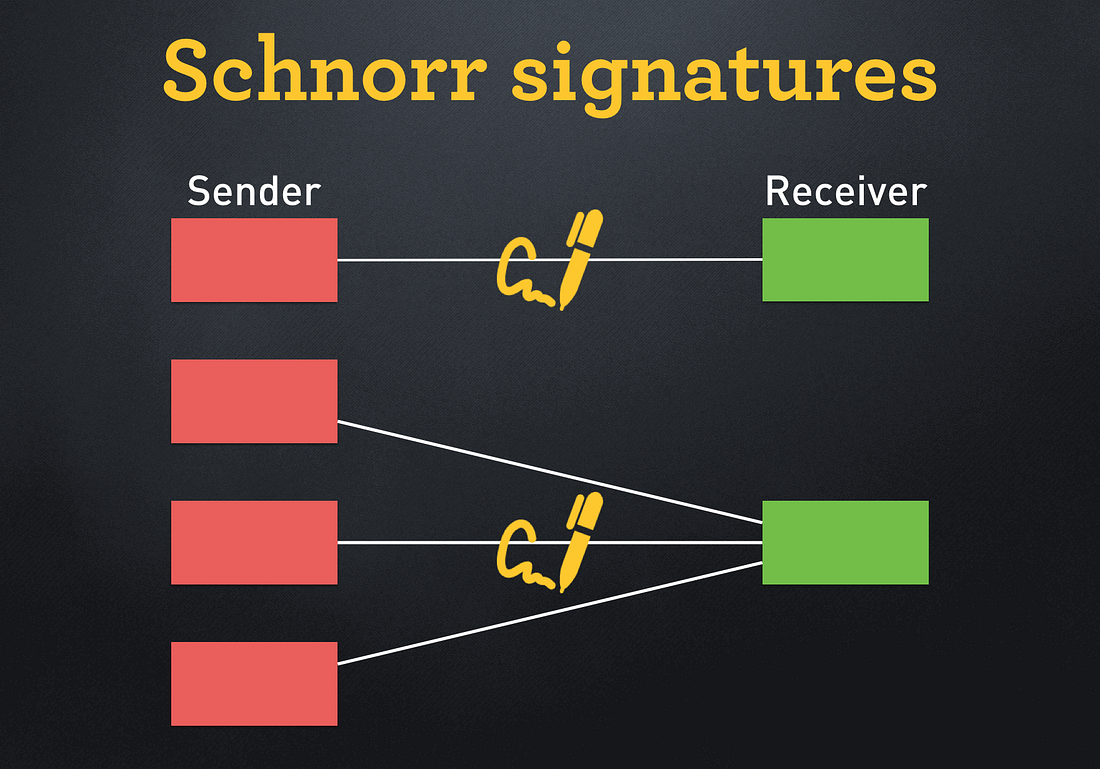
    In addition to the current “Elliptic Curve Digital Signature Algorithm” (ECDSA), the Taproot upgrade introduces the “Schnorr signatures”. ECDSA creates a signature from the private key that controls a bitcoin wallet and ensures that bitcoin can only be spent by the rightful owner. When used to sign multiple-signature transactions, the Schnorr signature algorithm adds a privacy layer to multi-signature transactions.

    ‘Privacy layer’ might sound too complicated for what the Schnorr signature actually does. The Schnorr signature combines the signatories of a multiple-signature transaction into one signature. The individual signatories in this transaction are a little bit more ‘hidden’ as the transaction is represented with only one signature.

    In addition to improved privacy for multisig transactions, the Schnorr signature can be used to significantly reduce the size of multisig payments and other multisig-related transactions, for example lightning channel transactions. It not only makes these transactions more private and secure; trimming the size of the transactions’ data makes for more efficiency in execution.

    I’d say the Schnorr Signature is the real game-changer. Currently, smart contracts can be created on bitcoin’s core protocol layer and also on the Lightning Network. The lightning network is a payment platform built on bitcoin, it improves bitcoin transaction speed and enables almost instant transactions. Smart contracts on the Lightning Network are notably faster and less costly when compared to smart contracts on the bitcoin core blockchain.

    By compressing multiple signatures into a single signature and greatly reducing the size of multiple signature transactions, the Taproot upgrade is set to add a whole new level of efficiency and speed to smart contracts on the bitcoin core blockchain and the lightning network as well.

    Taproot makes bitcoin stronger; Serenity will restore orderliness on the Ethereum blockchain. Two game-changers, occupy the topmost position. Developments in these two projects means a lot to the overall growth of the crypto space. With the Schnorr signature, bitcoin will power relatively more efficient applications, gain even more utility and more adoption. If successful, the Serenity upgrade will solve the biggest issues limiting Ethereum blockchain’s adoption. Either way, these two projects won’t be matching the breaks any time soon.

  • Death to 2022: A rekt man’s diary

    Death to 2022: A rekt man’s diary

    crypto bear market

    We lit the fireworks and changed our calendars as we swerved into a year we thought will brew a better story. Well, on a general note for the crypto space, that didn’t really happen.

    You could go on about how you made Bezos-level money from shorting the hell out of cryptocurrencies. Sincerely, I’d have bet a few dollars on bitcoin smashing the $100,000 mark in 2022. Such a bad gambler, I know. But the charts didn’t hint at anything this bad.

    Fair enough, the charts could have never predicted multiple bankruptcies and a full-blown war.

    Hell, of a year, literally, 2020 remains one of the worst years in the 21st century, but for the business sector, 2022 follows immediately.

    The tales aren’t really so juicy and our sarcasm might taste like a poorly prepared coffee, but we’ll have to do it anyways. So, let’s go through 2022 again in just 670 words.

    1200x-1.jpg

    Michael Saylor stepping down from his throne at Microstrategy should have been enough sign for us. The bitcoin man probably got tired of saving the space with his firm’s annual profits. It’s just unfortunate, if he dipped in a few billion more, I’d have paid off the fee for a ‘single-issue’ Toyota Corolla. Sorry, that’s an excerpt from a friend’s diary.

    Well, steady lads! A friend lost his tuition fee to that LUNAr eclipse, but it’s a good thing that we got a new fun phrase for euphemism. A couple of “Steady Lads” situations got us this far, if 2023 brings forth more, we might have to do better at word-building.

    If anything good came from 2022, it is the fact that cryptocurrency projects have learned how easy it is to get away with impoverishing investors. The chronology is similar; reach enviable heights, then crash so badly that your biggest fans look like absolute degenerates. It’s unfair to bring in the word “generates” here, considering the fact that the same word is an important figure in some of the biggest mainstream pumps of 2021. Looking back at how everything turned out, I have no apologies.

    A good measure of how bad we had it is that everyone already forgot about how Andre Cronje’s exit from Fantom foundation nearly rugged one of the best Layer-1 blockchains out there. Yeah, I think it’s time to give that project its flowers, even though it isn’t making those multiple profits anymore, for now.

    You can’t close a rekt man’s diary without turning to the page where he discovered that the leftovers he ‘saved’ on his favorite exchange have been donated to a charity program and he didn’t even get a pat on the back for being so generous. Cryptocurrency hated the banks so much but still managed to lose out to a nominal Bankman. That hate should grow.

    FhflrT0aEAEjeDP.png

    Since Alameda will spend more time in court, how likely is it that we still get that Solana blockchain phone in 2023? There’s a pre-order facility already, I hope a partial refund facility doesn’t follow. On a deeper thought, a $250 Million bailout should be enough to keep the project running. Unfortunately, someone already used that for himself. A silver lining, Solana Blockchain doesn’t stop twice in three days anymore.

    I’ll leave you to guess what 2023 will come up with, I’d suggest you don’t expect a pump. Most of the architects of the 2021 pumps are either standing on court podiums, hiding in an exotic location in a third-world country, or buying up the rekt projects that still stand a revival chance. Either way, they are too engaged to pump your bags. The penny coins you are throwing your pocket money on are likely to remain pennies or something lesser…like half-pennies.

    20221115_144923.jpg

    Being optimistic for 2022 didn’t stop two neighboring countries from clashing in a gruesome manner, nor did it stop Changpeng from putting out the tweet that almost put out the whole space; but it did help Mr. Trump to raise a couple of million dollars from selling some classic pictures. Hands-off to United States’ 45th chairman though, one of the biggest winners of 2022.

    crypto expectation.jpg

    Who else took a big win in 2022? I don’t know your guess and it’s needless waiting for one. Hackers, a straight answer. Hackers had lots of fun over here and banks aren’t this porous. To be fair, they have a solid recovery system. If every alternative fails, getting a bailout from people who print some crispy notes is one way to go about it. In 2023, I suggest we stop throwing jabs at banks, they are badly beating the space currently if we are being fair.

    I’d simply end by asking you to share your biggest losses of 2022. It might sound a bit too cruel until someone shares a story worse than yours and you go back to feeling better about your losses. Thank me then and thank you for taking the time to read.

    Let’s hope 2023 is a better story; happy new year!

    Follow up with CRYPTOCURRENCY SCRIPTS to stay refreshed in the crypto space with comprehensive articles and important tips.

  • CBDCs appeal more to governments than proper cryptocurrencies.

    CBDCs appeal more to governments than proper cryptocurrencies.

    Source

    For a moment I thought; “that move by El Salvador was supposed to trigger an era of national cryptocurrency adoption”. Well, it was actually too early to say that. National governments will have a very hard time accepting cryptocurrency in its normal form. ‘Impossible’ is a rare term, but if anything comes close, this is one of them. It will take a very long time before this becomes the case…if possible.

    While El Salvador prepares to move their bitcoin gains into the nation’s education sector, most other countries are yet to take a definite stand on bitcoin and cryptocurrency. The People’s republic of China continues its ban on bitcoin and crackdown on crypto-related activities while the Federal Republic of Nigeria has officially launched its Central Bank Digital Currency — the E-Naira.

    Hey, before going further, have you Followed us on Twitter?

    Same Naira, more possibilities…the E-Naira has been received with mixed reactions from the Nigerians as the majority consider it ‘useless’; an assertion I disagree with. In comparison, the development in Nigeria is healthier for cryptocurrency and blockchain technology. China’s controversial stand on bitcoin and cryptocurrency continues to worsen. The crypto ecosystem will have to learn to steer ahead without the communist nation.

    Despite detesting the idea of a decentralized form of money controlled by the people and essentially resisting the influence of a centralized government, China is rumored to be testing out its own CBDC — the digital Yuan. Nigeria’s close neighbor and fellow west African country — Ghana is also working on releasing a digitized form of her national currency. China’s effort on the digital Yuan and a nationally owned blockchain isn’t a rumor anymore.

    One thing is common about these countries — little tolerance for proper cryptocurrencies.

    Very logically, a centralized government will expectedly detest decentralized concepts. The world government structure is centralized. The presence of a central body of authority controlling the affairs of the people is the original idea of the government; this concept is also expected to be the main feature of a government-owned ‘cryptocurrency’.

    With government-backed cryptocurrencies; it is impossible to ‘be your own bank’. Core financial activities will still require the involvement of a third party and the government retaining its veto power on activities related to this currency. From what we have seen in recent prototypes, this is exactly what CBDCs are and the government is absolutely loving it!

    As far as the adoption of blockchain as a superior financial technology goes, CBDCs are a huge breakthrough. It delights the government; not only does it equip them with an easier way to manage financial activities, but it also preserves their central power and keeps them above the people…something not obtainable with proper cryptocurrencies.

    It’s obvious that the government loves everything about cryptocurrencies and blockchain technology except for one thing — censorship resistance. CBDCs are in fact perfect; for them.

    We are seeing national governments partner with blockchain firms to launch their CBDCs on their blockchains. Fantom blockchain is reportedly working with a number of reputable banks and governments to develop CBDCs, Algorand is also rumored to be taking a similar path. The idea of a central bank digital currency resonates well with governments and is set to be the next wave of blockchain adoption. On the other hand, proper cryptocurrencies will unarguably continue to face even sterner regulations.

  • Tim Cook owns “some bitcoins”; should you?

    Tim Cook owns “some bitcoins”; should you?

    tim cook bitcoin

    A billionaire’s investment in any project should easily run into hundreds of thousands and probably millions. With that in mind; I’ll make a wild guess… Apple’s CEO Tim Cook owns at least TWO full bitcoins. That’s a wild but very conservative guess for a man presiding over a company worth more than the entire market capitalization of bitcoin and who sees cryptocurrency as an ‘interesting’ idea.

    Cook’s revelation comes as a little surprise to me. For a guy as brilliant as him; it might be easy to ignore ‘the future of money’ but a bit harder to ignore the best performing ownable asset over the past decade. Hard to say why Apple’s CEO bought a cryptocurrency but whatever the reason is, it is probably the same with other wealthy individuals who have added bitcoin to their portfolios over the past decade.

    Too bad, his revelation didn’t rally the crypto market, probably because he didn’t confirm if his company will be adding any cryptocurrency to its balance sheet or showing any form of special support for crypto products. But Tim Cook adding a cryptocurrency to his portfolio is actually a big deal.

    Hey, before going further, have you Followed us on Twitter?

    Cryptocurrency just like most other investments is a very risky venture, there’s unarguably a more pronounced risk when it comes to cryptocurrency. The often outrageous fluctuations and nerve-spinning volatility give it a good place amongst “a thousand ways to die in the west”…that wasn’t meant to scare you!

    But whether you should consider bitcoin and cryptocurrency investment just because some popular names are invested in it is simply not advised. These popular people are regarded as smarter and more informed; but, making your own research and personal considerations have worked even better most times.

    Blockchains are one of the most interesting inventions of the past couple of decades. The ability it poses and its numerous applications are certainly one to look out for. Cryptocurrencies aside, blockchains are one of the most advanced computing protocols which are unsurprisingly gaining mainstream attention.

    Source

    An immutable store of data, a flexible network for building almost anything on the internet, the list is endless. Venturing into the crypto space is as good as swimming in the oceans of blockchain technology, and getting used to what has been a tangible offset of traditional ways of data storage, internet, and finance…to mention a few. Regardless of the risks, these features should make you give it a try.

    Even if the technology fails to impress you, it is hard to ignore the fact that cryptocurrency investments make mouth-watering returns. For investments in the last decades, cryptocurrencies have made the biggest return on investments, posting up to 20X gains.

    The ‘fast money’ idea is surely an unhealthy one and an investor who really wishes to be successful in the crypto space must first get rid of this orientation and embrace the technology and avoid being over-expectant of their crypto bags. Regardless, there is an already proven fortune in cryptocurrency investment, but just like every good thing, this takes a lot of time and requires some good level of patience and persistence.

    Source

    To spice it all up, cryptocurrencies come with some enticing level of freedom and privacy in the management of your finance and the performance of some core financial activities. Probably this doesn’t sound so clear to you, but here in the crypto space ‘you are your own bank’, guess that sounds better! You don’t need a stockbroker to help you invest in cryptocurrencies, the simplicity makes it possible for a total noob to invest in cryptocurrency and manage this investment.

    Now should you invest in bitcoin or any other cryptocurrency? Personally; I’d say yes, but that could be a very wrong source for your answers. You probably already own a few cryptocurrencies for different reasons…making some profits is a common one. Regardless of deep you are invested or will be investing in cryptocurrency, understanding the basics and making informed decisions is paramount. Albeit tons of compelling shills on the internet, an informed investor is healthier for the project and other investors too.