
Tag: metaverse

  • Is Metaverse the End game?

    Is Metaverse the End game?

    metaverse
    Source

    You think the metaverse is like a ‘new world’? you might not be wrong anyways. You’d wonder why Elon Musk isn’t exploring the space as he does with Mars and these other planets…just like you, I wonder too. The rocket man spends a lot of resources surfing the next destination for humans but seems to ignore the closest planet to earth — the Metaverse.

    Coined by Neal Stephenson in his 1992 novel, “Snow Crash,” and popularized by cryptocurrency and blockchain projects; the metaverse is an attempt to (re)create a world outside our world that exists in our world. That must have been tough to read. Well, it’s probably the most straightforward description of the metaverse.

    Using a combination of virtual reality and decentralized digital art technologies, tech companies and startups are working to create a world where we exist in simulation and perform certain interactive activities. The only difference is, we are not doing this in ‘real’. Remember those games where you’ll have to select an avatar that represents you? this is something similar but once again it’s not just a game.

    In the metaverse, you exist in form of your avatar; probably an NFT, operate in a virtual world, and interact with other avatars controlled by real humans. You’ll be able to attend (virtual) meetings, games, probably concerts, and as well make purchases on the metaverse. If you own land, you can as well build. It is a collaborative effort to create a world outside ours and hopefully reduce real human-to-human interaction…now I added that myself.

    With pollution and corruption taking over our world, I guess it’s time to try and exist somewhere else. Somewhere not too far. If you haven’t bought land in decentraland, then you are missing out on the biggest real estate opportunity. Jeff Greene needs to do something real quick.

    Anyways, who even cares? You’re probably more concerned about the next metaverse-themed project to do a 100x than you are concerned about what the metaverse really is. I wouldn’t blame you! To be fair, with so much abstraction surrounding the concept at this point, only the hype can be utilized. When it comes to utilizing hypes, the crypto space leads. Projects with ‘meta’ tags and little or no tangible products have been recording multiple gains since the concept took its first leap in the last quarter of 2021.

    From the crypto point of view, it looks like just another bubble that will soon settle down; but outside this space, it is a more serious topic for big tech companies who are throwing weights around the concept as the struggle for who delivers best for this sector continues to toughen.

    Facebook has re-branded to Meta in an attempt to reflect its latest and biggest diversification. Just like its social media platforms, Meta will leverage virtual reality and NFT technologies to bring people together; this time in a different and rather bizarre way. Sequel to this re-brand and even before it, they have invested so many resources in what they believe will be the next big thing in human existence. Well, they are not alone in this belief…

    Microsoft recently acquired American video game company; Activision Blizzard for over 68 billion dollars, citing plans to dive into the metaverse concept. The new acquisition with form a vital part of the company’s efforts to diversify into the ravaging concept. Over the years, other tech giants including Sony, Apple, and search engine platform; Google have continued to work on technologies related to the new (virtual) world.

    Outside your ‘pump and dump’ metaverse cryptocurrency world exists a real effort to use technology to transform the world. But is it really worth the effort?

    Is Metaverse the end game?

    In a time where the need to avoid group activities is being stressed, an avenue to interact in an alternative form as real as possible comes in handy. Working from home has never seemed more professional. The pandemic has steered our attention to an odd way of living — alone. Confined, separated, and existing in privacy; these odd ways of life are becoming the new norm. If we learned anything from the pandemic, it is that humans can survive without being in direct contact, probably.

    At the peak of the pandemic, other forms of human communication saw a steep rise in use. Social media platforms and video call services dominated other means of human communication as people were forced to work and communicate from home. Social media platform — Clubhouse grew from obscurity to full-blown popularity and multi-million dollar investments from big tech companies. Metaverse technology would have come in handy in situations like this.

    This probably intensified the effort to develop this technology as humans are actually adapting to this way of life. For probably the first time in human history, ‘staying away’ from public activities is medically justified, generally. Companies whose staff comfortably worked from home are exploring this option as an alternative to reporting to the office and working in a group.

    Maybe there’s no need for offices? Well, funny, but some people and firms are really considering going completely virtual. If they are completely or even partly successful in doing this, then a Meta world might be looming…the end game.

    When the lockdown rules in most countries were reduced and proper social life began to return to normal, there was a resulting sharp decline in the rate at which most social platforms were used. Despite generating millions of dollars for development, Clubhouse again went into relative obscurity. While clubhouse didn’t fail at its technology, the nosedive in the frequency of use was purely due to humans returning to normal life. This event hints at the superiority of the original way of life. People quickly dumped their pandemic-influenced lifestyle.

    The metaverse could suffer a similar fate and even with impressive technology, it might only form a minor part of human communication instead of the level of influence we are currently expecting. This however is a speculative opinion.

    What do you think about the Metaverse?
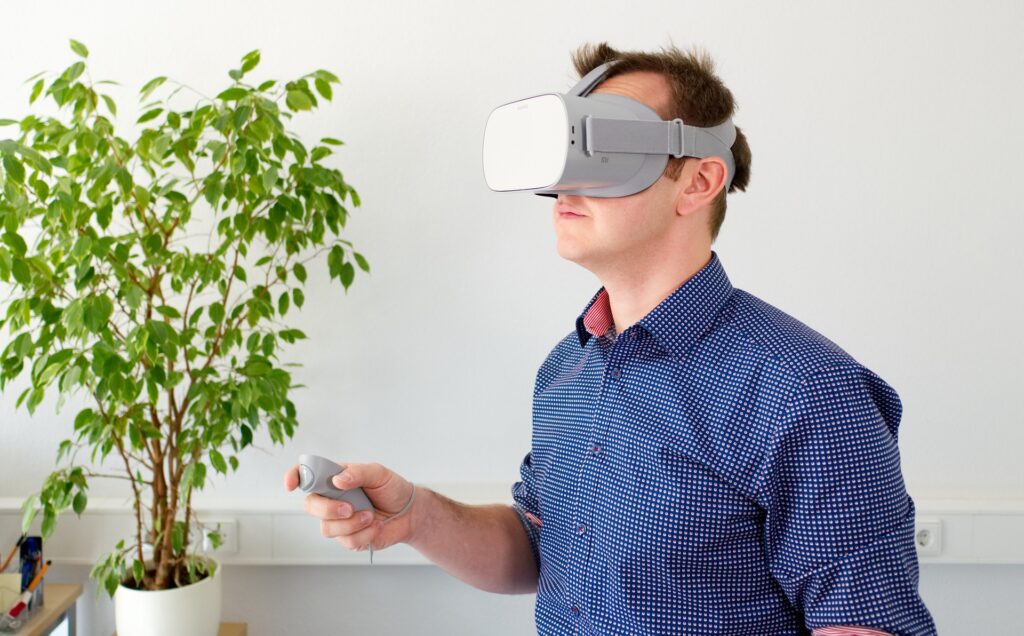
  • Accessible Virtual Reality facilities will boost industrial productivity.

    Accessible Virtual Reality facilities will boost industrial productivity.

    virtual reality

    Human communications took a huge turn during the COVID-19 pandemic; a bizarre shift. Healthy communication during the pandemic is one that involved the least contact between the communicating parties. With social life crippled to its lowest level ever, virtual communications technologies were adopted where possible to sustain communication and industrial productivity. Social media and video conferencing tools were the biggest winners from the pandemic. Yet, they were unable to mimic normal human interactions. Mainly due to their inability to convey emotion and ‘touch’.

    Virtual reality solutions rose in prominence and offered high throughput walk-throughs where these other alternatives failed. Thanks to the pandemic, VR has evolved from a fun tool for gaming and recreational activities to an advanced human communication tool. With its potentials and applications growing since then; Mark Zuckerberg’s Facebook rebranded to Meta to reflect its plans to make a deep dive into researching and building human communication solutions using Virtual reality technologies. Big tech companies are jumping on the trend with talks of building a complete virtual world making major headlines throughout the last quarter of 2021.

    Metaverse — the general name for the virtual world built using VR technologies is a major discussion amongst prominent role players in the technology sector. The Metaverse will feature personalized avatars built using VR and Non-fungible token (NFT) technologies. Coined by Neal Stephenson in his 1992 novel, “Snow Crash,” and popularized by cryptocurrency and blockchain projects; the metaverse is an attempt to (re)create a world outside our world that exists in our world. That must have been tough to read. Well, it’s probably the most straightforward description of what the metaverse really is.

    Using a combination of virtual reality and decentralized digital art technologies, tech companies and startups are working to create a world where we exist in simulation and perform certain interactive activities. The only difference is, that we are not doing this in ‘real’. Remember those games where you’ll have to select an avatar that represents you? this is something similar but once again it’s not just a game.

    Different sectors are currently exploring ways of utilizing Virtual reality technology. From a whole pain management technology in health facilities built using VR technology to virtual 3D house models with close to real-life effects used by construction companies. The ‘pandemic communication tool’ is fast taking its place in our everyday life.

    Normal physical human communication still remains undefeated but VR solutions are presenting interesting ways to enhance communication and bridge the conditional gaps in human communication through a readily available means of making sensational communications.

    Virtual Reality technology is great, but here’s the deal-breaker; it doesn’t come cheap…at all. An efficient VR headset costs anywhere between $50 to $1000. Setting up a complete VR facility cost an excess of $2,000 to multiple time this figure. In addition to the costly and relatively scarce facilities, Virtual reality management personnel aren’t so rampant and might cost significantly to hire.

    Like the early days of computers and smartphones, the cost of setting up and managing an efficient VR facility is one of the major factors limiting its adoption. Currently, only high-budget companies and institutions are able to properly integrate VR technologies into their routine procedures. Average companies can only manage to set up improvisational VR or low quality setups that hardly satisfy their purpose.

    Post-pandemic workplaces and industries have come to terms with virtualized communication alternatives. Many workplaces still have ‘work from home’ options for staff. Trimming down the workplace capacity has some advantages — saved cost and enhanced productivity due to comfortable settings.

    Different sectors could benefit greatly from VR technologies if made easily affordable.

    Construction industries’ Virtual 3D housing model when fully harnessed will create cheaper house planning and offer house owners a true feel of their houses before proper completion. This will enable them to make changes to their proposed structure without tangible extra costs.

    Virtual learning which became more popular during the pandemic has developed post-pandemic. Educational institutions are exploring ways to leverage VR technologies to improve the learning process and engage even more students. Distant learning programs powered by virtual reality technology brings teacher closer to the students in much better ways than video conferences and chat rooms.

    Creative VR technologies are exploring ways to keep students engaged through fun learning processes powered by Virtual reality. This process is expected to culminate in better academic performance and the production of more qualified graduates.

    Corporate organizations have even more realistic applications of VR technologies; virtual meet-ups, virtual work offices, and virtual marketing outreaches. Financial institutions can cut a great percentage of the cost of developing and maintaining the workplace facility by using virtual alternatives where possible. Fortunately, many workplace procedures can be replaced by virtual alternatives. This will not only save costs but offer a faster way of doing things. Conveyance for meet-ups and marketing presentations would take just a few minutes if every concerned party can afford VR facilities. Turning up for emergency meetings is as easy as wearing a VR headset.

    While these brilliant uses of VR technology will inevitably boost the productivity of these industries and associated sectors, the cost of setting up VR facilities eats deep into the projected saved costs; this defeats the goal.

    Government subsidies, optimized production costs; a few work-throughs could help lower the cost of VR facilities. The latter is more feasible as government subsidies are limited and could have an even worse effect on the general economy. Tech companies should consider trimming the production cost to produce more affordable facilities. This can also be done by producing cheaper alternatives with basic yet efficient features. A widespread VR adoption will be a catalyst for the next phase of the workplace and general communication revolution.